


 Francais
 Deutsch
 Italiano
Refine Your Search
Kiribati Gilbert Islands 1943 stock footage and images
- Showing 2131 to 2136 of 6726 results more
more Hide
Hide
Explosions of the German ammunition stores at an island in Saint Malo harbor during Allied Invasion of France.
Allied Invasion of France during World War II. German ammunition stores at an island in Saint Malo harbor are exploded on 17 August 1944. Allied troops explode stores as Germans refuse to surrender. Large smoke column arises.
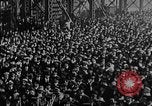
Large crowd gather for launching of USS Saccarappa at the Hog Island shipyard in Philadelphia,Pennsylvania.
Launching of the 11,190-ton freighter, USS Saccarappa, (No. 3828) built in 1918 by the American International Shipbuilding Corp., Hog Island, Philadelphia, Pennsylvania. Large crowd gather at the shipyard for launching. Gentleman in bowler hat advises woman about Christening ship with bottle of champagne. She smashing the bottle on the bow and the ship goes down the ways into the water. Another woman carrying a bouquet of flowers steps up to speak with her, and a man pushes her aside to allow the cinematographer to continue photographing the launching. The man, himself in the way, then ducks down to allow unimpeded view by photographers.
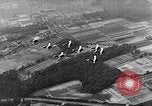
United States Army Air CorpsB-6A bomber aircraft and O-1D observation planes fly in formations over Long Island, New York.
Aerial views of formation of B-6A bombers from Mitchel Field, Hempstead, New York, as they fly over the towns, roads, and farms of Long Island. Crew members are seen in their open air positions in the aircraft. Large numbers of airborne O-1D observation aircraft in grouped formations and in-trail.
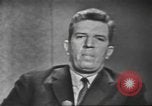
Kennedy and Nixon comment on the Indochina War, Quemoy and Matsu islands, and U-2 flights during their third debate.
Nixon and Kennedy debate questions regarding relations with Communists during the third Kennedy-Nixon Presidential Debate in the United States. Douglass Cater of Reporter magazine asks Republican candidate U.S. Vice President Richard M Nixon to comment whether there was a valid criticism of his statement of foreign policy. Nixon answers and states that the criticism is not valid. Regarding Indochina, he says that the U.S. would not have tolerated Indochina falling under Communist domination. And as a result of that the civil war there ended. He states that he supports the President's position and thinks that the President was correct in ordering the U-2 flights. Referring to Quemoy and Matsu he states that he objects to the constant reference to surrendering these islands. Democratic candidate Senator John F Kennedy disagrees with Nixon's statement on Indochina and states that reason Indochina was preserved was the Geneva Conference. On the question of the U-2 reconnaissance aircraft flights he states that he has never criticized them and never suggested stopping of espionage. On the question of keeping the Communists in doubt about the U.S. defending Quemoy and Matsu he states that the U.S. should meet its commitments to Formosa (Taiwan) and the Pescadores. He concludes by saying that he disagrees with Nixon as Nixon is extending the administration's commitment.
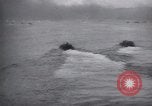
U.S. infantry fights Japanese troops and capture a Japanese air base on Noemfoor island in Indonesia during World War II.
U.S. infantry battles Japanese forces on Noemfoor island in Indonesia during World War II. U.S. infantry lands on narrow coral reefs. The infantry advances inland under fire. A Japanese air base comes under American possession. Reinforcements and supplies arrive by air. Paratroopers and parachute supplies are landed by U.S. Army Air Force transport aircraft.
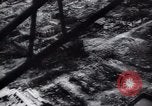
U.S. Marines battle Japanese forces on Agana, Guam, Mariana Islands after aerial bombardment during World War II.
Cleaning up operations by the U.S. Army in Agana, Guam, Mariana Islands during World War II. Aerial views of the town of Agana after U.S. Army Air Force bombardment. A Mass is conducted in a field as cleaning up operations continue. Smoke rises from shell explosions. U.S. Marines armed with guns advance cautiously. Wounded are carried behind the firing line by their comrades. Near the same United States Marine marker which stood during the Japanese attack two and a half years ago, the U.S. flag is raised over Guam.
CRITICALPAST.COM: About Us | Contact Us | FAQs - How to Order | License Agreement | My Account | My Lightboxes | Shopping Cart | Advanced Search | Featured Collections | Website Terms & Conditions | Privacy Policy ©2026 CriticalPast LLC.
License Agreement |
Terms & Conditions |
Privacy Policy
©2026 CriticalPast LLC.