


 Francais
 Deutsch
 Italiano
Refine Your Search
Kiribati Gilbert Islands 1943 stock footage and images
- Showing 4933 to 4938 of 6726 results more
more Hide
Hide
Japanese-American citizens, who found employment, leave Manzanar relocation center in California during World War II
Efforts to obtain employment and resettle Japanese-American citizens from Relocation Centers (internment) in the United States, during World War 2. A woman attends a Japanese-American girl in an office. Japanese-American men and women seated. A Japanese-American family at table in front of a map, discussing resettlement with an official. Japanese-Americans, who have found employment, leaving Manzanar relocation center with their families. Friends wave farewell to those who are leaving. At another location, a Japanese-American wife hugs her husband before he leaves to obtain employment so he can resettle his family. Japanese-American men getting on a bus leaving a relocation center.
Japanese-American citizens making use of ration cards at a war relocation center during World War II, United States.
Life of Japanese-American citizens at war relocation centers (internment camps) in U.S. during World War II. A Japanese-American woman at a grocery store. Relocated Japanese-American family at a home. Family prepares to have lunch at a dining table.
Japanese-American citizens participate in wartime production at a war relocation center in U.S. during World War II.
Life of Japanese-American citizens at war relocation centers (internment camps) during World War II, United States. Japanese-American man at a machine in a war factory. Japanese-American women paint clay sculptures. Japanese-American workers in a plant. Farmers sort hay on farm. Women operate a machine.
Churches in cities near war relocation centers sponsor social activities for Japanese-American soldiers during World War II
Protestant churches in cities near war relocation centers (internment camps) sponsor social activities for Japanese-American soldiers from U.S. Army camps, during World War 2. Japanese-American women at a table, greeting Japanese-American soldiers entering a dance sponsored by a church. Japanese-American soldiers socializing and dancing with young women from a nearby relocation center..
General Henry (Hap) Arnold reports to the nation on status of U.S. Army Air Forces in World War II
General Henry H. Arnold, Commander of the U.S. Army Air Forces, seated in front of world map, reports that since start of World War 2, the U.S. Air Force has gone from number 7, to number 1, in the world. Defense plant workers are shown walking near their place of work. A college football game shown in progress. Individual young men who left civilian life to became pilots, bombardiers, radio technicians, and gunners, in the Air Forces. A commercial DC-3 aircraft taxing to park at an airport. Shown are people who make the Air Forces possible, including many men and women workers at factories and manufacturing plants making aircraft and parts for the World War 2 effort: Steel workers, a woman working on a plane fuselage, actor James Stewart (in uniform), a welder at work, a typist, a machinist using a caliper, and an older couple at home, who forgoe driving their private car, shown covered in their garage. The flaming wreckage of U.S. aircraft at Hickam Field, on December 7, 1941. Large formation of German Heinkel He-111 bombers in flight. Formation of Japanese Mitsubishi G3M (Nell) bombers. U.S. P-40 pursuit planes taxiing out from parking places. Assembly line in U.S. aircraft manufacturing plant. U.S. Army Air Forces B-17 Flying Fortress planes on assembly lines. Workmen work on engines and aircraft fuselages. At the Douglas plant U.S. Army Air Forces B-26 Marauder bombers being assembled. Workmen inserting machine guns into a wing.
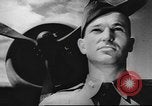
U.S. Army Air Forces aviation cadets being trained in U.S. during World War II.
U.S. Army Air Force activities during World War 2. An aviation cadet stands. Group of aviation cadets on flight line at an airfield. Animation of groups going through air and ground training. AT-6 Texan training planes in flight. WASPs (Women Air Force Service Pilots or WASP) board AT-6s. Woman in cockpit of a U.S. Army Air Forcs C-47 Skytrain transport plane. Two women in cockpit of a plane towing a gunnery target. WACs (Women's Army Corps) in a control hangar. Woman fuels an aircraft.
CRITICALPAST.COM: About Us | Contact Us | FAQs - How to Order | License Agreement | My Account | My Lightboxes | Shopping Cart | Advanced Search | Featured Collections | Website Terms & Conditions | Privacy Policy ©2026 CriticalPast LLC.
License Agreement |
Terms & Conditions |
Privacy Policy
©2026 CriticalPast LLC.