


 Francais
 Deutsch
 Italiano
Refine Your Search
Kiska Aleutian Islands Alaska 1944 stock footage and images
- Showing 2959 to 2964 of 9821 results more
more Hide
Hide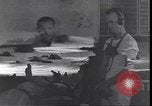
U.S. Navy USS Hornet (CV-8) sinks after battling Japanese bombers during Battle of the Santa Cruz in World War II.
Battle of the Santa Cruz Islands, Solomon Islands on 26th of October, 1942 during World War II. U.S. aircraft take off from U.S. Navy USS Hornet (CV-8) carrier at dawn. Members of crew on U.S. carrier look through binoculars. Japanese bombers formation overhead. Gun crews of USS Hornet (CV-8) attack the Japanese aircraft. Japanese aircraft in flames crash. Flak bursts in sky. USS Hornet gets torpedoed and bombed heavily. USS Hornet burns. The crew abandons the USS Hornet. Members of the crew board rescue boats. USS Hornet being sunk by torpedo attacks at night. Wounded men transferred to other U.S. ships and taken ashore. New ships being launched from shipyards in United States.
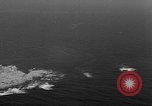
Various lighthouses and coast guard stations in the United States.
Aerial views from overflying aircraft, of Lighthouses and coast guard stations in the United States. Those seen are: Light Desert Rock lighthouse, followed by Lighthouses: Petit Manan, Nash Island, Avery Rock, Prospect Harbor, Egg Rock, Baker Island, Great Luck Island; Bass Harbor Head, Bear Island, Saddleback Ledge, Browns Head, Herons Neck, Isle of Shoals, Boone Island, Halfway Rock, Portland Breakwater, Pam Island Portland Head, Cape Elizabeth, and wood Island. The Coast Guard Stations seen are: Straitsmouth, Gloucester, Cranberry Island, Salem Air Station Isle of Shoals, Cape Elizabeth, and Biddeford Pool.
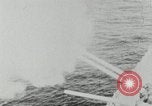
United States soldiers fighting at the Battle for Okinawa, Japan (WW2)
United States forces at the Battle for Okinawa in World War II. American ships fire artillery at Japanese positions in Okinawa Island. American ships and boats in ocean near Okinawa. American soldier moves forward with a rifle as he attacks Japanese positions. American soldiers fire at Japanese positions. Soldier uses a telephone for communication. American tanks and artillery fire. Soldiers hoist the American flag on Okinawa Island. View of a cemetery of United States soldiers. An American soldier visits fellow soldier's grave.
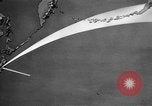
The story of U.S. Navy Seabees on Guadalcanal during World War II.
Activities of the Seabees on Guadalcanal, Solomon Islands, during World War II. Seabees seen salvaging ships damaged and sunk during the Japanese December 7, 1941 attack on Pearl Harbor.Seabees seen on the deck of the USS California (BB-44). U.S. warship fires guns at Guadalcanal. U.S. Marines land on Guadalcanal and advance in long line across the island. Marines firing heavy field artillery. Seabees begin rebuilding Henderson Field, surrounded by fire and smoke of battle. Ground and aerial views of Henderson field, with destroyed U.S. fighter bombers seen. From the air, many small airplanes and several B-17s can be seen. Seabees filling shell and bomb craters on the field. U.S. Marines firing firing antiaircraft weapons against attacking Japanese airplanes. Two Japanese airplanes plunging in flames. An empty life vest floating in the water. The Seabees continue rebuilding and expanding Henderson Field using Marston matting (pierced steel planking). A Navy Douglas SBD Dauntless dive bomber lands at the newly repaired field. U.S. Air Force B-17s take off from Henderson Field. and
The Fall of Corregidor in World War II
Opening shows affidavits attesting to the authenticity of source films. Views of the island fortress of Corregidor, as Japanese troops occupy it while Americans and Filipinos stand with hands up, in surrender. Japanese and American Army officers having discussions. Scene shifts to Lieutenant General Jonathan Wainwright with members of his staff: Brigadier General Lewis C. Beebe; Lieutenant Colonel John R. Pugh; Major William Lawrence; and Major Tom Dooley, as they arrive at the Japanese headquarters building on Bataan to discuss surrender. They line up outside the wooden building and are saluted by the Commander of the 14th Japanese Imperial Army, General Masaharu Homma, as he climbs the steps of the building. Next, the Americans are seen seated at a table on the porch, opposite General Homma, who has General Wachi at his left and Colonel Nakayama, to his right. Reporters, an interpreter, newsreel camera men and others are also on the porch. General Homma and Wainwright discuss surrender. (These discussions proved fruitless, as Homma demanded surrender of the entire Philippine Garrison, and Wainwright tried to avoid that, citing lack of authority. Accordingly, Homma curtailed the meeting, and Wainright and staff returned to Corregidor, where, on May 6, 1942, he finally surrendered all forces in the Philippines to Japanese Colonel Sato, commander of the 61st Infantry.) Camera outdoor pans over Corregidor Island. Scenes of prisoners standing in the so-called Garage area of Corregidor, where American and Filipino POWs were interred, following their surrender on May 6th. The remainder of the film shows various scenes of POWs on Bataan, moving under Japanese guard. A makeshift sign points the way to Mariveles, where the infamous Bataan Death March commenced.
Fall of Corregidor to Japanese, during World War 2, Japanese newsreel.
Japanese newsreel documenting fall of Corregidor, Philippines to attacking Japanese forces. Japanese Betty bomber flying overhead. Guns of a Japanese battleship. Japanese animated map showing Corregidor Island at entrance to Manila Bay and the location of Japanese amphibious assault on the island, during World War 2. Aerial view of Corregidor, from Japanese airplane. Aerial view of bombs striking Corregidor. Japanese troops moving from rocky shore, past obstacles, and climbing steep wooden stairs on Corregidor. One of the soldiers carries a flame thrower. Japanese soldiers engaged in firefights with defenders. Americans surrendering. Views of tattoo on sailor. Barrage balloon aloft nearby.U.S. Army Major General George F. Moore conversing with Japanese Commander. Japanese Lieutenant General Masaharu Homma enters a hut and sits with members of his staff, opposite U.S. Lieutenant General Jonathan Wainwright, Major General Moore, and another officer, to discuss terms of surrender.
CRITICALPAST.COM: About Us | Contact Us | FAQs - How to Order | License Agreement | My Account | My Lightboxes | Shopping Cart | Advanced Search | Featured Collections | Website Terms & Conditions | Privacy Policy ©2026 CriticalPast LLC.
License Agreement |
Terms & Conditions |
Privacy Policy
©2026 CriticalPast LLC.