


 Francais
 Deutsch
 Italiano

Refine Your Search
Kiska Aleutian Islands Alaska 1944 stock footage and images
- Showing 2977 to 2982 of 9862 results more
 Hide
Color Sound
The story of U.S. Navy Seabees on Guadalcanal during World War II.
Activities of the Seabees on Guadalcanal, Solomon Islands, during World War II. Seabees seen salvaging ships damaged and sunk during the Japanese December 7, 1941 attack on Pearl Harbor.Seabees seen on the deck of the USS California (BB-44). U.S. warship fires guns at Guadalcanal. U.S. Marines land on Guadalcanal and advance in long line across the island. Marines firing heavy field artillery. Seabees begin rebuilding Henderson Field, surrounded by fire and smoke of battle. Ground and aerial views of Henderson field, with destroyed U.S. fighter bombers seen. From the air, many small airplanes and several B-17s can be seen. Seabees filling shell and bomb craters on the field. U.S. Marines firing firing antiaircraft weapons against attacking Japanese airplanes. Two Japanese airplanes plunging in flames. An empty life vest floating in the water. The Seabees continue rebuilding and expanding Henderson Field using Marston matting (pierced steel planking). A Navy Douglas SBD Dauntless dive bomber lands at the newly repaired field. U.S. Air Force B-17s take off from Henderson Field. and
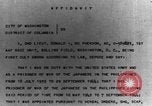
The Fall of Corregidor in World War II
Opening shows affidavits attesting to the authenticity of source films. Views of the island fortress of Corregidor, as Japanese troops occupy it while Americans and Filipinos stand with hands up, in surrender. Japanese and American Army officers having discussions. Scene shifts to Lieutenant General Jonathan Wainwright with members of his staff: Brigadier General Lewis C. Beebe; Lieutenant Colonel John R. Pugh; Major William Lawrence; and Major Tom Dooley, as they arrive at the Japanese headquarters building on Bataan to discuss surrender. They line up outside the wooden building and are saluted by the Commander of the 14th Japanese Imperial Army, General Masaharu Homma, as he climbs the steps of the building. Next, the Americans are seen seated at a table on the porch, opposite General Homma, who has General Wachi at his left and Colonel Nakayama, to his right. Reporters, an interpreter, newsreel camera men and others are also on the porch. General Homma and Wainwright discuss surrender. (These discussions proved fruitless, as Homma demanded surrender of the entire Philippine Garrison, and Wainwright tried to avoid that, citing lack of authority. Accordingly, Homma curtailed the meeting, and Wainright and staff returned to Corregidor, where, on May 6, 1942, he finally surrendered all forces in the Philippines to Japanese Colonel Sato, commander of the 61st Infantry.) Camera outdoor pans over Corregidor Island. Scenes of prisoners standing in the so-called Garage area of Corregidor, where American and Filipino POWs were interred, following their surrender on May 6th. The remainder of the film shows various scenes of POWs on Bataan, moving under Japanese guard. A makeshift sign points the way to Mariveles, where the infamous Bataan Death March commenced.
Fall of Corregidor to Japanese, during World War 2, Japanese newsreel.
Japanese newsreel documenting fall of Corregidor, Philippines to attacking Japanese forces. Japanese Betty bomber flying overhead. Guns of a Japanese battleship. Japanese animated map showing Corregidor Island at entrance to Manila Bay and the location of Japanese amphibious assault on the island, during World War 2. Aerial view of Corregidor, from Japanese airplane. Aerial view of bombs striking Corregidor. Japanese troops moving from rocky shore, past obstacles, and climbing steep wooden stairs on Corregidor. One of the soldiers carries a flame thrower. Japanese soldiers engaged in firefights with defenders. Americans surrendering. Views of tattoo on sailor. Barrage balloon aloft nearby.U.S. Army Major General George F. Moore conversing with Japanese Commander. Japanese Lieutenant General Masaharu Homma enters a hut and sits with members of his staff, opposite U.S. Lieutenant General Jonathan Wainwright, Major General Moore, and another officer, to discuss terms of surrender.
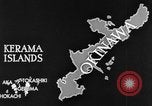
Okinawa is heavily shelled with guns and rockets and then invaded by 10th Army and the Marine 3rd Amphibious Corps.
Invasion of Okinawa. Animated map shows Aka, Tokashiki, Geruma, Hokachi and Okinawa Island. After six days of U.S. troops landing on Kerama Island, 10th Army attacks south west coast of Okinawa. Heavy naval shelling of Okinawa. U.S. fleet shelling coasts of Okinawa. Heavy explosions in Okinawa throw billows of smoke in air. U.S. fleet underway at sea approaching Okinawa. Rocket ships firing rockets on enemy positions on coastline. U.S. amphibious landing on beaches after heavy shelling. (World War II period).
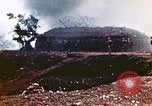
United States Marine troops organize the civilians of Okinawa in Pacific Theater.
Okinawa Operations in Pacific Theater. United States Marine units and 24th Army Corps advance on uneven terrain of Okinawa. Smoke rises up due to firing. The troops organize the civilians of the island. Refugees clog a road. Destructed bridges on the island. Jeeps and tanks advance. Amphitracks and jeeps cross a stream. Bulldozers repair a road. (World War II period).

U.S. ground forces fight their way across Okinawa against stout Japanese resistance
Okinawa Operations in Pacific Theater. United States Marine units and 24th Army Corps advance in the villages of the islands. Tanks advance in the villages. Marines approach houses in the village. Fire and smoke due to explosions. Dead bodies lay on ground. Fire rises up from the houses in village. Flame throwing Sherman tanks set huge fires throughout the villages. Aerial view of smoke over island. Infantry equipped with small arms, and some seen carrying flame thrower packs on their backs, moving along the roads without heavy support weapons. U.S. Douglas TBM Avenger aircraft drop food, water and munitions by parachute to Marines climbing hills. Smoke protects Marines crossing an open slope. (World War II period).
CRITICALPAST.COM: About Us | Contact Us | FAQs - How to Order | License Agreement | My Account | My Lightboxes | Shopping Cart | Advanced Search | Featured Collections | Website Terms & Conditions | Privacy Policy ©2026 CriticalPast LLC.
License Agreement |
Terms & Conditions |
Privacy Policy
©2026 CriticalPast LLC.