


 Francais
 Deutsch
 Italiano
Refine Your Search
Kiska Aleutian Islands Alaska 1944 stock footage and images
- Showing 5701 to 5706 of 9823 results more
more Hide
Hide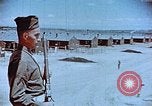
Nisei, the second Japanese generation in U.S. involve in various works after released from relocation home during World War II.
Relocation of Japanese ancestry people, in United States due to security reasons, during World War II. Military Police guard with rifle at the entrance of Japanese-American internment camp in Missouri. Nisei, the Japanese of second generation in United States, at various works and profession after released from the relocation centers. Nisei farmers work in sugar beet field. A couple leaving the center gets its details checked by Military Police official and gets in a bus. A family released from an evacuation home. Details of evacuees read by an officer. Nisei work at corn field in Illinois, mechanical machines. Nisei nurse at a hospital aids a woman. Nisei man drives tractor, work on machines, feeds chicken, work in potato farms, with printing machines, at candy factory. Nisei women work making dolls, in garment factory, break eggs for military supply and stitch flags. A Nisei at a book binding factory shows his salary check.
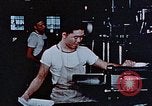
Nisei, the second generation Japanese in US, in the 442nd RCT of U.S. Army train for combat operation at Camp Shelby, Mississippi
Relocation of Japanese ancestry people, in United States due to security reasons, during World War II. Nisei, the Japanese of second generation in United States, in the 442nd Regimental Combat Team of the U.S. Army. Troops march, undergo physical training. Troops trained for a combat operation. Soldiers practice firing with artillery and mortar launcher. Soldiers run through an obstacle course at Camp Shelby in Mississippi Troops of armed Nisei soldiers pass by the U.S. national flag.
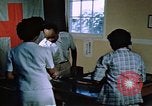
Japanese Americans performing various activities at Heart Mountain War Relocation Center, Wyoming, during World War II.
Japanese Americans at Heart Mountain War Relocation Center (internment camp), Wyoming, during World War II. A Japanese American doctor shakes hands with and talks to the patients at a clinic. A trial at the center. Japanese Americans stand in line for voting in the elections of the councilmen. A man walks out of a curtained area and places his paper ballot, in a ballot box. A young woman voter then steps behind the curtain to fill out her paper ballot. A Caucasian teacher plays piano for Japanese American students. Small children in a library study books.
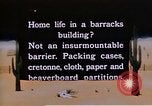
Nisei Japanese-American citizens, with their families at Manzanar War relocation center during World War II.
Nisei, the Japanese-American citizens of second generation, at Manzanar War Relocation center (internment camp) in California during World War II. A relocated family inside their relocation home. Mother cares her infant while the father reads a book. A father and his son's, who are U.S. Army soldiers temporarily home on furlough, sit and talk inside a relocation home. The mother sits by them. Clothes drying on a line in the house. A service star flag (showing that the family has a soldier serving in the war) hangs near a room divider, and other things and commodities inside the house. Shrubs and plantings beside camp housing units. Slated notes, "In their leisure time they have planted flowers, shrubs, and trees, and made beautiful gardens because they feel that they may become permanent residents. Japanese girls play in garden and are seen with women yards and well developed gardens of their relocation houses, including walkways, wooden bridges, and plantings.
Nisei, the Japanese Americans develop rubber extraction from guayule plant at Manzanar Relocation Center in California.
Nisei, the Japanese Americans of second generation, at relocation centers (internment) during World War II. A Japanese-American grows guayule plant generally grown in Mexico and Texas, experimentally at Manzanar Relocation Center in California. Japanese-American scientist at a laboratory in the relocation center invents methods to extract more rubber from guayule plant. Dried and ground plant at the laboratory. He makes production equipment from old automobile parts. A man paints old parts and modifies them for use. Rubber extracted from guayule plant rises to the surface as the container gets filled with the chemical. The scientist stretches the rubbers so made to check its quality.

'Go for Broke' depicts Japanese-American recruits of the 442nd Regimental Combat Team, under training at Camp Shelby.
'Go for Broke' shows the Japanese-American recruits of the 442nd Regimental Combat Team under training at Camp Shelby in Mississippi. Recruits carry rifles while marching. The recruits do jumping jacks and calisthenic exercises under direction from a trainer. A Japanese-American guard stands in front of the sign, 'Headquarters Company 442nd Infantry Combat Team.' Recruits learn to use rifle with fixed bayonets. They practice throwing hand grenades and protect themselves wearing gas masks. Soldiers practice loading and firing a 37mm artillery gun. (World War II period).
CRITICALPAST.COM: About Us | Contact Us | FAQs - How to Order | License Agreement | My Account | My Lightboxes | Shopping Cart | Advanced Search | Featured Collections | Website Terms & Conditions | Privacy Policy ©2026 CriticalPast LLC.
License Agreement |
Terms & Conditions |
Privacy Policy
©2026 CriticalPast LLC.