


 Francais
 Deutsch
 Italiano

Refine Your Search
Kodiak Alaska USA 1953 stock footage and images
- Showing 793 to 798 of 25628 results more
 Hide
Color Sound
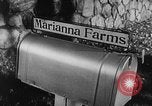
American Contralto, Marian Anderson doing several activities at her home in Connecticut and singing Ave Maria in concert
From a documentary about American Contralto, Marian Anderson, one of the leading classical singers in America. View of the Marian Farms, Marian Anderson's home in Connecticut, USA. Montage shows Marian working in her vegetable gardens, upholstering cushions, processing camera reel and cooking in kitchen. Marian Anderson and her arranger, Franz Rupp, working in a private studio. Marian practices in a room. She stands near the pianist and sings "Deep River" and "Comin' Through the Rye." She completes the song and asks the pianist about the next number. She takes a microphone and sings. Marian prepares to leave in her car. Scenes from a Marian Anderson concert where she sings Ave Maria, accompanied by a pianist. Audience applauds.
A6M Zeros, D3A Vals and B5N Kates take off from an aircraft carrier to attack Pearl Harbor in Hawaii during World War II
Japanese attack on Pearl Harbor, Hawaii during World War II. Animated map shows Manila, Singapore, Hong Kong, Nippon, Pacific Ocean and the USA. An arrow points out from Nippon to Pearl Harbor, Hawaii. Two Japanese aircraft carriers, the Kaga and the Zuikaku underway at sea as seen from the carrier Akagi. Waves of water dash over a deck. Japanese crew on the deck. Japanese Naval officers look through binoculars. An officer briefs Japanese pilots. A chart drawn on a blackboard. Japanese aircraft in flight. The pilots being briefed . The pilots run towards their aircraft and get ready for a take off. A signal flag is waved. The first Imperial Japanese Navy Air Service B5N (Kate) bomber takes off. A formation of nine A6M Zeros in flight. The mast of a ship. Japanese aircraft in flight. Three Kates in flight. Ford Island and airfield seen below. Aircraft dropping bombs. Honolulu smoking due to the bombardment. 3 PBY (Patrol Bomber Consolidated Aircraft) Catalinas. Bomb bursts near airplanes on the field. Pearl Harbor smokes. Animation shows war losses suffered by the U.S. A formation of A6M Zeros in flight. A Japanese war ship underway in the Pacific Ocean. Three Japanese warships underway. (Note: The attack began about 8AM December 7th, Honolulu time, which was 3AM, December 8th, Tokyo time.)

The anti war protests against the United States involvement in the Vietnam War.
Anti-war protests in the United States during the Vietnam War. Protesters march and demonstrate against the United States involvement in the Vietnam War from Central Park to the UN headquarters in New York City. Demonstrators in crowd holding protest signs. A number of African American marchers hold signs that read, "Black men should fight white racism, not Vietnamese freedom fighters." Another sign reads, "They are our brothers whom we kill." Masses of people including doctors, teachers, and businessmen on streets. People dressed in different costumes and 1960s hippie fashion as they protest. Young men participate in burning their draft cards while a crowd gathers around to watch the draft card burning. Pro-war counter protestors (sometimes called "Hawks") also demonstrating and arguing with anti-war activists. Pro-war banner reads, "End Hanoi Sanctuary. Let's bomb Hanoi to win the war and destroy the Communist conspiracy." Another Hawk sign reads, "Anarchy Cannot be Permitted in the USA. Fight Communism and Red Termites." African American civil rights activist Martin Luther King Jr. walks toward the United Nations building with other officials advocating peace. Policemen drag a protester. Scene changes to San Francisco: 50000 people carry banners as they protest the war in Vietnam and march to the Kezar Stadium (670 Kezar Dr, San Francisco, CA 94118, United States) for a mass assembly. People push each other during the protest as pro-war demonstrators clash with anti-war demonstrators and pacifists. A huge crowd gathered at a stadium.
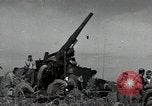
U.S. 24th Infantry Soldiers firing from tank.
Soldiers of U.S. 24th infantry regiment. Soldiers on and around a tank. Soldiers fire the tank. A tank marked with USA 9132569 can be seen in water. Soldiers sitting on the tank. 1947.
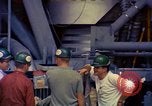
Progress in Space Research in America in form of NASA Gemini Space Program.
Workers making spacecraft for the Gemini Space Program,USA. Astronaut getting ready to go into space. Scenes of launch of Gemini Spacecraft and view from press and media area with cameras watching liftoff of Mercury Atlas rocket. 1965.
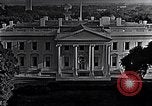
President Lyndon B Johnson remarks upon signing the Civil Rights Bill at White House, Washington DC.
View of the White House (1600 Pennsylvania Avenue NW Washington, D.C. 20500 U.S.) in Washington DC, USA. President Lyndon B. Johnson speaks upon signing the Civil Rights Act of 1964 at the White House, Washington DC. View of the bill signing ceremony for the Civil Rights Act. Scene changes to moderated discussion. The anchor welcomes Roy Wilkins, NAACP executive secretary, Leroy Collins, Former Governor of Florida, and Sterling Tucker, Washington Director of National Urban League, at a studio during Civil Rights Anniversary. The anchor starts conversation and Wilkins answers.
CRITICALPAST.COM: About Us | Contact Us | FAQs - How to Order | License Agreement | My Account | My Lightboxes | Shopping Cart | Advanced Search | Featured Collections | Website Terms & Conditions | Privacy Policy ©2026 CriticalPast LLC.
License Agreement |
Terms & Conditions |
Privacy Policy
©2026 CriticalPast LLC.