


 Francais
 Deutsch
 Italiano
Refine Your Search
Kodiak Alaska USA 1953 stock footage and images
- Showing 14623 to 14628 of 25600 results more
more Hide
Hide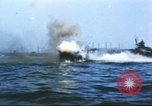
Color scenes of WWII including Pearl Harbor, D-Day, and Pacific campaign.
Montage of scenes dealing with Japanese attack on Pearl Harbor in World War 2. Bombs exploding and ships on fire; Japanese airplane diving from formation; a jeep driving past a burning airplane; hangars burning; Sailors firing anti-aircraft guns from an American ship; A New Orleans class American Cruiser firing her 8-inch guns; A South Dakota Class battleship firing her 16-inch guns; Group of American M3 Stuart light tanks in a field; U.S. Aviation Cadets marching between rows of Boeing Stearman Model 75 training biplanes; American soldiers marching in huge formations; Paratroopers in training jumps from towers; U.S. soldiers climbing down netting on side of troop transport ships to board small landing ships in the Pacific.; Marines in a landing craft carrying a large American flag; Landing craft in an amphious assault; Troops coming ashore from a Higgins boat, during training; An amphibious invasion task force at dusk; Troops wading ashore during the invasion of France in World War II, with barrage balloons aloft and support ships offshore. Staged scene of soldier on transport ship using flash light to read letter from home. Capital warships firing heavy guns and soldiers descending rope nets to enter landing craft. Soldiers landing on shore from Higgins Boats during training, and then on the shores of Normandy during the D-day invasion. American tank crew on an M26 Pershing tank. Major General George Patton with 1st Armored Division patch on his uniform sleeve. General George Marshall. General Dwight D. Eisenhower decorating an officer. Lieutenant General Henry (Hap) Arnold. Paratroopers jumping en masse from C-47 transport planes. German forces retreating in trucks along a road. Japanese General Yoshijirō Umezu, Chief of the Army General Staff, signing Surrender document aboard the USS Missouri, ending World War II, in the pacific. Glimpse of troop ship arriving in a U.S. harbor. View of U.S. military cemetery. Scene shifts to John Charles Daly, speaking in front of wall with names of Medal of Honor recipients, in the Hall of Heroes at the Pentagon, Arlington, Virginia, in 1968.
U.S. servicemen are kept informed through Stars and Stripes newspaper, radio and television telecasts in the United States.
American servicemen are kept informed through newspaper and radio telecasts in the United States. A man operates a recording machine and records the interview of an officer. Printing of Stars and Stripes newspaper. A truck loaded with bundles of newspaper moves through streets. Soldiers aboard a ship underway at sea read a newspaper. They listen to the radio. A man operates a recording device at a American Forces Radio and Television Station. American military men watch television shows. Newspapermen discuss news material. Broadcast technical specialists operate devices at a station.
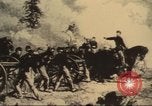
Union soldiers print the first issue of Stars and Stripes newspaper during the Civil War in the United States.
The history of the Stars and Stripes newspaper. Union soldiers print the first issue of Star and Stripes newspaper in a captured press in the U.S. on 9th November,1861 during the Civil War. World War I scenes show soldiers disembarking from a ship and advancing on a battlefield. Commanding Chief of the American Expeditionary Force John J. Pershing writes for the newspaper. Soldiers greet the Chief and wish him luck. After the end of World War I newspaper publication is ceased. During World War II the newspaper publication starts in London, England in 1942. Publication of the Pacific Stars and Stripes newspaper after the end of hostilities in Europe. Headlines in various editions of the Stars and Stripes.
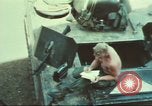
News report and informational programs are broadcast to a large majority of servicemen in the United States.
American servicemen are kept informed by American Forces Radio and Television Station facilities. A soldier listens to a radio and writes a letter. Another soldier in southeast Asia looks at a post with directional arrows showing distances thousands of miles away to cities like Seattle, San Francisco, and Denver. He sits on a bench and listens to the radio. Aerial view of the broadcasting station part of the American Forces Radio and Television Station. Power is supplied by portable generators housed in wooden shacks. View of radio studios, control rooms and administrative blocks. A man serving as Disc Jockey or DJ operates a control panel and a phonograph turntable to play a record. He turns dials on the control panel and works on a program schedule. View of a reel to reel tape machine running. News report and informational programs are broadcast to a large majority of servicemen. Military cooks working in a kitchen to prepare food. Army soldier standing at washroom sink and shaving, while listening to a portable radio. Two Army soldiers, one white and one African American, playing pool or billiards while listening to a portable radio. Soldiers on a rest break during a patrol in the Vietnam War listen to a radio.
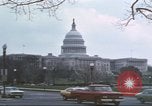
Men work with news ticker tapes in a newsroom at the American Forces Radio and Television Station in Washington DC, U.S.
American Forces Radio and Television Station facility in Washington DC, United States. The U.S. Capitol. Traffic on streets. A man sorts and checks news ticker tapes. Rolls of ticker tape emitting from a printing machine and growing in large coil piles. Another man feeds the ticker tapes in a teletype in a newsroom at the American Forces Radio and Television Station.
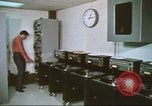
Personnel edit recordings at the American Forces Radio and Television Station in Washington DC, United States.
American Forces Radio and Television Station facility in Washington DC, United States. A man checks recordings of news, sports and special events at a station. The recordings are edited to remove commercial messages. Officials read program details at a operating schedule board. Men work at a station and feed the programs to a American Forces Radio and Television Station by short wave transmitters.
CRITICALPAST.COM: About Us | Contact Us | FAQs - How to Order | License Agreement | My Account | My Lightboxes | Shopping Cart | Advanced Search | Featured Collections | Website Terms & Conditions | Privacy Policy ©2026 CriticalPast LLC.
License Agreement |
Terms & Conditions |
Privacy Policy
©2026 CriticalPast LLC.