


 Francais
 Deutsch
 Italiano

Refine Your Search
Kodiak Alaska USA 1953 stock footage and images
- Showing 22711 to 22716 of 25628 results more
 Hide
Color Sound
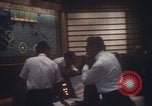
Female NASA personnel working with colleagues before a Mercury launch
NASA personnel in front of the Mercury Space Flight Network (MSFN) plot board at the NASA command center. A woman works with her male colleagues at NASA. The woman writes on the screen. Close up of female NASA worker's face as she talks to her colleagues. NASA personnel speak on their headsets at the NASA command center before a Mercury-Atlas mission liftoff. NASA personnel gather at the command center. NASA personnel talks on the phone. NASA personnel, military, and Air Force officers in another room at the command center. Some of the personnel are smoking in the meeting. An officer leans down to plot a map on the table as his colleagues watch. He uses a ruler and a square to measure the map. The officer draws, with some measuring tools and a compass on the table. NASA personnel and military officers in separate rooms talking to their colleagues. A NASA personnel leans on a monitor. Two NASA personnel wearing headphones talk to each other. A military officer with some men in suits.
Creation of dust storms and how to prevent soil erosion caused by dust storms, 1939
View of house on barren land. Destroyed fences and mounds of dirt. Dust storm covers the sky during Dust Bowl period in America. View of windmill and houses before the wall of dust. Illustrated map of the United States outlines the areas affected by dust storms, ranging from the panhandle of Texas to the Dakotas. Graphic shows side view of soil including top soil and sub-soil. Crops are pictured growing from the top soil, then dying. Narrator explains that sun and wind then strip away the top soil. Animation shows top soil crumbling to dust and being swept into the air. Measures to protect top soil are pictured, beginning with planting "arid-land plants" such as grasses to protect soil from the sun and wind. Illustration depicts Lister Furrows: the cutting of deep ridges at right angles to the direction of the wind, acting as a wind break. For future protection, an illustration of shelter belts of trees acting as wind breaks. Scene of house and barren ground in dust storm. Motor cars drive amid dust storm. Scenes of buffalo and cattle being herded. Man stands with cow in dry, barren farmland. Farmers tend to dry, unhealthy crops. Motor car and carriage drive on barren ground. Idealistic scene of healthy land with good grass for cattle grazing and large barn in the background. Final image of a wall of dust.
1929 Master Farmer awards and historical recreation of the Oklahoma land run of 1893
Historical dramatization of the 1893 Oklahoma land run, from a 1929 United States Department of Agriculture (USDA) film. A man on his horse looks at his watch. When the time strikes noon, the man blows a trumpet and fires a blank from his pistol, signaling the beginning of the land rush. A line of horses, wagons, and carriages take off. A large swarm of people on horses ride furiously. A line of horse-drawn carriages and buggies on open plains. More scenes of dozens of horses and people riding at speed. A man loses his hat and trips off the side of his wagon. A man jumps off his horse and quickly hammers a small stake and flag into the ground, staking his claim. Close up as the man, meant to be "Joe Tripp," as he ties the reins of his horse to his leg and prepares to sleep on the ground, without a shelter. Scene changes to "Bill Taylor," another figure in the historical recreation, who is uprooting a thicket in order to make good farming land. The historical recreation ends. Both men have received gold medals labeling them "Master Farmers." Joe Tripp wearing his medal. Two horses pull a wagon towards a large barn and house. Close up of the medal worn by Bill Taylor, who climbs into a wagon pulled by two horses. Behind him is a barn labeled "Riverside Farm W. S. Taylor." 37 men, including Joe Tripp and Bill Taylor, all honored as Master Farmers, stand and pose for a photograph. The men talk with one another, then take off and raise their hats for the picture. Panning shot shows all faces. Note says that Master Farmer medals are awarded by "public spirited agencies" in many states. Secretary of Agriculture, William Marion Jardine, pins a medal on one of the farmers. Scene changes to a farmer harvesting using a grain cradle, then a large combine harvester.
Oklahoma Master Farmer Ed Hearn's farming successes, 1929
From a United States Department of Agriculture (USDA) film. Title card presents the question "what is success in farming?" Various examples attempt to answer the question: A farmer handing a stack of bills to banker. Woman splits wood with an axe, small ramshackle house behind her. Man sits on the banks of water, fishing while smoking a pipe. Herd of cattle with large barn and house in the background, grain silos. Motor car pulls up to doorway of a luxurious house, man dressed in a suit enters the car and it drives off. Now, portrayed as a better answer compared to the previous, scenes of Ed Hearn's farming practices. Hearn has been recognized and awarded as an Oklahoma "Master Farmer." Hearn speaks with another man. Scene of Hearn driving a wagon pulled by a team of horses, which the film notes was what he began with. Now he has 550 acres. Hearn practices crop rotation and terracing to preserve soil quality. Various crops swaying in the wind. Wide shots of Hearn's farmland. Hearn's herd of shorthorn cattle graze in a field. View of Hearn's two-story house. Hearn's two daughters, both noted as being in college. Close up of Hearn smiling and talking with a man. Title card says "That's one story of success."
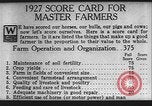
Farming practices of Will Barnett, named Oklahoma Master Farmer
United States Department of Agriculture film. A 1927 scorecard depicts the breakdown of points for assessing a farmer and his operations. Zoom on "maintenance of soil fertility." Scene shows deep machine plowing of soil, practiced by Will Barnett. Barnett uses manure from his farm to keep his soil healthy. Barnett drives a cart pulled by two horses, spreading manure on his land. Barnett's hogs in a pen. Barnett walks down a line of hogs, barn in the background. Barnett's wife's white leghorn chickens, moving about on the ground by their coop. Barnett weighing a bag of cotton, hoists it into the back of a truck amid a cotton field. Shot of the Barnett house and pumpkin patch.
President Harry S Truman awards Congressional Medals of Honor at the White House to Carl Sitter and Reginald Myers
President Harry S Truman awards Congressional Medals of Honor at the White House in Washington DC. A gathering at the White House. Officials and awardees with their families. The recipients are Marine Captain Carl Sitter (standing left of the President when all three men are together) and Reginald Myers (standing right of the President). The President awards the Medal of Honor to each of the two officers. The officers shake hands and pose with the President. Officers with their families after receiving the Medals. Sitter holding his son and pictured with his wife. Myers' wife, Margaret, and daughter, Susan, and son, Scott. Myers holding his son, Scott. Major Myers was awarded the Congressional Medal of Honor while serving as Executive Officer, 3rd Battalion, 1st Marines, in the vicinity of HAGARU-RI, KOREA, November 29, 1950, while commanding a group of 80 men who were stragglers and missing from other units during the Korean War. Major Myers' makeshift unit successfully denied the Chinese Communists the possession of EAST HILL, which dominated the key crossroads in the withdrawal -- attack in another direction -- by U.S. Marines and Army units from the Chosin Reservoir. Captain Sitter's unit relieved Major Myers' unit in the same battle. Sitter received e medal for his actions as a commanding officer during a two-day battle at Hagaru-Ki, Korea in November 1950. The fighting lasted 36 hours, and Sitter endured grenade burns to his face, arms and chest. He refused to evacuate as the fight continued. More than half of his company was killed, wounded or captured, but a successful defense of the area was mounted by U.S. soldiers.
CRITICALPAST.COM: About Us | Contact Us | FAQs - How to Order | License Agreement | My Account | My Lightboxes | Shopping Cart | Advanced Search | Featured Collections | Website Terms & Conditions | Privacy Policy ©2026 CriticalPast LLC.
License Agreement |
Terms & Conditions |
Privacy Policy
©2026 CriticalPast LLC.