


 Francais
 Deutsch
 Italiano

Refine Your Search
Leipzig Germany 1945 stock footage and images
- Showing 1129 to 1134 of 10470 results more
 Hide
Color Sound

A German Zeppelin dirigible in flight in Germany.
A film on the development of air power. A German Zeppelin dirigible in Germany. The dirigible in flight. Trees in the foreground. Animation shows Zeppelin routes in Germany.
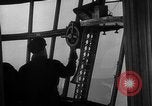
German airships Hindenburg and Graf Zeppelin I in flight over Germany.
German airship Hindenburg in flight over a city in Germany. Crewmen in the cockpit of the airship. It flies over a German city on the banks of the Danube River. The dining room of the Hindenburg. The German airship Graf Zeppelin I in flight. The tomb of Von Hindenburg. Crewmen inspect motor mounts on the Hindenburg. The Graf Zeppelin I in flight in the background. People eat and talk in the dining room of the Hindenburg. The Olympic stadium in Berlin, Germany (same year the Olympics were hosted there in 1936). People look out of the windows of the Hindenburg. Urban topography in the background. View of the Brandenburg Gate. The Hindenburg and the Graf Zeppelin I in flight in the background. An officer of the Hindenburg talks over a telephone in the control station. The famous Cologne Cathedral in the foreground. Several men wearing chefs' clothing look up at the sky and wave. A structural steel bridge in the foreground.
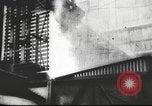
Men work in an armament and munitions factory in Germany during World War II.
A munition and armament factory in Germany, early in World War II, as Germany pursued aggressive remilitarization. Interior of the war materiel factory. Men work to produce war equipment and ammunition. The forging and shaping of iron artillery pieces or gun barrel and forging tools and lathes at work. German Men monitor the production process in the arms factory. A stack of artillery shells.
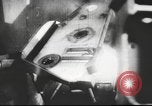
German workers producing large gun barrels in an arms factory in Germany during World War II.
A munitions and armament factory in Germany during World War II. Interior of the factory. Men work to produce war equipment and materiel. The production of gun barrels is seen, for large land based guns and artillery or for naval warship guns. Forging, shaping, and cutting tools at work during military buildup and re-militarization of Germany.

Manufacture of rifle barrels, gun stocks, and gun sights at war equipment arms factory in Germany during World War II.
Interior of a war materiel factory in Germany early in World War 2. Men work to produce war equipment, including rifles. Men on an assembly line producing German rifles. Scenes showing new rifle stocks and rifle barrels being assembled. A man inspects a gun barrel and gun sight. Scenes of German men working to produce war materiel during Germany's remilitarization.
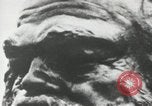
Images pertaining to advance of communism during 20th century, especially in East Germany
Statue of Karl Marx on his grave stone in Highgate Cemetery, London. A picture of Karl Marx. Scenes in Russia around the time of the Russian Revolution circa 1917 and creation of the Soviet Union. Soviet soldiers walking slowly in loose formation. Bolsheviks standing with a large banner. Images spanning many years thereafter: Damaged shops on a street. "One way" street signs in several languages. Large gathering of people carrying signs reading: "Frieden" (Peace, in German). A sign reading: "HALT, Landesgrenze" marking a German provincial boundary. A sign in German, designating the customs border at Furth im Wald, Bavaria ("Zollgrenz-Bezirk, Furth i.Wald"). East German border guards setting obstacles and sentry paths at barbed wire barriers (constituting the Berlin Wall, early on). Picture of Günter Litfin, a twenty-four-year-old tailor, who swam across the Spree Canal to West Germany on 24 August 1961. View of him being fatally shot from across the border, by East German guards, as he is being pulled into West Germany (the first such fatality at the East West German border). Animated map of the world with label references to Berlin,1961; Havana, 1959; Budapest, 1956; Coyoacan, 1940; and Kronstadt, 1921.
CRITICALPAST.COM: About Us | Contact Us | FAQs - How to Order | License Agreement | My Account | My Lightboxes | Shopping Cart | Advanced Search | Featured Collections | Website Terms & Conditions | Privacy Policy ©2026 CriticalPast LLC.
License Agreement |
Terms & Conditions |
Privacy Policy
©2026 CriticalPast LLC.