


 Francais
 Deutsch
 Italiano

Refine Your Search
Leipzig Germany 1945 stock footage and images
- Showing 349 to 354 of 10470 results more
 Hide
Color Sound
Gun crew operates 5" gun on shipboard and cargo ships underway off the shore of Iwo Jima, Japan during World War II.
Invasion fleet off the shore of Iwo Jima during the Battle of Iwo Jima of World War II. United States gun crew operates 5" gun on shipboard. Evening scenes: AK(cargo ships) underway. Rigging of USS Bayfield in the foreground. On January 29, 1945, General convoy of AKs (Cargo Ships) in column while underway at sea.
Violent explosions and fire fighting as Japanese bombs hit USS Franklin (CV-13) in Pacific Ocean during World War II.
Opening Slate reads: 19 March 1945, Enemy bombs hit (pictures made shortly afterwards shooting aft from forward deck). It refers to Japanese bombs striking the American Aircraft Carrier USS Franklin (CV-13). Heavy billowing smoke obscures the view for a moment. Then sailors are seen on the flight deck of the Franklin fighting a fire with hoses. More fire breaks out and smoke billows from the deck. Fire fighters continue efforts with hoses. New fire breaks out near the edge of the deck opposite the ship's island superstructure. View from other direction shows sailors all over the deck near the island trying to contain the fire. A slate appears reading: A series of violent explosions begin (made from USS Hickok - DD-673). This refers to filming from the USS Hickok. The USS Franklin is seen consumed by fire and covered by dense black smoke rising high into the sky. The smoke turns more white. A new view from the Hickok shows fire and smoke coming from the area of the carrier's island and blowing aft. A different view shows both white and dense black smoke enveloping the Franklin. Next, firefighters are seen again, on the Franklin's flight deck, forward of the island, continuing to battle the fires that see concentrated amidship. Slate reads: USS Miller alongside (refers to the destroyer, USS Miller, DD-535).View of the USS Miller close-by. Another view of sailors fighting the fire on the Franklin's flight deck. Brief view, from a parapet on the island, shows smoke. Also seen are water intakes stretched out from the ship, presumably providing water for firefighting. Back on the Franklin's flight deck, firefighters work against a backdrop of white smoke. a closeup shows portions of the flight deck broken and tilted into the hangar deck. More views of sailors on deck, forward of the island, fighting the fires. Glimpse of hangar deck below, where large section of flight deck has fallen. Firefighters with hoses working there.
African American WACS of the 6888th Central Postal Directory Battalion march in formation after arrival in Birmingham England.
African American women soldiers of the 6888th Central Postal Directory Battalion, nicknamed “Six Triple Eight", Women's Army Corps (WACS), march in formation on February 15, 1945, during World War 2. Location is Birmingham, England, United Kingdom, at the time of the unit's arrival in Birmingham. A military band of male soldiers precedes the group of marching WACS. The long column of African American WACS, marching 4 deep, is led by commanding officer Major Charity Adams. Close up views of the women marching. WACS in front of the unit carry the American flag in the procession.
African-American WACS pass in review before Major Charity Adams and General John C H Lee during World War II.
During World War 2, African American women soldiers of the Women's Army Corps (WACS) stand in formation at a parade ground in Birmingham, England, United Kingdom, during a formal military review on February 15, 1945. The women are from the 6888th Central Postal Directory Battalion, nicknamed “Six Triple Eight, which had just arrived in Birmingham. The WACS' commanding officer, Major Charity Adams, stands beside General John C.H. Lee. The African-American female soldiers of the WACS march in a column, eight deep, passing by General John CH Lee and Major Charity Adams, who salute the soldiers. Other male officers stand on the review stand behind officers Lee and Adams. Note: Major Charity Adams (Charity Edna Adams; later Charity Adams Earley) was the first African-American woman officer in the WACS, and, at the end of the war, then Lieutenant Colonel Adams was the highest ranking African-American woman in the United States military.
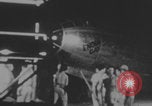
Enola Gay mission to drop “Little Boy” atomic bomb over Hiroshima, Japan (World War 2)
Enola Gay atomic bomb mission over Hiroshima, Japan during World War 2. The Enola Gay, a Boeing B-29 Superfortress bomber, prepares to leave for the Hiroshima mission. Army Armed Forces maintenance men and Enola Gay crew prepare the Enola Gay in Tinian, Northern Mariana Islands, checking their watches as the glance at the horizon. Maintenance men check bomb bay doors before closing. Pilot Colonel Paul Tibbets looks out of cockpit window of Enola Gay. Nose art of Enola Gay is seen. Close up of controls with hand show "starter" and "engine primer." Enola Gay engine starts and one of it propellers turns. The Enola Gay takes off from North Field, in the Northern Mariana Islands. Point of view through B-29 cockpit window as plane speeds down runway. Motion picture cameraman films the take off. The Enola Gay seen overhead as it leaves for Japan. Aerial View of Iwo Jima Island in Japan. The Enola Gay begins slow climb to bombing altitude over Iwo Jima. Crew member, possibly Tibbets, uses a pair of binoculars. Aerial view of Hiroshima. Enola Gay crew check instruments last time before dropping. The Enola Gay begins its bomb run. Crew bombardier turning a dial on a bomb site. View of Enola Gay with bomb bay doors open. Moving gauge pointer as bomb is dropped and seen exiting bomb bay. The Enola Gay banks away from Hiroshima at high speed. Aerial view in color of mushroom cloud forming over Hiroshima after the atomic bomb detonates in the city. (This actually shows the Nagasaki bomb blast from August 9, 1945, not the Hiroshima blast, despite the statements of the narrator in this edited film). Gigantic mushroom cloud from atomic bombing.
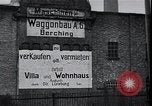
Life in Germany before, during, and after World War 2, including rise of Nazi party and intolerance in Germany
Unrest in Germany in 1930's during crisis of unemployment and inflation that had followed after World War I. A closed and boarded-up German factory. Two barefooted, jobless German men sleep in a park. During Great Depression in the United States, a weary woman is seen walking through an alley and looking in garbage cans. Sign for Los Angeles California Leather Company seen on building behind her. Children play in streets of a slum area. In Germany, scene of boys in training in Hitler Youth and carrying shovels, then carrying rifles and learning low crawling and military attack techniques. German farmers plowing on farms. Several night scenes including Nazis and brownshirts on the march, burning of books. Secret police or Gestapo and soldiers escort a church priest or clergy out of a church. During time of rising anti-Jewish sentiment in Nazi-led Germany, scenes of abuse and Gestapo arrests of some German citizens such as Jewish people, suspected Communists, political foes, and others critical of the Nazi party. A group of people attack and beat Jewish people in streets. A parade by the Wehrmacht German troops. Rearmament of Germany in 1930's. Scenes from busy German munitions factories. A Junkers Stuka aircraft factory filled with planes being built. A German artillery factory. German Luftwaffe and Panzer attack. German tanks roll over landscape. Scenes at end of war of burning German cities. Women run through bomb-wrecked streets of devastated Berlin during an aerial bombing raid by Allied aircraft. One woman falls as she runs. A woman and children race for the doors of a bomb shelter in Germany. The bomb wrecked streets of Berlin heaped with rubble and wreckage. Elderly German man walks through ruins. Small locomotive train running carrying cars of cleared rubble. German civilian dig potatoes in gardens. German women stand atop a collapsed building pile and clear rubble with shovels. German man waters a newly planted garden with empty shells of wrecked buildings in background. Newspapers produced by M.G. seen in newspaper printing press and rolling off presses. Binding of booklets and magazines from a German printing press. Sculptured bust of Goethe superimposed over books written by Goethe and Schiller. A montage shows in contrast the peaceful life in Germany before war, and scenes again of war, with alternating, juxtaposed scenes: German police officer escorts children across a street, book burning by Nazis, Gestapo violent arrest of a German citizen who is being pushed and hauled away. A German football (soccer) match in a stadium. Cook serves food to a man. A man in a concentration camp tips a bowl to his mouth. German children playing in a pool. Then juxtaposed scene with German women and children racing for a shelter during an air raid in World War 2. Scenes of bomb explosions. A peaceful waterfall.
CRITICALPAST.COM: About Us | Contact Us | FAQs - How to Order | License Agreement | My Account | My Lightboxes | Shopping Cart | Advanced Search | Featured Collections | Website Terms & Conditions | Privacy Policy ©2026 CriticalPast LLC.
License Agreement |
Terms & Conditions |
Privacy Policy
©2026 CriticalPast LLC.