


 Francais
 Deutsch
 Italiano

Refine Your Search
Leipzig Germany 1945 stock footage and images
- Showing 433 to 438 of 10470 results more
 Hide
Color Sound
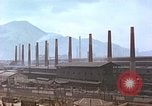
Burned out sections of Japan Iron and Steel Works at Kitakyushu, Kyushu, Japan
Iron and Steel Works at Yawata in Japan (Yawata Steel Works). A view at the end of the Japan Iron and Steel Works. Open hearth, rolling mills and coke ovens. Southern sections of the plant as seen from the roof of the Muwata Grade School. Burned out sections of Yawata as seen from the roof of the school. This area lies between a post office and the south end of the plant. It includes the areas Higaichi, Machi, Okadamachi and Hishimachi. This view shows the results of incendiary attack of August 8, 1945. The coke plant and by-products installations of Japan Iron and Steel Works. The southwest corner of the plant. Views of Tobata Power Plant. Aircraft revetments around the Japanese Naval Air Base in Omura. (World War II period).
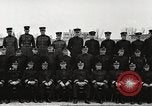
Naval officers photographed at The Naval Operating Base, Hampton Roads, Virginia in 1925.
The Naval Operating Base, Hampton Roads, in 1925 (re-designated "U.S. Naval Station Norfolk," in 1945). Opening scene shows Senior Naval officers (mostly captains plus a couple of rear admirals) seated in front row, and two rows of others officers standing behind them. At one point, they all remove their caps. Behind them is a concrete wall. But tops of some some buildings can be seen behind in the background. Closeup of a seated young rear admiral flanked by captains. In change of scene, all the officers are seen standing at attention, side-by-side on a gravel waterfront area, with a river and numerous buildings on the opposite shore visible in background. The camera pans across the assembled officers. Next, officers are seen on the waterfront, marching in white hats and carrying swords. (In these scenes, the motion is too fast, due to lack of compensation for low hand cranking speed of source camera.) The officers stop and stand in formation, and then march away.
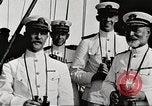
Chief of Naval Operation, Vice Admiral Edward W. Eberle at The Naval Operating Base, Hampton Roads, Virginia in 1925.
Vice Admiral Edward W. Eberle at Naval Operating Base, Hampton Roads in 1925. (The base was re-designated "U.S. Naval Station Norfolk," in 1945). Opening scene shows Admiral Eberle, Chief of Naval Operation, standing on deck of a ship with a captain, a Commander, and a Lieutenant Commander. They are pointing and peering through binoculars at objects (likely aircraft) passing overhead. Next, a Navy launch is seen entering a channel and moving toward the camera. It arrives at a dock is made secure by sailors. Vice Admiral Eberle then steps to the dock, followed by a Captain, a Commander, and several other naval officers, who line up on the dock They exchange salutes with the Admiral, who then ascends stairs followed by his retinue. The last scene is reconstituted and re-filmed. This time, naval staff officers are lined up beside the launch. They salute as Admiral Eberle steps from the launch, followed only by a staff Lieutenant Commander. The admiral then proceeds up steps, followed by officers on his staff. Another scene shows Admiral Eberle, standing on the dock with senior members of his staff behind him.
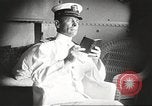
Scenes of Naval Operating Base, Hampton Roads, Virginia in 1925
Naval Operating Base, Hampton Roads, Virginia (renamed U.S. Naval Station Norfolk, in 1945 ). U.S. Navy Commander seated in a chair aboard a ship. A large group of civilian businessmen and officials pose on board a ship with several American Navy officers and one British Naval officer, for a photograph. Some of them stand and some are seated. One civilian stands in front of the group and poses with an American Navy Captain. Change of scene shows Admiral Way on the Navy Base, containing mansions and other structures from the 1907 Jamestown Exposition. It is a very windy day and several civilians are seen on a sidewalk and entering a large building on Admiral Way. Numerous Navy personnel in uniform are seen in the area, including a number of Naval officers entering that building and others heading there along a sidewalk. Residential mansions are seen in the vicinity along Admiral Way.
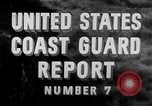
Worldwide operations of United States Coast Guard in World War 2
Overseas activities of United States Coast Guard in World War II. U.S. Landing Craft Infantry, LCI(L) 617, part of LCI Flotilla 22 in World War 2. She is seen underway in rough waters of the Pacific ocean during 1945. Coast Guardsman ordered to Battle stations. A Coast Guardsman observes approaching enemy aircraft through binoculars. Coast guard gunner fires Antiaircraft guns using foot trigger. Enemy aircraft crashes in ocean. A Coast Guardsman signals using semaphore flags. Beachhead supply operations. Coast Guard Picket Boat, CG-42022, seen patrolling around U.S. transport ships in a Persian port, while they carry lend lease supplies to the Soviet Union. Coast Guard combat patrol in jungle using canines (dogs). The Cactus (A) Class 180 foot buoy tender, USCGC Tupelo placing a buoy at sea. Releasing a weather balloon. A Coast Guard wooden 83 foot cutter ("83 footer"). Loading a Coast Guard B-24 aircraft on Guam. The plane takes off. Invasion task force of U.S. warships underway. Coast Guard crews at various duty stations aboard their ships during the war. The former luxury ocean liner, SS Manhattan underway, her decks crowded with troops, following her conversion into the U.S.Coast Guard-manned USS Wakefield (AP-21). U.S. Navy attack transport USS Arthur Middleton (APA-25) at sea in the Pacific. Coast Guard operating transport ships unloading cargo for Allied invasion forces and running inter-island shipping service in the Pacific, during World War II.Landing Ship Tank (LST-788) arriving at the beach next to Landing Ship Medium, LSM-242, on Iwo Jima. A Landing Vehicle Tracked (LVT) being driven off LST-760. USS LCI(L)-87, Flagship of LCI Flotilla 10. Her Captain, M. E. Imlay, USCG, is seen on her bridge, before departing from England for the Normandy invasion. U.S. Landing Craft Infantry, LCI(L)-668 at beach and troops wading ashore.

Soldiers of the British Army South Lancashire Regiment patrol Jerusalem during marshal law.
Arab man walking with city of Jerusalem in background behind him. British army soldiers drive GMC OTTER Light Reconnaissance Cars next to the Tower of David (Jerusalem citadel). They are driving on Highway 60, also known as the Talpiot–Atarot Axis, also known as "Road 1." Sign that reads “NO ENTRY." Residents of Palestine, some wearing European clothing, others in traditional Arab attire, wait behind a barbed wire checkpoint. British Army soldiers of the South Lancashire Regiment check credentials and admit entry to a Jewish women. A South Lancashire Regiment soldier frisks an Arab man who has his hands raised. Soldiers talk to the driver of a 1945 Plymouth Special Deluxe sedan (one of only 770 made) that pulls up behind barbed wire. British soldier with machine gun behind sandbags and barbed wire. Machine gun pointing behind wall of sandbags. Silhouette of a soldier and barbed wires. Point of view from inside sand bag machine gun position looking out to city. Silhouettes of solidier and of a man putting his hands up.
CRITICALPAST.COM: About Us | Contact Us | FAQs - How to Order | License Agreement | My Account | My Lightboxes | Shopping Cart | Advanced Search | Featured Collections | Website Terms & Conditions | Privacy Policy ©2026 CriticalPast LLC.
License Agreement |
Terms & Conditions |
Privacy Policy
©2026 CriticalPast LLC.