


 Francais
 Deutsch
 Italiano

Refine Your Search
Lenglern Germany 1945 stock footage and images
- Showing 6889 to 6894 of 10470 results more
 Hide
Color Sound
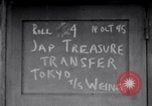
U.S. Army convoy passes by a road and Japanese treasure unloaded at a warehouse in Tokyo, Japan.
U.S. Army tank followed by a truck convoy passes by a road in Japan. Workers unload Japanese treasure (silver and gold bars) at a warehouse. U.S. Army soldier stands outside the warehouse and supervises the unloading operation. (World War II period).
Workers handle Japanese treasure under supervision of U.S. soldier at a warehouse in Tokyo, Japan.
Workers handle Japanese treasure at a warehouse in Tokyo, Japan. Workers and U.S. troops at the warehouse. U.S. troops supervise the operation. (World War II period).

Emperor Hirohito visits the grave of Emperor Taisho to report the surrender of Japan at the end of World War 2
Emperor Hirohito visits the grave of his father (Emperor Taisho) following the surrender of Japan at the end of World War 2. View of Mt. Fuji in Japan. Torii gate at the Musashi Imperial Graveyard (1833 Nagabusamachi, Hachioji, Tokyo 193-0824, Japan) in Nagabusa-machi, Hachiōji, Tokyo, Japan. Shinto priests waiting for Emperor Hirohito’s arrival. Emperor Hirohito, wearing a Western semi-civilian court dress, alights from his car and salutes. Shinto priests bow to Emperor Hirohito. Emperor Hirohito and other Japanese officials descend a set of stone stairs. Emperor Hirohito, now posthumously known as the Shōwa Emperor, leaves the Musashi Imperial Graveyard by car.
P-38 planes complete mission and land at base, including crash landing
P-38 planes over German targets. U.S. Pilots destroy enemy targets by firing aircraft machine guns. A P-38 plane pilot contacts U.S. Air Force Base for crash landing. P-38 plane hits the surface and burns. Other P-38 plane contacts for emergency landing. Ground officers observe the burned P-38 plane. (World War II period).
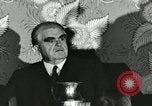
U.S. Labor leader, John L. Lewis, President of United Mine Workers of America, at official function
John L. Lewis, President of the United Mine Workers of America, at an official function. Mr. Lewis listens as he is being introduced by an unseen person.
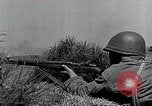
Role of American women in the military; WACS, nurses, and other military roles for women in World War 1 and World War 2
The role of women in the armed forces in the United States. A U.S. Army sniper fires a 1903 Springfield rifle on the Korean front during the Korean War. A woman in the Women's Army Corps (WAC) inspecting such a rifle in the U.S. Several Patton Tanks moving up a hilly road in Korean War. A WAC testing the turret of a Patton tank. U.S. Army women at desks as they work with Army men in an office. Picture depicts Molly Pitcher, wife of a fallen U.S. Revolutionary War artilleryman. Depiction of George Washington at desk. Depiction of Clara Barton, an American nurse with a wounded soldier. Reenactment of Clara Barton working with another women. A man holds the flag of the American red cross. Actual footage of a Wright Brothers aircraft in flight. Women in long dresses pushing an early model of car. A group of American soldiers in World War I running on a battlefield.. U.S. Army troops wearing gas masks and firing rifles from trench in World War I. American women war production workers assembling belts of machine gun bullets during World War I in a munitions factory in the United States. A nurse tending a wounded soldier. A woman nurse helping place a wounded soldiers into an ambulance in Europe, in World War I. Nurses in an operating theater in a hospital during World War I. Women march in victory parade at end of World War I. Women's suffrage demonstration by suffragists (sometimes called suffragettes) in front of the White House and then women and men entering a polling place to vote around time of of 19th amendment giving women the right to vote in 1920. Aviatrix Amelia Earhart climbing down from an airplane. Swimmer Gertrude Ederle on an award stand. U.S. Navy Vought SB2U-2 planes in flight as they drop bombs. Scene of Pearl Harbor attack by Japanese during World War 2. Army nurses look out from deck of ship in World War II. Soldiers fire artillery. View of mountains and scenes of combat on islands in the Pacific during WWII. General Mark Clark awards nurse Silver Star medal. Repatriated Army nurses, who were prisoners, are loaded onto an aircraft by means of a fork lift. In 1942, President Franklin D. Roosevelt signs legislation establishing the Women's Army Auxiliary Corps (WAAC). Secretary of State George Marshall and others witness the signing. Depiction of Godess Athena. Women volunteering for WAAC move in a line carrying bags. American women in military uniform marching. WAAC volunteers being processed. Women receive physical exams and receive inoculations. WAAC personnel being trained: working on X rays, in medical pharmacy laboratories, food service, and radio work. Women on board warships in World War 2.
CRITICALPAST.COM: About Us | Contact Us | FAQs - How to Order | License Agreement | My Account | My Lightboxes | Shopping Cart | Advanced Search | Featured Collections | Website Terms & Conditions | Privacy Policy ©2026 CriticalPast LLC.
License Agreement |
Terms & Conditions |
Privacy Policy
©2026 CriticalPast LLC.