


 Francais
 Deutsch
 Italiano
Refine Your Search
Lenglern Germany 1945 stock footage and images
- Showing 8893 to 8898 of 10461 results more
more Hide
Hide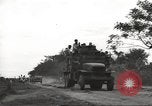
U.S. POWs, rescued from a Japanese prison camp, en route to American lines and an evacuation hospital in Nueva Ecija, Philippines (WW2)
United States prisoners of war, rescued from Cabanatuan Prison Camp by 6th Battalion Rangers, Alamo Scouts, and Filipino guerrillas in Luzon, Philippines, during World War II. The liberated prisoners aboard trucks and Jeeps en route to U.S. lines and the 92nd Evacuation Hospital. Trees and houses along the sides of a road in Guimba, Nueva Ecija. Soldiers and medics seated along with the former prisoners.
U.S. Army Brigadier General Benjamin Davis arrives in Liege, Belgium for an inspection tour.
U.S. Army Brigadier General Benjamin Davis in Liege, Belgium during World War II. Brigadier General Davis arrives in Liege in a car. He inspects a quarter master (QM) depot and engineering installations. He talks to African American troops. A sign board on the top of a building reads 'Enlisted Men Mess'. The Brigadier General inspects living quarters, barracks and mess halls.
U.S. soldiers load white snow capes onto trucks in Thionville, France.
Activities of U.S. soldiers in Thionville, France during World War II. Buildings in the snow covered area. Men unload boxes from a truck and carry them to a building. They carry white snow capes from the building and load them into trucks.
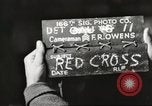
French Red Cross workers make a Red Cross insignia and cut German flags in Thionville, France.
Activities of Red Cross workers in Thionville, France during World War II. French Red Cross workers make a large Red Cross insignia for U.S. medics. They use a sewing machine for making the insignia. Women cut German flags.
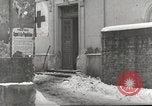
U.S. officers and a French woman collect vests at a Red Cross center in Thionville, France.
U.S. officers at a Red Cross center in Thionville, France during World War II. Officers seated in a jeep outside a Red Cross building in a snow covered area. A French woman comes out of the building carrying vests in hands. She sits in the jeep and the jeep leaves the area. Men and women walking in the snow covered area.
A man interviews two prisoners of war which were liberated from a Japanese prison camp in the Philippines.
Liberated American prisoners of war in the Philippines during World War II. Patients lying on hospital beds. A nurse gives medicines to the patients. A man interviews two of the prisoners of war from the Cabanatuan camp. One of the soldiers talks about the Bataan Death March. He states that they marched for three days and three nights. Food and water was not given to them. They were transported to prison camps in boxcars and some of the prisoners died and some were killed. Sergeant Donald Smith also talks about the conditions in the prison camps and treatment received from the Japanese.
CRITICALPAST.COM: About Us | Contact Us | FAQs - How to Order | License Agreement | My Account | My Lightboxes | Shopping Cart | Advanced Search | Featured Collections | Website Terms & Conditions | Privacy Policy ©2026 CriticalPast LLC.
License Agreement |
Terms & Conditions |
Privacy Policy
©2026 CriticalPast LLC.