


 Francais
 Deutsch
 Italiano
Refine Your Search
Lenglern Germany 1945 stock footage and images
- Showing 91 to 96 of 10471 results more
more Hide
Hide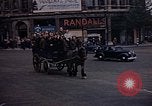
Victory in Europe: People celebrate in London, England as Germans surrender in World War II.
Germany surrenders in World War II. British soldiers and citizens loaded in a horse drawn carriage ride down a street in London and wave during celebrations on news of German surrender that day. A man selling the May 7, 1945 London newspaper "The Evening News" with headline "Germany Surrenders". A number of men and women buy newspapers from him. Allied soldiers in a jeep with American flag on it. They shake hands. Men and women march down a road with a British flag as they celebrate Allied victory in Europe during World War II. They are also rolling a statue on a cart. Happy British citizens celebrate VE Day.

Bombed Berghof residence; German leaders surrender to Allies; stolen art collection retrieved after German defeat.
Ruins of Hitler's Berghof residence in Berchtesgaden after bombing by Allied forces near the end of World War 2 in Europe. Goering's stolen collection of paintings and art pieces taken from all over Europe. The stolen collection was hidden in air raid shelters and loaded on battle trains. View of U.S. soldiers retrieving the stolen works of art. Book 'Mein Kampf' written by Adolf Hitler in Landsberg prison. Portrait of Adolf Hitler with a Nazi symbol. German military officials including General Herman Gred Von Runstedt, Field Marshal Albert Kesselring, and Hermann Goering surrender to the American Army. Views of Hermann Göring after having been flown from Austria to U.S. Army headquarters in Augsburg, Germany on May 9, 1945, where he is seen handing over his handgun. Göring talking to U.S. 7th Army officials.
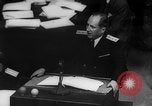
View of the Nazi Concentration Camps and its victims, and other atrocities committed by Nazi forces in World War 2.
Images and testimony related to the Nuremberg Trials held at the Palace of Justice in Nuremberg, Germany in October 1946. Flashbacks of a variety of Nazi crimes against humanity during the years of World War II. Reference to testimony of Kenaris and Hans Frank in describing Nazi policies and methods for exterminating Poles and others. Pictures recording the implementation and results of Nazi policies; atrocities and murder of victims in Ouradour Sur Glane in France, in Bande in Belgium, in the Catacombe of San Callisto in Italy and in Czechoslovakia. Nazi German soldiers seen leveling and destroying the town of Lidice in Czechoslovakia in 1942, after massacre of many residents, in retaliation for the assassination of SS Reich Protector Reinhard Heydrich. Corpses of the victims of the Nazi concentration camps, including Auschwitz, in 1945. Bones of humans in crematory ovens. Cramped starved women camp victims inside barracks. Stacks of luggage and suitcases of victims at a concentration camp, along with locks of hair, stacks of toothbrushes. Shaving cream brushes, shoes, clothing, and finally, piles of bones of camp victims. Testimony of Rudolf Franz Ferdinand Höss (sometimes spelled Höß or Hoess or Hess) describes concentration camps at Auschwitz in Poland. As scenes of victims in hospitals are shown, testimony of Rudolf Hoess is read, describing medical experiments include lowering the body temperature, injecting the body with poisons and infectious diseases and subjecting the body to high altitude pressure chambers. Shows pile of mutilated corpses.The "Arbeit Macht Frei" sign over the camp entrance of Auschwitz. Scenes of dead victims of Nazi brutality in the concentration camps.
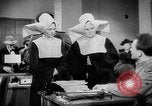
Reenactment of the activities at Russian occupation headquarters in German city at the end of World War II.
From a Russian feature film "Meeting on the Elbe" depicting East Meets West meeting of the American and Russian soldiers at the River Elbe in Germany on April 25 and April 26, 1945. The film is dubbed in Korean. Reenactment: The interiors of Russian occupation headquarters in a German city perhaps intended to be Torgau. An American officer talks to the Russian officer in the headquarters. Two nuns stand beside them and listen to the conversation. The American officer moves over and picks up the telephone and speaks over the telephone. The nuns and the Russian officer watch the American officer. The Russian officer sits down at the table and writes on a paper. The American officer leaves and the nuns bow to the officer. A woman in a bicycle approaches the American officer. The woman speaks to the officer. Other men and women move about in the headquarters. The American officer talks to a group of men. The officer talks to a couple of men. A Russian guard stands behind. The American officer outside a door to an office room.
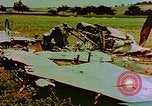
German farmers work in field around wreckage of American P-47 , a month after end of World War II in Europe
Wreckage of U.S. Air Forces P-47D-30, tail number 44-33495, of the 368th Fighter Group, 397th Fighter Squadron in a field, near Munnerstadt, Germany, a month after the end of World War 2, in Europe. Women work around the wreckage, turning hay. Street scene in a nearby small German village. Workers come home from fields. Buildings on either side of the street. Civilians move on an ox cart. Person carries hay in a wooden hand cart. Water running from faucet in the village square. (Reportedly, the pilot of the P-47 was William T. Wright, who was killed in the crash, on April 15, 1945.)
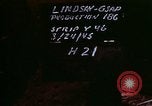
P-47 aircraft of the 365th Fighter Group strafe German cities during World War II.
Film opens with a slate reading: "Strip Y 46 3/24/45." This refers to Allied Advance Landing Ground, "Y-46 Aachen, Germany." The ensuing film shows numerous gun camera footage clips from U.S. Army Air Force P-47 aircraft of the 365th Fighter Group operating from Y-46 during 16 March through 13 April, 1945, near the end of World War 2. The clips show strafing attacks by the P-47s on German cities. Several of the final attacks seem to be hitting the same city located on a river.
CRITICALPAST.COM: About Us | Contact Us | FAQs - How to Order | License Agreement | My Account | My Lightboxes | Shopping Cart | Advanced Search | Featured Collections | Website Terms & Conditions | Privacy Policy ©2026 CriticalPast LLC.
License Agreement |
Terms & Conditions |
Privacy Policy
©2026 CriticalPast LLC.