


 Francais
 Deutsch
 Italiano

Refine Your Search
Lenglern Germany 1945 stock footage and images
- Showing 1147 to 1152 of 10471 results more
 Hide
Color Sound
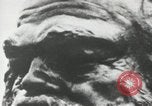
Images pertaining to advance of communism during 20th century, especially in East Germany
Statue of Karl Marx on his grave stone in Highgate Cemetery, London. A picture of Karl Marx. Scenes in Russia around the time of the Russian Revolution circa 1917 and creation of the Soviet Union. Soviet soldiers walking slowly in loose formation. Bolsheviks standing with a large banner. Images spanning many years thereafter: Damaged shops on a street. "One way" street signs in several languages. Large gathering of people carrying signs reading: "Frieden" (Peace, in German). A sign reading: "HALT, Landesgrenze" marking a German provincial boundary. A sign in German, designating the customs border at Furth im Wald, Bavaria ("Zollgrenz-Bezirk, Furth i.Wald"). East German border guards setting obstacles and sentry paths at barbed wire barriers (constituting the Berlin Wall, early on). Picture of Günter Litfin, a twenty-four-year-old tailor, who swam across the Spree Canal to West Germany on 24 August 1961. View of him being fatally shot from across the border, by East German guards, as he is being pulled into West Germany (the first such fatality at the East West German border). Animated map of the world with label references to Berlin,1961; Havana, 1959; Budapest, 1956; Coyoacan, 1940; and Kronstadt, 1921.

Groups of people visit a propaganda museum of Nazi ideology in Germany, early in World War II.
Propaganda museum of Nazi ideology in Germany, early in World War 2. A German sign on the National Trade building (Landesgewerbeamt) advertising the "Eternal People" exhibit. Close-up views of various exhibits in the museum. Some track German history, others track the German rulers, Aryan race, and ethnicity over time. A man observes a map in the museum. Groups of people visit the museum, including a group of school girls. Nazi ideology and German history explained by means of charts, pictures, models and exhibits. Some exhibits extol ideal German workers and how labor and national production leads to the power and health of the individual and the country. An anti-Jewish exhibit discusses Nazi German anti-Jew population policies and blood purity laws and emphasizes eugenics (from the Nuremberg Laws; seeds of the holocaust and Jewish persecution), and depicts a Jewish man beside a road intersection with one direction pointing to Germany and the other to Palestine. Children look with curiosity at the exhibits. Several paintings on the wall. Exhibit of movement of people from farms to cities and Nazi ideology that earlier Germans were consumers and not producers is demonstrated.

The course of major rivers of Germany and the area under German empires.
Changes in Germany's western border from 800 A.D to 1936 A.D. An animated map of Germany shows the course of major river systems in Europe including the Rhine, Or, the Po, the Elbe, the Seine, Schelde, Maas, the Garonne, Onau and the Loire. Charlemagne's empire and its division. German empires of Weftfrankifches, Mettel and Oft and the areas covered by these empires.

Various ancient empires, the western border, and course of rivers in Germany.
Changes in Germany's western border from 800 A.D to 1936 A.D. An animated map of Germany shows the Mittel reich in 925 A.D and the course of major rivers around the borders of the empire. Rivers may include the Rhine and the Saone. Area under Frank empire in 1200 A.D and 1273A.D . The borders of the empire extend. Freid empire and the area under it from 1446-1493 A.D . Major rivers in the region like the Rhine, the Elbe and the Saone. Hein Empire in 1547 A.D and the territory under its control.

People live under poor conditions in British occupied zone of Germany after World War II.
'A defeated people' shows the life of people in a British occupied zone of Germany after World War II. A map of Germany depicts regions occupied by different Allied governments. A damaged ship at a coast as a result of Allied bombings. A damaged bridge. Displaced German civilians milling about in a street. The displaced persons read messages and notices on a board as they look for their family members. Children and women along a street. Officials and a military officer discuss the plan to provide relief to the people and give direction to their lives. Electric poles are erected. Workers at the construction sites of various buildings. Buildings damaged during the war in Hamburg and other towns. Rubble spread on the ground. People live in poor conditions. Women cook, knit and fetch water.
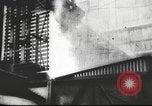
Men work in an armament and munitions factory in Germany during World War II.
A munition and armament factory in Germany, early in World War II, as Germany pursued aggressive remilitarization. Interior of the war materiel factory. Men work to produce war equipment and ammunition. The forging and shaping of iron artillery pieces or gun barrel and forging tools and lathes at work. German Men monitor the production process in the arms factory. A stack of artillery shells.
CRITICALPAST.COM: About Us | Contact Us | FAQs - How to Order | License Agreement | My Account | My Lightboxes | Shopping Cart | Advanced Search | Featured Collections | Website Terms & Conditions | Privacy Policy ©2026 CriticalPast LLC.
License Agreement |
Terms & Conditions |
Privacy Policy
©2026 CriticalPast LLC.