


 Francais
 Deutsch
 Italiano
Refine Your Search
Long Beach California USA 1960 stock footage and images
- Showing 8449 to 8454 of 27665 results more
more Hide
Hide
The discovery and production of penicillin and its first import to the United States
Scottish scientist Sir Alexander Fleming isolates antibiotic substance penicillin from the fungus at St Mary's Hospital in London, United Kingdom. A petri dish with penicillin. Articles on bacteriology, immunology and chemotherapy are published. Pharmacologist Howard Walter Florey extracts penicillin at Oxford University. In June 1941, tiny flask of penicillin brought to the United States. Chemists work and develop penicillin in refined form. Penicillin Production Factory. Penicillin is built in many forms. Penicillin is made in huge fermentation tanks and passed through many machines for purifying and refining. Quantities of penicillin reduced in gallons to recover it. It is concentrated in the laboratory. Water contained penicillin, evaporated at laboratory. Penicillin transferred to sterilized vials and packed in boxes. Penicillin prepared for use.
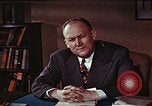
Basic principles and applications of penicillin therapy in United States.
Doctor Harrison Flippin, MD, Assistant Professor of Graduate School talks about three basic principles of penicillin therapy: The organism must be susceptible to penicillin, the organism must be reached by penicillin in adequate concentration and the organism must be eradicated or suppressed. Procedure of penicillin therapy in laboratory: penicillin in test tube and slide test of it. Scenes of Gram positive bacteria and Gram negative bacteria. A patient suffers from gangrene. Doctor and nurse examine the Pneumonia patient. Doctor and nurse empty the injection of blood in vial for study. Nurse prepares for giving injection and treatment. Nurse injects infected region of patient.
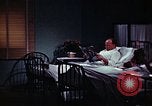
Penicillin in medicines and surgery in United States.
Nurse enters a patient room. She gives food to patient. Patient eats food. Penicillin in test tubes. After taking treatment of penicillin therapy, patient feels better and reads newspaper. Doctors examines patient, whose general condition does not improve within two days. Doctor reads the reports of patient. He checks with other doctors and nurse whether surgery is required or not. Chart explains concentration of penicillin in blood with time.
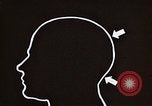
Administration of penicillin in serious infections, United States.
Human figure depicts penicillin given during meningitis condition. Chart explains administration of penicillin's effect during Pneumococcal Meningitis Type III, Acute Bacteremia Staphylococcus Aureus, Subacute Bacterial Endocarditis Streptococcus Viridans. In all serious infection, administration of penicillin should be continued for at least 48 hours, if signs of active infection are absent.
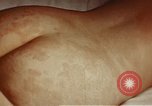
Adverse effects of penicillin in United States.
Common adverse drug reactions associated with use of the penicillin. Dermatitis on patient's body. Penicillin is common cause of severe allergic drug reactions.
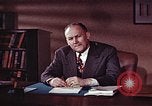
Doctor Harrison Flippin talks about penicillin therapy and its three basic principles in United States.
Doctor Harrison Flippin talks about new knowledge of penicillin therapy in a laboratory, and that no change should be made in anticipating penicillin therapy. He talks about three basic principles of penicillin: The organism must be susceptible to penicillin, the organism must be reached by penicillin in adequate concentration and the organism must be eradicated or suppressed.
CRITICALPAST.COM: About Us | Contact Us | FAQs - How to Order | License Agreement | My Account | My Lightboxes | Shopping Cart | Advanced Search | Featured Collections | Website Terms & Conditions | Privacy Policy ©2026 CriticalPast LLC.
License Agreement |
Terms & Conditions |
Privacy Policy
©2026 CriticalPast LLC.