


 Francais
 Deutsch
 Italiano
Refine Your Search
Long Beach California USA 1960 stock footage and images
- Showing 97 to 102 of 27665 results more
more Hide
Hide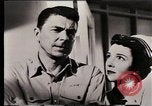
President Ronald Reagan's political career leading to election as California Governor, in the election of 1966
Film opens showing a still photograph of Ronald Reagan and Nancy Davis when they appeared together in the 1957 film, "Hellcats of the Navy." Although they were married since 1952, She was billed as Nancy Davis in the film. View of the newly wed Reagans cutting their wedding cake in 1952. Best Man, William Holden and his wife, Ardis Ankerson (stage name Brenda Marshall) share the moment with them. Closeup of Reagan and his new wife. Still photograph of Ronald Reagan appearing in the television series, "Death Valley Days." Next he is seen in a chair on the set of the TV series,"General Electric Theater," which he hosted from 1953 until 1962. He also toured General Electric plants to talk about the benefits of the free enterprise system. He is seen seated sharing a meal and posing with women employees of General Electric. Film shifts in time to the year 1932, when Reagan was first eligible to vote. Camera focuses on men's feet and they shuffle on a line at a soup kitchen. Views of men receiving food and drink. President Franklin D. Roosevelt is seen, seated in an open car chatting with people surrounding it. Roosevelt sits in the midst of men playing guitars and banjos. On inauguration day, March 4, 1933, he and his Vice President Henry Wallace are seen in the back of an open car. First Lady, Eleanor Roosevelt, sits just ahead of them. President Harry Truman being sworn in by Chief Justice of the United States Fred Vinson, January 20, 1949, for a second term as President. Views of the Republican National Convention in 1952 when the party chose Dwight D. Eisenhower as its candidate for President. He and his wife Mamie, at the podium together. Ronald Reagan addressing a large group. Supporters walking with Republican Presidential candidate, Richard Nixon, whom Reagan favored over Democrat John F. Kennedy in the 1960 national election. In 1962 Reagan officially became a Republican Party member, supported Barry Goldwater and their candidate for President at the Republican National Convention of 1964. Views of Goldwater at the convention and stepping from an airplane during his campaign. Still photo of Goldwater next to Reagan, and then of Reagan defending Goldwater in a nation-wide address. View of Reagan and wife Nancy, and son, Ronald, walking together across field at their ranch in California. They are surrounded by Republican Party leaders who ask him to run for Governor. He and Nancy laughing about it. Billboard advertising Reagan for Governor, and views of him on the campaign trail. Views of Governor Edmond Brown surrounded by his supporters during the campaign. Reagan speaking during the campaign, and then seen with Nancy when he won the gubernatorial election.
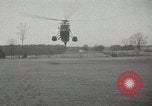
U.S. President Eisenhower, Presidential candidates and their wives and citizens casting votes at the election day in the U.S.
The 1960 Presidential Election in the United States. A helicopter landing on a field in Pennsylvania. U.S. President Dwight Eisenhower with officials disembarks from the helicopter. Photographers taking pictures of the President. The President shaking hands with a few officials. Cars parked outside a building. The Barlow Firemen's Hall building. President Eisenhower standing with the officials inside the hall. Photographers taking pictures. A clock showing 7 O' clock. The President takes a ballot paper from an officer at a polling station and goes inside an area separated by a curtain and casts his vote. The President puts the ballot paper in a ballot box. President's wife Mamie Eisenhower casting her vote in the voting booth. Japanese Ambassador to the U.S. and his wife at a polling booth in Maryland viewing polling procedures. A woman officer showing a voting machine to the dignitaries. Republican Presidential candidate Richard Nixon and his wife Pat Nixon cast their votes at a polling station in a town in California. They put ballot papers in a ballot box. Democratic Presidential candidate John F. Kennedy and his wife Jacqueline Kennedy casting their votes at a polling booth in Boston, Massachusetts. Several reporters taking pictures at the booth. Boards on buildings indicating a legal holiday on the election day. People entering a building to cast their votes. Burmese Ambassador to the U.S. at a polling booth in New York. View of Burmese officials. People in a queue at polling booths on the election day to cast votes. The U.S. flag and people at a polling booth.
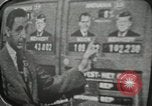
Presidential Election results show Kennedy in the lead and Nixon delivers a speech pledging his support to Kennedy in the U.S.
The 1960 Presidential Election in the United States. A television broadcast showing Presidential candidate John F. Kennedy's lead in the Presidential Election. A correspondent recording figures on a sheet of paper. The returns in a tabulating machine checked by Kennedy's press secretary. The interiors of the press headquarters of the Democratic Presidential candidate in Massachusetts. Men and women viewing a television. The television commentator announces that Republican Presidential Richard Nixon is about to make a statement. A clock showing 3.20 AM. Richard Nixon with his wife Pat Nixon in California, standing behind a podium in front of a tally board which shows Presidential Election summary. Nixon waves at the crowd. His speech being broad casted on television. Richard Nixon talks about the importance of how elections work in the United States, that they are hard fought, but once the decision is made we united behind the man who is elected, and he says that if Kennedy goes on to win the election and becomes the President of the United States then Kennedy will have his whole hearted support. The crowd cheering and applauding. Nixon waving at the crowd. Men and women going out of a building. Vacant chairs in the Republican Party headquarters. A tally board showing figures of the election results. A few men and women in the headquarters.
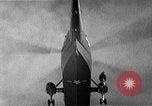
Events leading to Cuban Missile Crisis as United States military prepares for emergency in October 1962.
Events leading to the Cuban Missile Crisis of October 1962 when the United States and the Soviet Union confronted each other with nuclear destruction. A helicopter lands on the White House lawn in Washington DC. Scenes of Cuba and emergence of Castro in recent prior years. Beach views in Cuba. A military parade in an earlier time, with Cuban troops marching in front of the Monument to the Battleship Maine. Next scene shows desecration and destruction of the Battleship Maine Monument in Cuba.. A crowd of cheering Cuban people as Fidel Castro enters Havana, Cuba in 1959. Exterior view of United Nations building in New York City. Fidel Castro and Soviet Premier Nikita Khrushchev embrace during meeting in New York in September 1960. Deputy Premier of the Soviet Union Anastas Mikoyan deplanes and is greeted by Fidel Castro in Havana. A trade agreement between Russia and Cuba signed by Fidel Castro. Russian cargo ships en route to Havana. Cuban refugees in small boats. A map depicts proximity of Cuba to the U.S. U.S. surveillance aircraft heading for Cuba. A sign reads 'HQ. 4080 S W Intelligence Division'. Men examine reconnaissance photographs of Soviet nuclear missiles in Cuba. The photographs show transports and tents for fueling and maintenance. A sign reads 'Strategic Missile Facility GAM 77 Combined Systems'. U.S. missiles rolled out of hangar and readied for emergency. A U.S. Air Force B-52 bomber aircraft takes off from an airfield. U.S. Navy ships in the Atlantic Ocean. A U.S. submarine underway at sea.
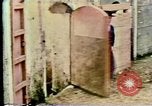
CIA and other U.S. sponsored experiments dealing with control of animals and people using various techniques during the 1960s and 70s.
In 1964, Professor Jose M.R. Delgado, of Yale University's School of Medicine, invented a device he called a stimoceiver. It was a chip that could alter the brain’s electrical impulses via radio signal. In tests sponsored by the U.S. Office of Naval Research, he implanted the device in the brain of a bull. This film opens shows that experiment and its results. A man in Cordova, Spain, opens a bull ring door to allow a fighting bull to enter. It charges a man holding a cape. Another man fires a dart to sedate the bull. Several men plant electrodes for a stimoceiver in the bull's brain. Next, the bull charges a man holding a cape, but pulls up short before hurting him. The bull chases the cape but never attacks the man as the man uses remote control to influence the animal's behavior. The bull charges around in a circle. Scene shifts to Dolley Madison Parkway (Route 123 in Mclean, Virginia, where sign points toward the CIA headquarters at Langley, Virginia. Narrator lists various techniques examined in the 60s and 70s, including brain surgery; psychosurgery; creation of amnesia; parapsychology; and manipulation of genes. Glimpse of some facilities at CIA headquarters. Change of scene to hearing of the Senate Subcommittee on Health and Scientific Research on September 20, 1977. Chaired by Senator Edward M. Kennedy, the Committee sought information about these activities by the CIA. Narrator says witnesses had agreed to limit information they would provide the Subcommittee. Former narcotics officer Charles Siragusa is seen on camera admitting that the man he reported to at the CIA wanted him not to say anything. Former CIA chemist Robert V. Lashbrook is seen testifying that he has no knowledge about the CIA running safe houses. (Narrator states he ran one of them and that a "surprise LSD experiment" was conducted there.) Scene shifts to a California tennis court, where Dr. Sidney Gottlieb is playing doubles tennis, Narrator says he oversaw those activities at the CIA but destroyed all his records when he retired in 1973. View of a letter he wrote at that time, in which he states he and his colleagues had been able to maintain contact with the leading edge of chemical and biological developments in the field of biological and chemical control of human behavior. View of Dr. Gottlieb entering an ante room where he testified before the Senate Subcommittee on Health and Scientific Research without being filmed because of what his lawyer claimed were health and cardiac problems. View of him on the tennis courts as Narrator states he declined ABC News requests for an interview. Change of scene to George White who retired from the CIA and lives in Stinson Beach, California. View of Stinson Beach from high overlooking vantage point. People jogging on the beach. Narrator states that White wrote to Dr. Gottlieb summing up his career saying, "it was fun fun fun, and where else could a red-blooded American boy lie, kill, and cheat, steal, deceive, rape, and pillage, with the sanction and blessing of the All Highest." Narrator strolls on lawn near the U.S. Capitol building and says it appears doubtful that mind control has been achieved. But work, that we don't know very much about, is continuing in this field. He asks how deeply are the Russians and other dictatorships into this. He notes that the CIA is reluctant to give information about it (such as Project MKUltra) and he questions where such a program fits in a democracy. He notes that one person working on these projects told him there are capable, conscientious, and very capable scientists working for our country, and "their work speaks for itself."
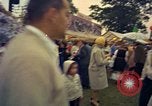
American people shopping and enjoying recreation and leisure time during the mid 1960's
Recreational activities of American people. Scenes of people in a fair, like a state fair or town fair with tents and vendors, and at a fruit and vegetable market. Three people play musical instruments on a street side. Boys in a school yard of a rural western or southwestern area jump and smile for the camera. A crowded street in America and faces of many Americans all together, of various races and ethnic groups. Scene at an amusement park as young people enjoy a spinning ride at the park and look at themselves in funny warped mirrors. Group of teenagers dancing. Cars racing. Men and women ballroom dancing. Drag racing cars pass by. Two older men dancing on a sidewalk. A middle aged man riding a small go cart. A band playing instruments. People pass by in convertible automobiles. Children hold hands and jump and run in a circle ring. Man driving a convertible car. Adult and child in a go cart, and elderly woman in a slower, covered motorized cart. Man in bar claps hands enjoying music of cowboy hat wearing guitar player nearby, with beer bottles atop table. Man drives unusual tractor equipment on road. A long yellow amphibious car boat hybrid vehicle with picture of an alligator painted on the side. Tractors racing. Three teenage girls in a convertible car on a city street, as seen from hood area of vehicle while driving. Ballet dancers in a studio dance and jump. Car a a checkpoint as guard inspects. Three children wave out of rear window of a red AMC Rambler classic station wagon vehicle. Various 1960's cars pass by on roads with overpasses also visible.
CRITICALPAST.COM: About Us | Contact Us | FAQs - How to Order | License Agreement | My Account | My Lightboxes | Shopping Cart | Advanced Search | Featured Collections | Website Terms & Conditions | Privacy Policy ©2026 CriticalPast LLC.
License Agreement |
Terms & Conditions |
Privacy Policy
©2026 CriticalPast LLC.