


 Francais
 Deutsch
 Italiano
Refine Your Search
Long Beach California USA 1960 stock footage and images
- Showing 2233 to 2238 of 27665 results more
more Hide
Hide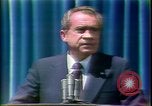
In San Clemente, California U.S. President Nixon talks about the existence of wiretaps during the Kennedy administration.
U.S. President Richard Nixon talks about the role of wiretaps in national security during a press conference in San Clemente, California. A journalist questions the President about his statement regarding the 10 additional wiretaps that could have been initiated by late U.S. Senator Robert F. Kennedy, which would have lead to the discovery of the Oswald plan and thus prevented U.S. President John F. Kennedy's assassination. The President responds that 10 more wiretaps could have found the conspiracy, if it was a conspiracy in the first place, then it would have been worth it. The President also talks about the high number of wiretaps in the National Security area during the Kennedy administration for national security purposes. The taps on news organizations, news people and civil rights leaders were all justified. The journalist then asks the President if he thought that President Kennedy's assassination threat mattered more to the national security wiretaps. The President does not agree with this and believes that the assassination was a breakdown in the President's security. He also states that he personally does not prefer to have secret service.
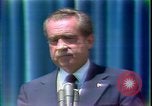
In San Clemente, California U.S. President Richard Nixon talks about the Watergate scandal and the Cambodian bombings.
U.S. President Richard Nixon talks about his officials' role in informing the prosecutors during the Watergate Scandal in San Clemente, California. A journalist seeks an explanation from the President as to why, after being informed by his officials about the White House staff's involvement in criminal activities, had he not given this information directly to the prosecutor rather than allowing his staff to conduct their own investigations. The President explains that he was under the impression that both the people responsible for communication with the prosecutor, White House Counsel John Wesley Dean and the President's Assistant for Domestic Affairs John Ehrlichman, were keeping the prosecutor informed. Another journalist asks the President whether he felt he owned an apology to American citizens with regard to the Cambodian bombing. The President states that he does not feel that way since the bombed area in Cambodia was occupied by North Vietnam Communists and was being used for attacking and killing American soldiers. The President felt that his countrymen would be thankful to him for taking the necessary action in order to save the lives of American soldiers. (Vietnam War period).

U.S. Army IX Corps soldiers fill and load gasoline cans into trucks and discuss maps in California.
U.S. Army IX Corps maneuvers at desert training centers in California. RHD Calipatria: A gasoline rail cargo in the background. Gasoline cans are filled and loaded into trucks. Blue CP: A IX Corps officer explains a maneuver map to the soldiers. Red CP: Soldiers camp in the desert. Soldiers discuss a map. (World War II period).
U.S. aircraft on a landing strip, soldiers refill gasoline cans at the IX corps camouflaged headquarters in California.
U.S. Army IX Corps combat operations at desert training centers in California. Landing strip and desert training center area. Four aircraft being parked on the strip. Camouflaged HQ (headquarters) behind the bushes and trees. Aircraft camouflaged with trees and bushes. Soldiers at work on the plane engine under camouflaged netting. Water tank truck leaves a water point. Soldiers refill portable gasoline cans. Crew refuels and starts a U.S. Army Medium Tank M-3 (M3 Lee) tank. A jeep pulls into the camouflaged HQ area. Two African American soldiers at work on a telephone pole. (World War II period).
Camouflaged guns and equipment, soldiers with bazookas while other load land mines at a IX Corps camp in California.
U.S. Army IX Corps maneuvers at desert training centers in California. Half-track mounted with 50 cal Machine Gun moves. A tank moves on. A soldier on truck and another soldier on ground. Many camouflaged tanks move ahead. Soldiers on the barbwire boarder. A soldier in a trench. Another soldier with a gun inside a foxhole. A soldier digging trench. Two soldier in trench aims Bazooka. Soldiers on the barbwire boarder. Anti tank mine field..Three soldiers unloading mines from a truck. 155 mm Howitzer camouflaged. Four soldiers take stance with 75 mm AA (anti aircraft) gun in preparation for firing. A soldier sees through binoculars. Some more soldiers near a camouflaged trench. A soldier making calculation on the map using drafting instruments. Another soldier sights through transit.. (World War II period).

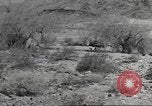
A P-38 flying at low level flies past a 75 mm antitank gun on a half-track at the IX Corps camp in California
Infantry moves across a wide expanse of a desert at U.S. Army IX Corps camp in California during World War II. A United States Army Air Force P-38 Lightning flying at low level across a maneuver area flies past an M3 GMC (Gun Motor Carriage) 75mm antitank gun on a half-track. The P-38 aircraft flies at low level in the open desert area.
CRITICALPAST.COM: About Us | Contact Us | FAQs - How to Order | License Agreement | My Account | My Lightboxes | Shopping Cart | Advanced Search | Featured Collections | Website Terms & Conditions | Privacy Policy ©2026 CriticalPast LLC.
License Agreement |
Terms & Conditions |
Privacy Policy
©2026 CriticalPast LLC.