


 Francais
 Deutsch
 Italiano
Refine Your Search
Long Beach California USA 1960 stock footage and images
- Showing 259 to 264 of 27665 results more
more Hide
Hide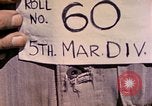
U.S. 5th Marines Division launches rockets and a M-4 tank burns in Iwo Jima, Japan during World War II.
United States 5th Marines Division in Iwo Jima, Japan during World War II. White Phosphorus shells and rocket burst as smoke rises. Enemy emplacement on fire. M-4 tank with a long stream of fire as it burns. Convoy in the harbor. A wrecked U.S. Navy PBY aircraft in the foreground. American convoy in the harbor. Marines along the beach in Iwo Jima.
Scenes from World War 1, and world events in the period between World War I and World War II.
Rail guns firing in World War 1. U.S. troops charging out of trenches. Allied gunners firing "French 75s" Allied twin-tailed biplane bombers. French Renault F17 tanks. Crowds in cities celebrate Armistice Day and end of World War I. Treaty of Versailles. Destruction of warships. Scenes of Paris. A pagoda in Japan. Temples in Siam, China, and Manchuria. Two Kayan women in Myanmar or Thailand perform a dance. Both Kayan women wear long brass coil neck rings. In the U.S., a boy hits a baseball and runs toward first base. Scenes of Japan invading Manchuria. Newspaper with headline: Henry Stimson denouncing Japan. U.S. Army troops dispel World War I veteran bonus marchers. Men lined up in bread line for unemployed during Great Depression. Brief shot of Gangsters in gun battle in an American city. Scenes of dust bowl in American with farmers and families heading West in caravans. Family standing by tent. Torchlight parade in Germany. Adolf Hitler standing with German President Hindenburg circa 1933. Adolf Hitler, Heinrich Himmler, and Victor Lutze, at 1934 Nazi Rally in Nuremberg. Italian Caproni bombers over Ethiopia. Ethiopian tribesmen and Haile Selassie. U.S.Neutrality Act. American youths with a 1930 Ford coupe. Scenes from Civil war in Spain. Spanish Rebel forces in ground combat with Nationalist forces. German and Italian aircraft participate in bombing Spanish Nationalist targets in Spanish Civil War. Spanish civilians flee bombing, tend to wounded and dead victims following bombings. Italian Savoia-Marchetti S.M.79 Sparviero bombers. Crowds running for shelter. Women and children victims of bombing, some crying and in shock. Spanish General Francisco Franco arrives by train in southern France to meet with Hitler. View of Gallup Poll forms, and findings, with Americans against entering European war and preferring neutrality. Japanese planes and warships attack China. Naval Chinese civilians run for cover; bodies of Chinese in trucks. Japanese freighters, Buenos Aires and Tatsuno Maru, in U.S. ports being loaded with scrap iron and metals. Hitler, Goering and other officers in 1938. Adolf Hitler, Neville Chamberlain, Edouard Daladier, Benito Mussolini, Count Ciano sign Munich Agreement. Hitler riding standing up in an open car during a rally in Germany. Elevated view of Los Angeles, then view of traffic on streets of Los Angeles California and newspapers being sold to pedestrians. View of faces of American citizens in a movie theater watching Confessions of a Nazi Spy. German-American Bund activities including outdoor rallies in the U.S. (Camp Siegfried in Yaphank, Long Island, New York, in 1937), and an indoor rally in New York City at Madison Square Garden in 1939. Emperor Hirohito reviewing World War 2 troops of Japan. Japanese steel production and arms production in Japanese factories. The Hokoku Maru Japanese ship being launched with fanfare from Tama Shipyards on July 5, 1939. Meeting of United States Military Affairs Committee of the U.S. House of Representatives in late 1939 to consider national defense matters. In meeting of Naval Affairs Committee, representative asks for increase of 25 percent in authorized naval tonnage.
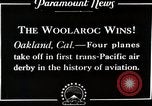
Scenes from the Dole Trans-Pacific Air Derby of 1927
Aerial view of airfield at Oakland, California. Pilot, Bennett Griffin, is seen with his wife and child, standing beside his Travel Air 5000 airplane,"Oklahoma." Registration number:"N-X 911" is stenciled on its tail. Pilot Martin Jensen, saying farewell to members of his family in front of his airplane,"Aloha" (that finished second in the race). Aircraft being readied for takeoff. Starter with checkered flag stands ready as nine men push the Travel Air 5000 "Oklahoma, the first to take off, forward into starting position, with engine running. Next scene shows starter holding stopwatch and flag. He signals start with the flag. Scene shifts to the second aircraft to take off, the Goddard Special metal monoplane, NX5074, "El Encanto." Camera tracks as the airplane has difficulty breaking ground, skipping several times in a long ground roll. Suddenly, it veers off the the right in a crab, wiping out its landing gear and breaking part of its right wing as it flips over in a crash leaving it tilted on its left wing facing backwards. Some smoke is seen but quickly disappears. Men and rescue personnel rush to the scene. (Reportedly the crew was unhurt.) Next, the prototype Lockheed Vega 1 monoplane, NX913, "Golden Eagle," is making smooth takeoff. Navigator Gordon Scott waves to spectators below as the plane climbs out. Aerial view of the plane in flight. The "Miss Doran," a Buhl CA-5 Air Sedan, number NC2915, is seen next on takeoff, past photographers and spectators, and then airborne. Next, the Breese-Wilde 5 Monoplane, NX914, "Aloha" is seen taking off. It climbs out very slowly. Navigator Paul Schluter waves as they depart. Pilot Arthur C. Goebel and navigator, Willian V. Davis Jr. are seen next by their plane "Woolaroc." A woman wishes them good luck, with a bouquet of flowers. Next, men are seen pushing the "Woolaroc" and it takes off and climbs. Pre-departure footage of Pilot Gordon Scott and navigator John W. Frost, with friends, near their airplane, "Golden Eagle." (Their aircraft vanished in the Pacific.) Pre-departure footage of pilot John Augie Pedlar, navigator Lieutenant Vilas R. Knopie, and their passenger, Mildred Doran, whose aircraft, "Miss Doran," was also lost in the Pacific.
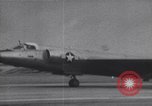
The Cuban Missile Crisis. The Limited Nuclear Test Ban Treaty.
October, 1962, U.S. Air Force U-2 reconnaissance aircraft, tail number 56-6707, of the Strategic Air Command (SAC) 4080th Strategic Reconnaissance Wing, lands at Laughlin Air Force Base, Texas. View of Photographic evidence, brought back by the U-2, showing Soviet missiles being set up in Cuba. President John F. kennedy broadcasts to the nation about the crisis on October 22, 1962, announcing measures being taken by the USA to address the situation. A B-58 Hustler bomber landing. Airmen removing camera from nose of a reconnaissance aircraft. Air Force Sergeant, photo interpreter, reading wet film in a base laboratory. U.S. Naval officers and sailors in Command Center viewing large wall map of the world. U.S. Air Force SAC B-52 bombers taking off. View of United Nations Headquarters building in New York City. On October 25, 1962, U.S. Ambassador to the UN, Adlai Stevenson, confronts Soviet Ambassador Valerian Alexandrovich Zorin about missiles in Cuba.He looks at Zorin, and says,"Don't wait for the translation, yes, or no." Zorin smiles as the room fills with laughter. He then responds. View of a Soviet ship bound for Cuba being monitored by a U.S. aircraft overhead. Pilot in cockpit of the aircraft. View from U.S. aircraft flying low past a Soviet ship. Crew in cockpit of the aircraft. Soviet ships turning away. Helicopter flying over sandy beach area of Hyannis Port, Massachusetts. The helicopter parked and Undersecretary of State, Averell Harriman, steps from the helicopter and is later seen with President Kennedy, and Secretary of State, Dean Rusk, at the President's Weekend White House. Harriman reports on the successful negotiation of a limited nuclear test ban treaty. Glimpse of Moscow. U.S. Secretary of State, Dean Rusk, Soviet Foreign Minister,Andrei Gromyko, and British Foreign secretary, Alexander Douglas-Home, are seen signing the document for their respective nations, August 5, 1963.
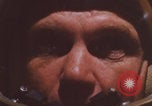
American Astronaut John Glenn launches on Mercury-Atlas 6 broadcast in Cape Canaveral, Florida
Face of John Glenn before launch of “Friendship 7”. Mercury-Atlas 6 officials talk on headset to begin countdown to launch the “Friendship 7”. A United States Marine Corp UH 34D helicopter flies. Mercury-Atlas 6 official wait for countdown. Mercury-Atlas 6 telemetry network officials at work at different stations all over world. Broadcast of Mercury Atlas launch. United States army personnel climbs into USA aircraft. NASA personnel operate Mercury-Atlas 6 controls. View of Mercury-Atlas 6 after service structure moved away. NASA official, wearing headphones, begins countdown. Face of John Glenn before launch, the voice of backup Mercury-Atlas 6 astronaut, Scott Carpenter, says “Godspeed John Glenn”. Launch of the Mercury-Atlas 6 spacecraft, “The Friendship 7”, with rocket thrust. Backup clock is started as John Glenn calmly sits inside the spacecraft launching to space. The Mercury-Atlas 6 in space flight. View of crowd of people watching the launch on the beach near Cape Canaveral. They cheer as the Mercury-Atlas 6 is successfully launched into space. View of the “Friendship 7” ascending.
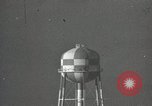
First powered flight of an X-15 Rocket Plane. Also scenes of several other X-15 powered flights.
X-15 first powered flight on Thursday, 17 September, 1959. (X-15 No. 2, tail number: 56-6671 with LR-11 engines. Scott Crossfield flew this mission at mach 2.11 and altitude 52,341 feet.) Scenes of several other X-15 powered flights are also shown. View of the water tower at Edwards Air Force Base, california. Overhead, NASA NB-52A, No. 003 and an F-100D chase plane, are seen at high altitude, with contrails behind them. The X-15, cradled under the B-52's right wing, drops clear, starts its rocket engines and begins its first independent powered flight, climbing rapidly away from the B-52. NASA camera tracks it, appearing as a moving white dot against the sky. The next sequences show later powered flights. View of NASA B-52 and three chase planes leaving contrails overhead. X-15 drops, its engines are running and falls behind the B-52, before accelerating rapidly, passing to its right, and continuing upward. Another scene shows brief glimpse of NASA B-52 overhead (no contrails). In final scene, X-15 is seen moving rapidly, leaving a long contrail behind it. Cloud then obscures the image somewhat.
CRITICALPAST.COM: About Us | Contact Us | FAQs - How to Order | License Agreement | My Account | My Lightboxes | Shopping Cart | Advanced Search | Featured Collections | Website Terms & Conditions | Privacy Policy ©2026 CriticalPast LLC.
License Agreement |
Terms & Conditions |
Privacy Policy
©2026 CriticalPast LLC.