


 Francais
 Deutsch
 Italiano
Refine Your Search
Long Beach California USA 1960 stock footage and images
- Showing 355 to 360 of 27665 results more
more Hide
Hide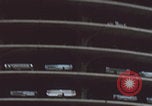
Assorted modern architecture and highways in the United States in the late 1960s
Cars are seen parked at the Marina City (300 N State St, Chicago, IL 60654, United States) in Chicago, Illinois, United States. A helicopter flying over New York City. Views of various New York City skyline buildings and skyscrapers, including 40 Wall Street or the Bank of Manhattan Trust Building, as seen from low aerial flight. Low aerial view of the John Ferraro Building (111 N. Hope Street, Los Angeles, CA 90012) in Los Angeles, California. Low aerial views of stacked highway interchanges and highway lanes in the United States.
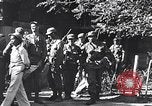
U.S. Rangers and Filipino guerrillas rescue Allied prisoners from Japanese prison camp in Philippines during World War II.
On January 30, 1945, 121 members of the 6th Ranger Battalion and 286 Filipino guerrillas are seen setting out on a 30 mile trek behind Japanese lines, to free Allied prisoners of war (POWs) and civilians from a Japanese camp near Cabanatuan City, in the Philippines, during World War 2. They stretch out in a long, informal column as they traverse low flat lands and ford a wide shallow river. The men carry weapons and supplies (some on their heads) as they move along, almost like a Safari. Scene shifts to rescued prisoner, Major Emil P. Reed, U.s. Army Medical Corps,26th Cavalry. He was the senior officer among prisoners at the Cabanatuan prison camp number 1. He recounts being told by the Japanese Commandant that commencing January 7th, they were free at their own risk, but also assured them they would not be molested by the Japanese if they stayed within their regular camp area. Sergeant Samuel E. Goldy, Signal Corps, also speaks a few words about that period when Japanese were departing. Next the camera records the Rangers and Filipino guerillas returning with the approximately 500 freed POWs. Some Filipino women and children watch them return. At one point, the cadre climb aboard army trucks and continue their journey in a convoy. The POWs climb down from their trucks at the 92nd Evacuation Hospital, in Guimba, Luzon. Some take pleasure is simply lying down on the grass at the site. Many gather around hospital staff handing out packages of treats, including cigarettes, candy and the like. A couple of them express pleasure as they smoke cigarettes. Two frail and injured are seen hobbling with canes. Some appear seriously malnourished. A group are seen trying on new clothes. A British prisoner, Sergeant Robert Bell, Manchester Regiment, British Army, speaks of his experience. He was taken prisoner in Singapore and sent to Thailand where he worked to build a railway for the Japanese. Many prisoners died there from disease and malnutrition. He was one of a small number who survived after being on a Japanese ship with other prisoners when it was sunk by American dive bombers. Sergeant Walter Ring, of San Roque, Luzon, is seated, relaxed on a chair, as he recounts his experiences. Two young Filipino boys sit on the grass at his feet. He reaches to one, whom he says is his son Louis and to the other, his son Sam. His captivity began on Bataan in 1942. Finally, after rest and rehabilitation, the former POWs are seen heading away from the battle fronts to be transported back to the U.S.A.
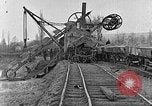
African American troops of the U.S. 501st Army Engineers, build port facilities at Brest, France, during World War I
Army Engineers of the American Expeditionary Forces (AEF) use a rail-mounted conveyer-type bucket dredge to deepen a channel for Allied ships on the Penfeld River at Brest, France, during World War 1. In the background, the Kerguillo mansion in the suburb Bohars, can be seen. The dreged spoils are being emptied into a string of open rail cars. Men work around the base of the dredge, loosening soil with long poles. Army engineers, including African American soldiers of the U.S. Army 501st Engineers work with French civilians to build wharfs on the Penfeld River. They stand with a rail car of concrete at the job site, and manually remove it when emptied. Construction supplies are piled up at the port, where 501st Engineer members are seen with other U.S. soldiers and French soldiers. View from rail car (not seen) moving along track, away from the port. A locomotive is seen with "USA" painted on its side,next to a newly constructed rail platform. A French workman carrying a large can walks next to the tracks. A railroad crane stands on a siding. Workmen build a station on the platform. (One raises his arms out wide for the camera.) An open rail car sits by the platform. A soldier from the 501st crosses the track near a rail car filled with wooden ties. View of U.S. troops running from work on a train of rail cars, as they respond to noon mess call. African American soldiers of the 501st Engineers getting lunch and eating at an outdoor mess. Four of them tap dance for the camera, as their comrades watch and clap.
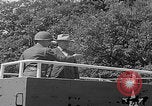
President Harry S. Truman and officials review soldiers and tanks at the German Autobahn
United States President Harry S. Truman reviews the 2nd Armored Division at the Autobahn in Germany soon after end of World War 2 in Europe. President Truman, Admiral William D. Leahy, Secretary of State James F. Byrnes, and other military staff ride a United States M3 half-track vehicle (“Bess” USA 4064790). President Truman and his retinue (on the half-track) review an armored Division lined up along the Autobahn. A long line of M4 Sherman tanks and tank destroyers are parked along the Autobahn. A United States Army soldier hanging on to the M3 half-track’s rear. Soldiers in front of the tanks salute to President Truman. Soldiers holding the United States flag and their divisional insignia. President Truman and his retinue come to attention as they pass by the soldiers holding the United States flag and divisional insignia. President Truman removes his hat while other officials salute to soldiers from both the moving half-track and on the ground. President Truman and entourage resume the motorcade. Soldiers riding on motorcycle during motorcade. Closer view of soldiers and M4 Sherman tanks. Soldiers holding the United States flag while others salute. Some soldiers present arms. Close up of soldiers saluting. President Truman and officials standing on half-track. A military official reads a speech. President Truman attaches a special banner to a divisional standard. Another official holds a paper for President Truman. President Truman and officials in motorcade on the Autobahn.
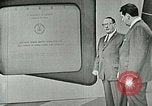
George Stone and Dr Philip Hauser discuss on census of various regions in United States,1960.
George Stone and Dr Philip Hauser at the presentation of U.S. census. George is asking questions to Dr Philip. In his answer he takes George to a picture of Incas. He then picks threads lying on a table and shows him a drawing of the threads. They move to a next painting of Chinese people. Dr Philip picks a Chinese script from a table and shows it to George who explains the script. Then he shows a script formed out of animals and signs. Dr Philip then shows a painting of Moses, the prophet of the Old Testament. George is given a copy of the Holy Bible in which page tags are inserted . George reads the census during Moses' era from the Bible which is then kept back on the table. Dr Philip then brings George to a painting of Christ's nativity. Finally they come to a picture of a colonial home and discuss the use of census during colonial reign.
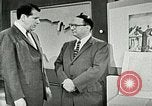
Dr Philip Hauser briefs George Stone on development of various aspects of U.S. census from 1790 to 1900 in United States,1960.
George Stone and Dr Philip Hauser at the presentation of U.S. census. Map of U.S. with an area marked on it appears. Figures of population of 1970 appear on the marked area. On its side 6 questions required for census are seen. A slide with Census 1900 appears on the screen. An official with a gun is seen riding a horse in a forest. He meets a Native American Indian and writes his family details for the census.
CRITICALPAST.COM: About Us | Contact Us | FAQs - How to Order | License Agreement | My Account | My Lightboxes | Shopping Cart | Advanced Search | Featured Collections | Website Terms & Conditions | Privacy Policy ©2026 CriticalPast LLC.
License Agreement |
Terms & Conditions |
Privacy Policy
©2026 CriticalPast LLC.