


 Francais
 Deutsch
 Italiano
Refine Your Search
Long Beach California USA 1960 stock footage and images
- Showing 4135 to 4140 of 27665 results more
more Hide
Hide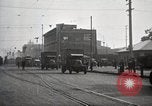
U.S. Army motor transport convoy in Oakland and San Francisco after Transcontinental Motor Convoy trip across America in 1919
U.S. Army trucks of the 1919 motor transport convoy drive past a moving trolley car on a street in Oakland, California. Spectators gather along side of street at ferry slip to watch as convoy trucks board a ferry boat for trip to San Francisco. Several men watch from upper deck of the ferry. A boy with a bicycle watches from beside a fence. View from upper deck of the ferry boat, of trucks driving aboard. A line of civilian cars sits to the side as the army vehicles drive aboard. View from the ferry boat underway in San Francisco harbor. Next, the convoy is seen driving along street in San Francisco, on September 7, 1919. The Mayor of San Francisco, James Rolph Jr., conversing with officers of the convoy, as they stand on a flag wrapped stand during a formal greeting ceremony. More views of convoy trucks in the city and lined up on hill overlooking San Francisco Bay.

Amelia Earhart successfully spans a 2400-mile course over the Pacific.
Amelia Earhart's plane lands on an airfield in Oakland,California. She emerges out of the cockpit and welcomed by press, media and public. Earhart gives an interview to the journalists and explains about her flight from Honolulu to the mainland. It took her 18 hours to span a 2400-mile course over the Pacific.
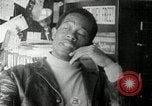
Bobby Seale co-founder of the Black Panther Party for Self Defense speaks about social problems and "pigs" (police)
Co-founder of the Black Panther Party for self defense, Bobby Seale, seated in the organization's office, speaks about brutality and discrimination by police against African Americans in Oakland, California. He believes that black citizens are unfairly blamed for social unrest and claims that police and business interests are responsible. Sign on wall behind him reads: "Set Huey Free"
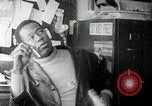
Eldridge Cleaver, co-founder of the Black Panther Party for Self Defense, speaks from their office
American writer, political activist, and Black Panther Party leader, Leroy Eldridge Cleaver, speaks about the impact of the Black Panthers on the situation in Oakland California. Eldridge Cleaver asserts that African American people are oppressed by the police and business interests. A white American policeman passes by on his motorcycle. Black Americans on streets. Black Panther Party members, including Elbert Howard and Bobby Seale, discuss the effect the Black Panther Party can have on police, as well as on African American troublemakers.
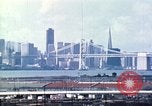
View of the city of Oakland and its African American citizens.
View of San Francisco skyline as seen from across bay in the City of Oakland, California. Buses and heavy vehicle traffic on the streets of Oakland. Montage shows scenes in Oakland, including an orchestra band playing and various sports such as ice hockey and baseball. Narrator describes contrast of wealthy areas of city with poor areas of city. African American citizens along streets and sidewalks and near apartments and homes. Black woman walking with child. Black American children play. Black American men on streets. Still images of African American citizens in Oakland during World War II.
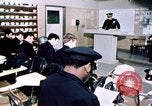
Oakland Police Department undertakes new community service oriented method of policing
Sergeant briefs a room full of police officers in Oakland, California at start of their shift. Closeups of individual policemen. Patrolman John Dixon in his patrol car notes that new procedures improve relations with the community but ease somewhat on law enforcement. He knocks on an apartment door.He talks with a woman there, about her child. Several patrol cars stop a car and search a suspect, as local residents watch somewhat amused. In locker room at the police station, a uniformed officer speaks of being more community service oriented, at the expense of law enforcement. Oakland Police Chief George Hart, in civilian clothes, defends the new approach to policing. The uniformed officer agrees that it would be a mistake to go back to the earlier approach.
CRITICALPAST.COM: About Us | Contact Us | FAQs - How to Order | License Agreement | My Account | My Lightboxes | Shopping Cart | Advanced Search | Featured Collections | Website Terms & Conditions | Privacy Policy ©2026 CriticalPast LLC.
License Agreement |
Terms & Conditions |
Privacy Policy
©2026 CriticalPast LLC.