


 Francais
 Deutsch
 Italiano
Refine Your Search
Long Beach California USA 1960 stock footage and images
- Showing 4237 to 4242 of 27665 results more
more Hide
Hide
Paintings made by prisoners are put on a show for general public in San Quentin Prison.
San Quentin State Prison in California. A guard looking through binoculars from tower. Signboard of 'Department of Corrections' and civilians passing by. Guard opening the main gate and people moving in to see the paintings made by prisoners. People at the exhibition. Close of view of various paintings exhibited and people looking at the paintings.

Workers assembling aircraft in Douglas Aircraft factory during World War 2.
Workers entering Douglas Aircraft factory in Santa Monica, California, early during World War II. Workers assembling aircraft in the factory and women workers working on wings of aircraft. Men and women war production workers building bomber aircraft for Britain and the United States war effort.
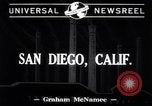
Canadian Air Marshal Bishop, head of recruiting for the Canadian Air Force, visits consolidated plant at San Diego.
Canadian Air Marshal Bishop, head of recruiting for the Canadian Air Force, visits consolidated plant at San Diego, California. Air Marshal Bishop having snacks with other VIPs and crowd of employees cheering.
Launching of SNAP (Systems Nuclear Auxiliary Power) 9A generators in space.
Rocket carrying SNAP (Systems Nuclear Auxiliary Power) 9A generator is launched from Vandenberg Air Force Base in California. SNAP-9A generator in space center and men working. By animation it is explained how satellite operations are carried out in space by making use of chemical and solar energies but with limitations. It is further explained how SNAP-9A generators work by means of nuclear energy. Animated versions of Thermocouple and Radioisotopes are shown. Shows Atomic Energy Commission men working and Nuclear generators installed at two different sites on earth.
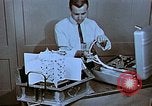
Launch of Systems Nuclear Auxiliary Power 9A generator after successful tests.
Technicians work at AEC (Atomic Energy Commission) facility on SNAP (Systems Nuclear Auxiliary Power) generators to be launched in June and November months of year 1961. Design of SNAP generator is explained and shows generators at a pole and carried by a rocket in space. SNAP 9A modified by an added AC-DC converter. AEC personnel in fields to test missile launch effects of SNAP 9A. Simulated missile explosions are carried out to check if fuel capsule can withstand fire and explosions. After successful tests, SNAP 9A is launched from Vandenberg Air Force Base in California.
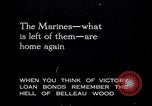
Wounded American soldiers return home from France. Soldiers with new prosthetic limbs practice walking.
American Marines and Army troops return home from France after World War I. Wounded American soldier gets out of acar and is helped by women as he walks with crutches. Wounded soldiers and women walk in queue toward an event. Slate indicates the war resulted in 2500 leg amputations and 1100 arm amputations. View of wounded American soldiers on grounds of Letterman Hospital in San Francisco, California, wearing artificial prosthetic limbs and practicing walking with the new limbs. (World War I; World War 1; WWI; WW1)
CRITICALPAST.COM: About Us | Contact Us | FAQs - How to Order | License Agreement | My Account | My Lightboxes | Shopping Cart | Advanced Search | Featured Collections | Website Terms & Conditions | Privacy Policy ©2026 CriticalPast LLC.
License Agreement |
Terms & Conditions |
Privacy Policy
©2026 CriticalPast LLC.