


 Francais
 Deutsch
 Italiano
Refine Your Search
Long Beach California USA 1960 stock footage and images
- Showing 5179 to 5184 of 27665 results more
more Hide
Hide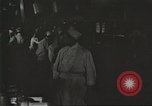
Chefs, waiters and women working in the kitchens of the Hotel Statler in Detroit, Michigan
Chefs and employees working in the restaurant kitchen of the Hotel Statler (1539 Washington Boulevard Detroit, Michigan) in Detroit Michigan. Opening slate of film reads: "Here we are in the heart of the hotel, looking down the long line of ranges where Broiled Lobsters and Roast Chicken are done to a turn. (At lower right of slate is statement: "Produced by Ford Motor Company.") More than a dozen chefs in classic white uniforms are seen preparing meals that are being picked up by waiter in tuxedos. Another view of chefs at work. A slate reads: "If cleanliness is next to Godliness, surely this is a wonderful place to work. It is unknown, while pots and pans shine like milady's mirror." Several views of a young woman tending several large coffee pots and dispensing pots of it to waiters. Another slate reads: "System! There is enough of it here to delight a General. Note the order and precision with which everything is carried forward." Views of kitchen staff interacting with the formally dressed wait staff members who check each order before taking it on trays to the dining room. Next slate reads: "Dainty salads with sweet cream and delicious fruits, prepared by the hand of an expert."Four women are seen behind a counter, making these fancy salads and passing them to waiters. Closeup of one being prepared.
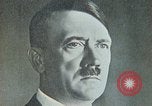
FBI catches Operation Pastorius criminals and hands evidence of their sabotage plots to the United States Military.
A picture of German leader Adolf Hitler. Footage of Pearl Harbor attack by Japan during World War 2. A reenactment shows landing of Operation Pastorius would-be saboteurs in Long Island, New York and presence of the FBI at the site collecting evidence the Germans had buried. Evidence of their plots to bomb various sites in the United States is collected by the FBI and presented to the United States Military. Views of some of their captured equipment and uniforms. Faces of the Operation Pastorius captured criminals (who included George John Dasch, Ernst Peter Burger, Herbert Haupt, Heinrich Heinck, Eddie Kerling, Herman Otto Neubauer, Richard Quirin, Werner Thiel) during their military tribunal hearing in July - August 1942.
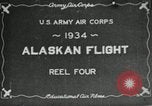
The U.S. Army Air Corps processes photo-mapping films covering 21,000 square miles, brought back by the 1934 Alaska Flight
Followup to the U.S. Army Air Corps 1934 Alaska Flight. The U.S. Army Air Corps Photographic department processes and assembles the 60 rolls of film shot by the USAAC 1934 Alaska Flight during its aerial photo-mapping mission over 21 thousand square miles of Alaska territory. Photographic workers mount film onto large rolls and place them into developing solutions. Long strips of film are seen drying on rotating slatted drums.Oblique negatives placed in rectifying printer are transformed into vertical photographs. Workers develop the negatives. Developed single wing photographs. Composite five lens photographs ready for mapping.
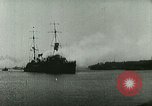
Charles Lindbergh feted in Washington, DC and New York City, upon return to U.S. after his historic transatlantic flight
American aviator Charles A. Lindbergh arrives aboard USS Memphis (CL-13) at the Washington Navy Yard, Washington D.C. upon his return from Europe to the United States following his pioneering trans-Atlantic solo aircraft flight. He comes down the gangplank and is greeted by a phalanx of officials. They drive Lindbergh away in an open car. Two days later, June 13, 1927, the scene shifts to New York harbor, where there is a virtual traffic jam of ships and boats of all sizes and shapes, assembled to greet Lindbergh. Fireboats salute with streams of water as Lindberg arrives (as backseat passenger) in a seaplane from Mitchel Field on Long Island. The seaplane is seen flying over the harbor,and descending to land. The seaplane is seen in the water amongst the flotilla of vessels, as. Lindbergh is picked up by a police launch that takes him to the ship Macom, where he is helped aboard by passengers. (He almost falls into the water while stepping from the launch to the ship.) Lindbergh waves from the deck of the Macom, as they proceed in a parade of vessels toward a Manhattan pier. Upon arriving, Lindbergh is hustled into an open car and driven away surrounded by New york City policemen,including mounted police, who escort the car through mobs of spectators. Police form lines to hold back enthusiastic admirers. The car proceeds along a city street where cheering spectators jam the sidewalks and office workers create a virtual storm of ticker tape and confetti from their windows high above the street.
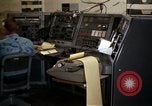
A man works and types on a typewriter in a console in a building in the United States.
Oceanographic Prediction Systems in the United States. Interior of a console in a building. A man seated at a desk types on a typewriter. He looks into a microphone hanging above the console. A long yellow sheet of paper hangs out of the typewriter.
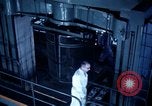
A man stands near a hydraulic press which begins to lower slowly in the United States.
Oceanographic Prediction Systems in the United States. Interior of a large work space. A man in a long white coat stands by a hydraulic press. The man moves from the place. The press begins to lower slowly. Two technicians stand near a heavy piece of equipment in the large space.
CRITICALPAST.COM: About Us | Contact Us | FAQs - How to Order | License Agreement | My Account | My Lightboxes | Shopping Cart | Advanced Search | Featured Collections | Website Terms & Conditions | Privacy Policy ©2026 CriticalPast LLC.
License Agreement |
Terms & Conditions |
Privacy Policy
©2026 CriticalPast LLC.