


 Francais
 Deutsch
 Italiano
Refine Your Search
Long Beach California USA 1960 stock footage and images
- Showing 5413 to 5418 of 27665 results more
more Hide
Hide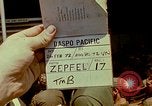
Sammy Davis Jr. on tour with a USO Troupe, entertaining American troops at Can Tho Army Airfield, Vietnam.
Large audience of American Army soldiers is seated in hangar and spills outside, as well, to watch Sammy Davis Jr. who is performing as part of a USO tour entertaing troops during the Vietnam War. Glimpse of Davis onstage. A banner reading "156th Aviation Company" is displayed at back of stage. Views of troops in audience. Several take pictures. A woman singer onstage dressed in bright orange outfit. She finishes her song and leaves the stage as another woman enters, dressed in a long brightly colored dress. Several musicians play at rear of stage. The woman takes a microphone as troops watch and signal their approvals. View from rear of troops watching from outside. Various views of audience applauding interspersed with views of the woman singing onstage. A young Vietnamese girl in the audience. A Vietnamese officer sits with American officers in the audience, as the Americans clap rhythmically in cadence with the music being played and sung by the woman performer onstage.
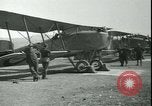
Ground crewmen mounting 155mm bombs under the wing of a Breguet 14 A.2 bomber flown by Americans in World War 1.
Breguet 14 A.2 bombers parked in a row in Clermont, France during World War I. American ground crewmen mounting 155mm bombs under the wing of a Breguet 14 A.2 bomber. U.S. soldier fuses a 155mm bomb. Airman in Breguet 14A.2 bomber winds up bomb release mechanism and looks into a sighting instrument. A bar with pegs on it turning in the wing of Breguet 14 A.2 bomber. Officer closes the hatch of the wing. Officers hold 115mm, 115 long, 115 short and 75mm shells in hand. (World War i; World War 1; WWI; WW1)
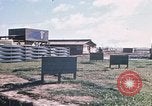
United States 50th Infantry soldier undergoes training session.
United States 50th Infantry soldier undergoes training session. He jumps over three hurdles, jumps over a wooden wall with a board of 'Long Range Patrol' hanging on top. He climbs and balances on a wooden log, climbs and jumps on other hurdles. The soldier climbs a pole and moves on string. (Vietnam War period).
The end of WWII and U.S. President Harry Truman's role in immediate postwar actions
Opening scene shows some German infantry surrendering with hands raised. Next scene shows people thronging Times Square in Manhattan, New York City, celebrating VE Day, or Victory in Europe Day, on May 8, 1945, when Germany surrendered to end World War II, in Europe. Image of the first atomic explosion (Trinity) on July 16, 1945, in New Mexico, United States. Scene shifts to deck of the U.S. Battleship, USS Missouri, where Japanese foreign minister, Mamoru Shigemitsu, is seated and signing the instrument of surrender., on September 2, 1945. Closeup profile of General Douglas MacArthur. Another glimpse of Mamoru Shigemitsu signing. Next, MacArthur is seen signing the document. He turns and presents the pen to Lieutenant General Jonathan M. Wainwright , who is standing behind him alongside British Lieutenant-General Arthur Ernest Percival. Brief glimpse of the San Francisco War Memorial and Performing Arts Center with flag appearing to be at half staff and a long awning extending from its entrance to the sidewalk. View of representatives at the first United Nations meeting there . Views of audience in auditorium shows many notables. Closeups of Soviet Ambassador, Andrey Gromyko and Soviet Foreign Minister, Vyacheslav Molotov.. Next, President Harry S. Truman is seen broadcasting a greeting to the delegates, from the Capitol, Washington, DC, on April 25, 1945. The delegates are seen listening to the broadcast and then applauding.
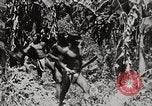
Construction of the Panama Canal
Construction of the Panama Canal connecting the Caribbean Ocean with the Pacific Ocean. Views of abandoned and failed first attempt by French team led by Ferdinand de Lesseps, with scenes of Panama natives cutting vegetation with machetes. Scene of abandoned canal work area. Scenes of United States work to build the canal beginning in 1903. Steam shovels digging and moving earth. Laborers construct railroad for use in canal building. General Glen Edgerton talks about the construction difficulties from malaria, and the worker prescription of quinine three times daily. Views of British and French workers on the site working and arriving by rail to work. Dynamite explosion removes rumble for railroad construction. View of locks under construction 1000 feet long and 110 feet wide. Excerpt from interview with former Canal Zone Governor and Congressman Maurice Thatcher, who characterizes the project as the greatest liberty that man had ever taken with nature. (Thatcher was honored when the first bridge connecting both sides of the Panama Canal was named after him as "Thatcher Ferry Bridge". In 1979 the name was officially changed to the Bridge of the Americas.) Clip next shows 1970's aerial view of the Panama Canal. Ships moving through the Panama Canal.
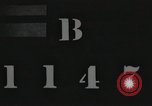
German civilians dig graves and bury Nazi atrocity victims in Gardelegen, Germany.
German civilians forced by U.S. Army soldiers in World War 2 to dig mass graves for Nazi atrocity victims of the Gardelegen Massacre, in Gardelegen, Germany. Bodies of slave laborer political prisoners on the ground, including Russians, Poles, and French, many of whom had come from the Mittelbau-Dora Concentration Camp and the Hannover-Stöcken Concentration Camp . A large barn in the background on the Isenschnibbe estate, showing evidence of fire damage, where many victims were found by the U.S. Army 102nd Infantry Division on April 14, 1945, after having been locked in the barn which was then set on fire on April 13, 1945. German civilians uncover nearby existing hastily dug mass graves containing piled victims. Dead bodies placed in new graves and covered with dirt. Civilians under U.S. Army direction dig long, mass grave trenches to bury the dead.
CRITICALPAST.COM: About Us | Contact Us | FAQs - How to Order | License Agreement | My Account | My Lightboxes | Shopping Cart | Advanced Search | Featured Collections | Website Terms & Conditions | Privacy Policy ©2026 CriticalPast LLC.
License Agreement |
Terms & Conditions |
Privacy Policy
©2026 CriticalPast LLC.