


 Francais
 Deutsch
 Italiano
Refine Your Search
Long Binh Vietnam 1967 stock footage and images
- Showing 5377 to 5382 of 5994 results more
more Hide
Hide
Children of many countries at play. Barriers between East and West Germany. Soldiers in places of international tension
Children in various countries at play. British boys playing soccer on muddy field surrounded by trees. Boys playing on bicycles along a paved path in an otherwise fairly barren landscape, possibly in the Middle East. Boys and hitting and catching a ball (probably in South Asia). American boys and girls pulling on a rope in a tug of war game at a park in the United States. Asian children in a school yard playground. African children seated in a circle as one runs around them in a game. An Asian boy flying a kite. Barbed wire and title of film: "In pursuit of Peace." German boys playing in mud near apartment buildings. Concrete Berlin Wall barrier nearby topped by barbed wire. An East German policemen monitoring a no man's land between East and West Germany. East German police in a guard tower at the barrier. Sound of dogs barking. Several soldiers in practice drill with an artillery piece . One armed soldier wears brown beret with crown and wreath insignia. An automobile is stopped by a sentry as it enters a military compound. A soldier in the compound wears Pakistani military insignia. Sentry checks papers of car's occupants. An Arab man looking through binoculars. His hat displays insignia badge of the Arab Legion with crown of the Hashemite Kingdom flanked by two crossed swords surrounded by a wreath. Sound of call to prayer from minaret is heard in background. View of ancient wall with statue of a woman and child in center, flanked by two outlook towers. A cross is displayed on face of wall between the statue above and an entrance way below. A soldier in steel helmet with netting, looks out over a stone wall (near time frame of Arab-Israeli Six Day War). Barbed wire and an arid valley are seen in the middle east. Two different shots of nuclear weapon test blasts or atomic bomb blasts are then seen. The first includes view of blast wave particles or shock wave approaching the camera position.
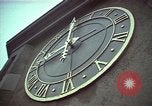
Profile of Harvard professor of Economics Thomas Schelling at home in Lexington and at work at Harvard and Washington, D.C.
Thomas Schelling, a Professor of Economics with specialization in arms control at Harvard University in Cambridge, Massachusetts. Close up of clock tower at Harvard. View of Harvard Yard and statue of John Harvard with students nearby. Tom Schelling smokes a pipe while walking through Harvard Yard. Professor Tom Schelling teaching a class at Harvard. View of outside of the Center for International Affairs at Harvard. Tom Schelling compiles newspaper cuttings and goes through papers at the Center for International Affairs. Tom Schelling on a flight. View of airplane wing and propeller through passenger window. Wide shot of Rand Corporation in California. View of Capitol Building in Washington D.C. from a moving car. Wide shots of Pentagon Building in Arlington Virginia as Tom Schelling arrives at the Pentagon parking lot via taxi and climbs the steps to enter the Department of Defense at the Pentagon. As an adviser to the United States, Schelling participates in a meeting with military officers to discuss issues of national defense and arms control. Professor Schelling at his home with his family in Lexington, Massachusetts near the town green where the American Revolutionary War began. Thomas Schelling walks with his wife, Corinne Tigay Saposs, and their four sons, Robert Schelling, Daniel Schelling, Tom Schelling Jr., and Andrew Schelling. At night he is seen recording lectures and articles with the help of a tape recorder.
World tensions after World War II. The Baruch Plan. The Berlin Airlift. The Korean War. The Cold War. The Atomic age. Ballistic Missiles
Speaking before United Nations Atomic Energy Commission (UNAEC) in its first meeting in June 1946, Bernard Baruch proposes international control of all atomic energy -- the so-called Baruch Plan. Low level aerial view of ruined post World War 2 European city. Goods including heavy equipment, locomotives, being loaded aboard ships to aid in the postwar recovery of Europe (The Marshall Plan). Workers in Western Europe making use of Marshall Plan materials to rebuild their national infrastructures. West European farmers restoring agriculture. View from overflying light airplane of parts of postwar Berlin in 1948. Blocked roads and empty railroad tracks leading from East Germany to West Germany, blocked by the Soviet Union. Barge traffic at standstill due to Soviet actions. U.S. C-54 transport aircraft flying supplies into West Berlin (The Berlin Airlift) during the Soviet blockade of that city. West Berlin citizens watching U.S. transport aircraft bringing fuel, food and other essentials into the isolated city. A C-54 flying low over empty railroad lines, as it prepares to land in West Berlin. Supplies offloaded from a DC-3 ( AKA C-47 or British Dakota) equipped with unusual set of rear cargo doors. Supplies being moved on Tegel Airport with many C-54 aircraft in the background. Numerous C-47 aircraft operating at Tempelhof airport. An East German official opening a barricade as Soviet blockade of West Berlin ends on May 12, 1949, and supply trucks begin to move over roads again. Flags of Western nations flying on high flagpoles. Glimpse of Allied warships underway during the Cold War. Formation of P-38 Lightning aircraft in flight overhead. NATO troops marching and NATO armor on parade. Flashes of heavy artillery firing at night. Korean refugees moving South in 1950 with the outbreak of the Korean War. View of UN Security Council meeting in the absence of Soviet representative. U.S. tanks firing guns and American infantrymen in conflict with North Korea in Korean War. American wounded on stretchers.Delegates of both North and South Korea signing the Korean Armistice Agreement in P'anmunjŏm, on July 27, 1953. A rocket is launched. Images of earth from inside a space craft in orbit. Narrator mentions the first satellite to circle the earth, the soviet Sputnik 1 in 1957. View of Soviet pilots in low pressure altitude chamber. A test subject in an aircraft making a maneuver that allows him to experience "weightlessness." Objects in his cockpit float about. A military rocket launch monitored by arrays of radar. An object being retrieved from space by means of a parachute. A nuclear powered submarine. Rockets on display during a military parade in Red Square, Moscow, the Soviet Union. A U.S. Air Force B-52 bomber taxiing. More views of rockets seen during a Soviet military parade in Red Square, Moscow.
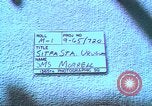
Inspector General Uruguayan air force speaks to an official at headquarters of American Air Force using SITFA
Inaugural person to person voice communication between Inspector General of Uruguayan Air Force and an official at United States Air force headquarters. Inspector General speaks over a phone to the official using SITFA ,( System Interamericano de Telecommunicaciones de Furezas Aereas) a single sideband voice communication system that enables 15 Latin American countries to converse among themselves. Uruguayan flag is seen in the Inspector General's office.
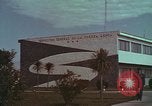
American Air Force officers work on controls at SITFA station in Uruguay
SITFA ( System Interamericano de Telecommunicaciones de Furezas Aereas) station in Uruguay as an antenna rotates. Air Force officers work on controls and take down notes.
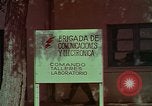
Technicians work on controls in a laboratory at SITFA station in Uruguay
Technicians work on various instruments in a laboratory at SITFA ( System Interamericano de Telecommunicaciones de Furezas Aereas) station in Uruguay as an Air Force officer monitors their work. They also work on controls.
CRITICALPAST.COM: About Us | Contact Us | FAQs - How to Order | License Agreement | My Account | My Lightboxes | Shopping Cart | Advanced Search | Featured Collections | Website Terms & Conditions | Privacy Policy ©2026 CriticalPast LLC.
License Agreement |
Terms & Conditions |
Privacy Policy
©2026 CriticalPast LLC.