


 Francais
 Deutsch
 Italiano
Refine Your Search
Long Binh Vietnam 1968 stock footage and images
- Showing 829 to 834 of 5711 results more
more Hide
Hide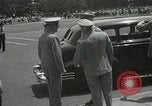
U.S. military officers, government officials, and family members at General John Pershing's funeral in Washington DC.
The state funeral for United States Army, General of the Armies John J Pershing in Washington DC. U.S. Army General Omar Bradley greets a civilian who shakes hands with other officers present. The casket is removed from the car and pallbearers proceed with it up the U.S. Capitol steps. The late General's son, sister, Secretary of State George C Marshall and others in the background. A long line of citizens enter the Capitol building to view the body. Several crippled veterans entering the building. Citizens entering the Capitol. A long line of people waiting to enter. Men, women, children, soldiers, sailors, veterans, nuns, and African American citizens waiting in line. Four men standing in the line.
Scenes cursorily illustrating the development of airplanes from 1908 to 1943, from a German perspective.
German slates refer to the dream of "Northern" people to fly, fulfilled by aircraft development. Scenes from Paris airshow in 1908, when it was a feature of the automobile show that year. Hangars bear names of aircraft companies: Bleriot; Vetze and others, with historic vintage airplanes of the period parked on the grass in front of each. A man plays with a dog in the grass. Spectators are seated in stands set up in the background. Scene shifts to 1935, where a long row of German aircraft are shown parked with engines running. Then it shifts to 1943, during World War 2, with a long line of German Messerschmitt aircraft parked with engines running. An animated map shows air lines of communication emanating from center of Germany and extending throughout Europe. Huge formations of German warplanes are seen in flight.

Some rocket motor designs of 1930s and speculation about future of rocketry
Liquid Rocket motor design drawings of various pioneers in the field, from the American Rocket Society, including: Constantin Paul van Lent (aka Constantin Tselentis,aka Constantin Lent, aka Dr. Constantin Paul van Lent) 1936; Alfred Africano, 1937; Reed,1937; Wild,1938; H.F. Pierce and Nathan Carver, 1938. Slates refer to the post World War I period through about 1938, as the beginnings of rocket flight, and the immediate subsequent period as the second phase of achievement that could lead to high altitude and long range rocket missiles and even manned spaceships. Slate suggests that future of rocketry is limited only by our imagination. Next are imaginary, science fiction scenes like a science fiction movie, showing a major city, in Germany, as a rocket ship travels away from it, and eventually showing Europe, and the earth from outer space, as the rocket travels into the blackness, beyond. Slate comments about eternal longings related to human flight.
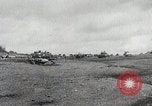
U.S. Army campaign leading to capture of Cologne, Germany, in World War II
U.S. troops huddle together on Sherman tanks late in World War 2 in Europe. U.S. Infantry and tanks moving across open fields. View from cottage window of American infantrymen swarming across a field. U.S. tanks and infantry entering outskirts of Cologne, Germany. One soldier plays a French horn, as he marches into town. Several German civilians walking together. German soldier POWs (prisoners of war) being herded under guard of American Army forces. German civilian refugees walking on a road. Graffiti scrawled on wall reads "Hitler ist Kaput". Numerous trucks filled with German prisoners of war. Civilians watching as U.S. Army M10 tank destroyers move into town towing 155mm long tom guns. Amusing graffiti by U.S. troops reads, "I'll walk Cologne" with arrow pointing (alluding to popular song, "I'll Walk Alone.") U.S. troops loading and firing 155 mm long tom guns. Civilians holding their ears, as they watch. U.S. troops entering center of Cologne, Germany. Towers of Cologne Cathedral visible in background. U.S. infantry firing from behind pile of rubble. Tanks rumble through streets of Cologne. House to house fighting. U.S. Army 3rd Armored Division tanks in streets of Cologne, and soldiers with small arms firing at buildings in clearing operations from building to building. A German soldier emerges from building with hands held up in surrender. Tank firing causes part of a building to collapse. Infantry moving along roadway with Cathedral visible in near background. City buildings of Cologne seen destroyed with rubble everywhere. German Mark V Panther tank is hit by fire from U.S. Army gunner Corporal Clarence Smoyer in a M-26 series Pershing tank (a T26E3) with a 90mm gun, at position at the An den Dominikanern and Marzellenstraße crossroads. German Army soldiers jump from the Panther tank. The Panther Tank is hit again from the American Pershing tank, and goes up in flames and smoke. View from wreckage of the Cologne Cathedral. Bridge across the Rhein (Rhine) River. U.S. forces moving across the bridge. A sign posted on bridge pillar reading: "Cross the Rhine with dry feet, COURTESY OF 9TH ARMD DIV." View from vehicle crossing the bridge. U.S. medics treating casualties in wooded area.

Track and Field events at 1936 German Championships at the SCC Stadium in Berlin, Germany.
German national championship Track and Field events in 1936. Seen are Hammer thrower, 2 Shot putters (the second is Wollke who later won the Olympic title), Karl Kotraschek in the triple jump, Luz Long in the long jump, Gustav Weikotz in the high jump, Julius Müller in the Pole Vault. The Men's 100 meters, won by Gerd Hornberger is followed by Doris Eckert winning the 80 meters hurdles, and finally the men's 400 metres, won by Helmut Hamann

A "U" shaped modern kitchen demonstrated in United States.
A member of the housing staff explains the plan of U-shaped kitchen developed by the Bureau of Human Nutrition and Home Economics to its customers. A woman uses 42 inches space of counter for making cookies. Three women use mixing counter of different heights to obtain feasible height in kitchen. Carpenter designs revolving corners of wardrobe in kitchen. Housing staff member explains the design to the carpenter. The carpenter takes measures of tube light for good lighting in kitchen at minimum cost. Kitchen is displayed. A woman receives phone at convenient place near the planning desk with note pad. Enlarge window for natural light. Woman opens the storage cupboard and places the serving equipment at mixing counter. She uses revolving corner shelves of kitchens. She pulls the drawer to use small equipment. Large cabins of equipment displayed. She opens small top shelf for using long handed pans. Woman opens the container of flour and sugar. She takes flour from the container. Woman sits on chair and comfortably uses the board for working at long. Vegetable preparation and dish washing center with knife rake displayed. Woman peels off potato directly into garbage. She cleans compartments of vegetables. At cooking inserting center, she puts the pan on burner and takes salt. She uses other equipment in cooking range center. She opens sliding door and takes supply equipment. She takes food in plate. In dish washing center, she removes wastes from plate directly into garbage and washes plates. She puts plates into drain. She places plates into shelves and other equipment into handy drawers. She hangs napkin into handy rake. She takes jars. She serves the breakfast on kitchen dining table. Housewife takes breakfast with her family in the modern kitchen of her house.
CRITICALPAST.COM: About Us | Contact Us | FAQs - How to Order | License Agreement | My Account | My Lightboxes | Shopping Cart | Advanced Search | Featured Collections | Website Terms & Conditions | Privacy Policy ©2026 CriticalPast LLC.
License Agreement |
Terms & Conditions |
Privacy Policy
©2026 CriticalPast LLC.