


 Francais
 Deutsch
 Italiano
Refine Your Search
Long Binh Vietnam 1968 stock footage and images
- Showing 3253 to 3258 of 5713 results more
more Hide
Hide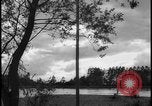
Various bunkers, water filled trenches, and tank obstacles found along Siegfried Line in western Nazi Germany prior to WWII.
View of a bunker overlooking a river in Germany, likely the Saar river, before World War 2. A ship can be seen sailing in the river. Many other pillboxes along the river. Low angle view of “Dragon’s teeth” tank barriers found in the Siegfried Line, the defense fortification line in western Nazi Germany use during WWII. Aerial view of long water filled trench on the Siegfried Line running through forest and farmland.
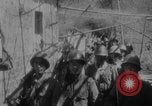
Imperial Japanese Army invades and bomb Mandalay, Burmese refugees flee for India, British soldiers destroy supplies during WW2
Imperial Japanese Army marches towards Mandalay, Central Burma (present-day Myanmar) during World War 2. They pass sign post reading, "Mandalay 82, Rangoon 348, Hanza 6" Imperial Japanese Army Mitsubishi G3M1 Model 11 Land-based Attack Aircraft bombers drop bombs on Mandalay. Explosion from dropped bombs as viewed from air. Children run away. Japanese bombers drop more bombs. Bomb explosion at ground level. Buildings on fire in Mandalay. A train full of evacuating Burmese locals, some holding on to railings of rail cars. Animated map showing Japanese capture of Burma. British troops in retreat driving a crowded truck. POV driving down road past long line of refugees fleeing Burma for India. Refugees in ox carts. British Army demolition squad destroys equipment and materiel, burn oil supplies to prevent Japanese Army usage. Oil derricks burning. British soldiers retreat at a running pace to small boats. British soldiers retreat on boats as oil supply burns. Huge fire from oil supply. Refugees carry their belongings, flee on foot. Line of Chines soldiers retreating. Burmese and British soldiers lead refugees on foot on elephant trails, jungle, across river and mountains, to India. Camp for Burmese refugees in India. Soldiers carry an injured patient on a stretcher. United States General Joseph Stilwell talks to a Chinese colleague. “We got run out of Burma, that's humiliating as hell. I think we ought to find out what caused it, go back and retake the place.” General Joseph Stilwell says.
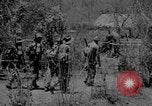
Chindit soldiers cross a jungle, sail on the Chindwin river in Burma during WW2
The Chindits, a Long Range Penetration Group of British and Indian soldiers, return to India from their ill fated mission cross the jungles of Assam and Burma during World War 2. A Chindit soldier pets a dog. Chindit soldiers take baths in small metal tubs. Mythical chinthe statues in Burma. Orde Wingate, British brigadier and leader of the Chindit units, speaks with military officials. Chindit column crosses a jungle. Chindit soldiers on boats on the Chindwin River the largest tributary of the Irrawaddy river. Chindit soldiers pushes small boat. One of the Chindit soldiers appears to be naked, and thus might be Wingate himself, given the Wingate was known to even greet visitors to his tent while naked. Chindit soldiers carry supplies in the jungle

United States President John F. Kennedy addresses the United States Congress for defense and space program budget increase
United States President John F. Kennedy addresses the United States Congress, appealing to increase the budget for defense and support for the space program. Congressmen clap upon the arrival of President Kennedy in the United States Capitol. Cameramen capturing videos of President Kennedy’s address using very long lenses. “These are extraordinary times. And we face an extraordinary challenge. Our strength as well as our convictions have imposed upon this nation the role of leader in freedom's cause.”, President Kennedy begins his speech. “I have not asked for a single program which did not cause one or all Americans some inconvenience, or some hardship, or some sacrifice. But they have responded and you in the Congress have responded to your duty--and I feel confident in asking today for a similar response to these new and larger demands. It is heartening to know, as I journey abroad, that our country is united in its commitment to freedom and is ready to do its duty” said President Kennedy, concluding his speech to the United States Congress.
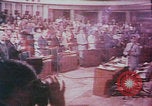
Saddam Hussein addresses the Iraqi National Assembly in Baghdad
Saddam Hussain addresses the Iraqi National Assembly (al-Majlis al-Watani), consisting exclusively of Saddam Hussein’s own fellow Baath party members, as the military president of Iraq. From his speech, Saddam Hussein highlights the importance of the National Assembly’s decision-making for the good of Iraq, the pride of being a democratic country with “democracy as a pillar of Iraq” and how they can face the local, national and regional issues long related to their country’s history.
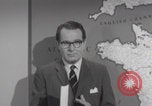
Interview with General Omar Bradley about Operation Cobra (WW2)
"The Big Picture” host Alexander Scourby interviews General Omar Bradley, the architect of Operation Cobra in Normandy during World War II. General Omar Bradley recounts his experience with handling Operation Cobra in Normandy. Omar Bradley attributes several factors for Operation Cobra’s success such as the aggressive and strong fighting spirit of the American troops, the teamwork displayed by the combat armies and air force, the alertness of subordinate commanders such as General Collins. On Martin Blumenson’s book, “Breakout and Pursuit”, General Omar Bradley says that reading the book sounds like “traveling down the road in the daylight than is the time you had taken it in the dark. It is generally familiar, which is always interesting to see the whole picture- part of which is hidden before”. General Omar Bradley gives a positive review on the historicity and veracity of “Breakout and Pursuit”. General Omar Bradley speaks about the value of military historians studying the events of World War 2. “Despite the fact that the weapons of war changes, the principle of war remain the same” said Omar Bradley. “War was a big thing in all our lives. We’ve been reading about the Revolution, the Civil War for a long time, to get a clear picture of ourselves as a nation. The Army is giving us the ability to do that now. The greatest war we have ever fought in our history” said General Bradley as he concludes the interview.
CRITICALPAST.COM: About Us | Contact Us | FAQs - How to Order | License Agreement | My Account | My Lightboxes | Shopping Cart | Advanced Search | Featured Collections | Website Terms & Conditions | Privacy Policy ©2026 CriticalPast LLC.
License Agreement |
Terms & Conditions |
Privacy Policy
©2026 CriticalPast LLC.