


 Francais
 Deutsch
 Italiano
Refine Your Search
Long Binh Vietnam 1969 stock footage and images
- Showing 2215 to 2220 of 5714 results more
more Hide
Hide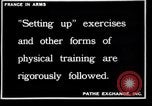
French recruits entering the military during World War I, receiving physical training.
French recruits receiving physical training during World War 1. They exercise on the field. They run on a track. They do long jump. They run on the field. (WWI. WW1)
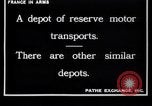
French army motor pools and oil and fuel depots in France during World War I
Camera pans over countless canvas-covered French army trucks in a large depot at an area well behind the front lines, untouched by combat,during World War 1. Several large buildings are seen in the background. A long line of empty army trucks with canvas covers, drives along a road, out of the depot. Buildings and trees line the background. Scene shifts to interior of depot containing stacked drums of lubricating oil. Workers inside move materials on hand carts. Scene changes again, to outdoor storage yard for gasoline. It is in containers within wooden crates, that are stacked up high in the yard. Workers use large hand trucks to move materials. (WWI. WW1)
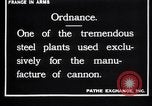
French war plant devoted to the manufacture of gun barrels, in France, during World War I.
View from upper tier in French war materiel plant used solely for manufacturing gun barrels and artillery in World War 1. Machining room of ordnance factory is seen with many metalworking machines driven by long belts. Gun barrels in various stages of completion are stacked on the floor. Workers moving about and tending machinery. A machine shop in the factory where workers turn weapons barrels on belt-driven lathes. Gun barrels on stands on factory floor. Camera pans across factory scene. (WWI. WW1)
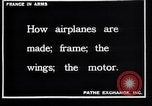
Nieuport 17 airplanes being built in a factory in France during World War I
Interior of a French aircraft factory during World War 1. Stacks of lumber in their receiving department. Men work on airplane framework stretched across wooden horses. Women in dresses and caps work on electric ignition wiring. men occupying an office area on the factory floor. Partially assembled aircraft lined up in the background. Men and women in a wing assembly area. Two scenes of men working in an engine assembly area. A man stands next to a LeRhone 9J,110 Hp rotary radial aircraft engine mounted on a mobile test stand. He rotates the engine. Another man displays one fitted with a long propeller shaft. A third man starts an engine fitted with a propeller. It runs on the test stand. A group of completed Nieuport 17 aircraft fuselages, lacking only wings and propellers. Larger view of that factory room, with men fitting the wings onto the airplane bodies. A line of airplanes with wings on the opposite side of the room. View of an airfield with a line of Nieuport airplanes parked in front of buildings. (WWI; WW1)
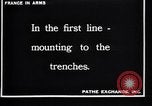
French infantry enter their trenches during World War I
French infantry assembled before advancing to occupy trenches in World War 1. The pick up supplies and are next seen marching in full battle gear towards the front lines. Officers on horseback follow leading platoon carrying the unit flag. Long line of infantrymen follow behind. Another view of the infantry on the march. The troops enter their trenches. They are dressed warmly and as they progress into an area of woods, snow is seen on the ground. A sign at the trench line reads: "Bois Carre." (WWI. WW1)
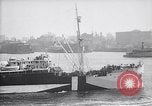
A U.S. troop ship filled with soldiers leaving New York harbor during World War I
A long single-funnel troop ship, in camouflage paint, making way in New York harbor, carrying U.S. soldiers overseas during World War 1. The local waters are busy with ferry boat and tugboat traffic. Buildings line the opposite shoreline. (WWI. WW1)
CRITICALPAST.COM: About Us | Contact Us | FAQs - How to Order | License Agreement | My Account | My Lightboxes | Shopping Cart | Advanced Search | Featured Collections | Website Terms & Conditions | Privacy Policy ©2026 CriticalPast LLC.
License Agreement |
Terms & Conditions |
Privacy Policy
©2026 CriticalPast LLC.