


 Francais
 Deutsch
 Italiano
Refine Your Search
Long Binh Vietnam 1969 stock footage and images
- Showing 2371 to 2376 of 5714 results more
more Hide
Hide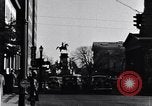
Landmarks in downtown Richmond Virginia; African American men on a horse cart loaded with boxes in Richmond, Virginia.
Equestiran statue of George Washington in Richmond, Virginia (The Virginia Washington Monument). Various statues. People pass at roadside. The Virginia State Capitol building. A squirrel eats. Cars in lot in front of Old First Baptist Church (Greek Revival designed by Thomas Walter at northwest corner of 12th Street and East Broad Street. Note cupola over portico, which was later removed. The building later became the Hunton Student Center of Virginia Commonwealth University). New construction underway of another building beside the church. View down Broad Street. Cars pass at nearby intersection. A horse cart on a road with an African American driver, parked in front of the H. W. Rountree & Bro. Trunk and Bag Company located at 201 – 217 North Fourteenth Street. Scene changes to a long view down Broad Street. Next scene is sign that reads "White House of Confederacy Entrance on Clay Street". View of the back porch columns at the White House of the Confederacy. African American men on a horse cart pass by a parked streetcar or trolley. Another horse cart approaches, with two African American people on it. The cart is loaded with boxes. It passes by Triangle Service Station and then near a parked streetcar.
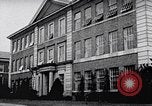
Student athletes train and compete in African American college athletic programs in the United States
Exterior view of a building on an African American college campus in the United States. Various athletic programs of the African American college are shown as students exercise, perform gymnastics and practice boxing at the college. A student athlete competes in a long jump competition. Marching band and girls with flags march on an athletic field before a college football game. Two college football teams compete as African American college fans look on and cheer for their team, led by cheerleaders.
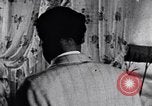
Malvin Gray Johnson paints in the United States. Also New York City subway scene.
An African American artist opens his coat in United States. R W Lindsey prepares a fish sculpture with a child. A woman studies a book. Richard William Lindsey at a class observes students' paintings. Malvin Gray Johnson comes with a board, sits and paints. Paintings at a wall. W Ellisworth Artis prepares a sculpture. People at an exhibition of Spanish African American art. Next scene appears unrelated, and shows pedestrian traffic on a busy New York City street, with many men and women walking on the sidewalk beside stores and shops. Next scene shows a stopped subway train at a station in New York City. Men and women and a few police officers exit the train onto a crowded platform, as other riders wait to board the railroad train. Next scene returns to an art studio view, with African American painters at work. Final scenes show a Harmon Communities map depicting Long Island in New York, and view of a train passing slowly through a switch yard area or marshaling yard.
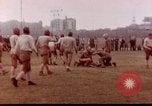
U.S. Navy and Marine Corps compete in football game at infield of racecourse in Tsingtao, China
Scene is football field, set up in the in field of the city racecourse at Tsingtao (Qingdao) China, in 1946. The unusual thing is there are no goal posts. U.S. Marine and Navy spectators stand around the field, and some occupy a small viewing stand. Various multistory buildings are seen in the far background, as the camera pans about,following the play on the field. Players wear football uniforms, and leather helmets. One team (probably Marines) wears Khaki jerseys and the other (probably Navy) wears white. As the film begins, one Khaki team player is being helped as he walks off the field, while others attend to a player lying on the ground. Play resumes with a play in the Khaki end zone, followed by a Khaki kickoff to white, who return the ball. Camera stops there and switches to another Khaki kickoff. White seems unable to overcome Khaki defense on the ground and resorts to a long pass that is intercepted by Khaki. The rest of the film shows glimpses of plays on the field. A White team player is seen on the ground attended by sailors. Play resumes again, with Navy punting. As the game ends, players of both teams walk off the field and are greeted by Marine and Navy spectators respectively. Camera shows view of the much larger racecourse area that encompassed the playing field. U.S. military trucks begin driving over the field. Scene shifts to view from a grandstand at far end of the racecourse, near buildings in downtown Tsingtao. Marines and sailors are leaving the field. Camera pans over the large racecourse infield where marines and sailors are cleaning up the playing field. Change of scene shows U.S. Army Lieutenant General Albert C. Wedemeyer, Navy Admiral Charles M. Cooke, and a Rear Admiral, sitting with Madame Chiang Kai-shek. She is examining an American football, as the Rear Admiral explains it to her. Scene shifts to more shots of the football game including several fumbles. It ends with Khaki team huddle.
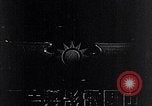
President Dwight D Eisenhower meets Chiang Kai Shek during his visit to Taiwan.
Posters of U.S. President Dwight D Eisenhower on buildings during his visit to China. A banner reads "Long live Sino-US friendship". Large crowd during procession welcomes President Eisenhower with banners and President's cutout. Sailors on a ship in sea at Northern coast of Taiwan. A helicopter arrives. Soldiers with the U.S. and Chinese flags. Military officers walk. A U.S. Marine helicopter lands. Chinese dignitaries and diplomats. President Eisenhower arrives in helicopter. President meets diplomats and Chiang Kai Shek. An American photographer clicks photos. President Eisenhower reviews honor guard with Chiang Kai Shek. President Chiang Kai Shek addresses. President Eisenhower addresses. Both Presidents shake hands. President Eisenhower shakes hands with officers. He sits in car. Planes fly over head. Presidential motorcade goes. People show banners in Chinese. Traditional dances by Chinese women. President Eisenhower waves to a large crowd sitting in car. American children with flags in their hands.
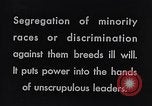
Diversity of different people in New York City in the late 1930's. Chinese, Jewish, and African American areas of New York City.
Ethnically diverse people along streets in New York City. People of Chinese origin in Chinatown. Scene changes to a Jewish area with signs on market shops in Hebrew. A board at a shop reads "Strictly Kosher A Goldberg & Son Poultry Market". A view of busy shops and push cart vendors on Orchard Street near Delancey Street on the lower east side of Manhattan. Store fronts visible include Cohens Opticians at 117 Orchard Street. Two men in hats talk together. One of the men has a long beard. Scene changes to Harlem with an elevated view of sidewalk as pedestrians walk by and children play, fencing with toy wooden swords. African American men talk in a Harlem neighborhood of New York City (likely Harlem). African American children play games and skip rope. A boy writes with a chalk on a sidewalk.
CRITICALPAST.COM: About Us | Contact Us | FAQs - How to Order | License Agreement | My Account | My Lightboxes | Shopping Cart | Advanced Search | Featured Collections | Website Terms & Conditions | Privacy Policy ©2026 CriticalPast LLC.
License Agreement |
Terms & Conditions |
Privacy Policy
©2026 CriticalPast LLC.