


 Francais
 Deutsch
 Italiano
Refine Your Search
Long Binh Vietnam 1969 stock footage and images
- Showing 2773 to 2778 of 5714 results more
more Hide
Hide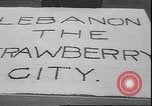
The largest strawberry pastry being cut at a gourmand festival in Lebanon, Oregon.
The largest pastry being sliced in Lebanon, Oregon. A sign on the pastry reads 'Lebanon is a strawberry city'. A woman cuts the pastry with a seven feet long knife during a gourmand festival. Pieces of the pastry in plates. Men and women cut many more slices of the pastry.
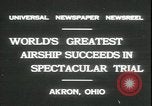
United States Navy airship Akron takes off and in flight during a trial in Akron, Ohio.
United States Navy airship Akron being successfully tried in Akron, Ohio. Crew members gathered around the 785 feet long airship as it prepares for its maiden flight. The airship in flight. Aerial view of the airship in flight.
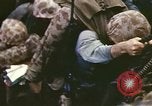
Marines load in LCVPs to move towards the Philippines coast as naval vessels fire at the coast during World War II.
United States Naval fleet off the coast of the Philippines during World War II. U.S. Marines climb over the side of cargo nets and into an LCVP ( Landing Craft Vehicle Personnel). The marines go over the side of a ship into the LCVP. A four barrel 5" 38 caliber naval gun aboard a destroyer fires. A United States destroyer of Fletcher class bombards the coast. 5" 38 caliber naval gun fires. The destroyer bombards the beach. An LSMR (Landing Ship Medium, Rocket) fires rockets. Shells explode on the beach. A United States battleship of Nevada class camouflaged by Thayer method bombards the beach. 5 inch and 40 mm guns fire at the beach. Crew loads and fires a 3"50 caliber gun. Explosions occur. An LCS ( Landing Craft Support) near the beach. The destroyer of Fletcher class bombards the beach. Aircraft fly over the convoy of ships. Sky lookouts on the bridge of a ship. Camouflaged destroyer and a heavy cruiser of Baltimore class bombards the beach. Twin mounts on a cargo ship bombard the beach. A man with a long glass leans against a signal lamp towards the beach.
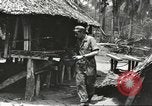
U.S. soldiers put huts on fire and cross a stream during the invasion of New Guinea of World War II.
United States soldiers during the invasion of New Guinea during World War II. Two United States soldiers throw gasoline on native huts. The huts on fire as smoke rises. Men atop an improvised observation tower. A man at a multiple 50 caliber machine gun. A long column of soldiers wades through waist deep water as they cross a stream.

War industries lead to overcrowded cities and lead to problems of housing, education and congestion in Mobile, Alabama (WW2)
"War Town" shows how War industry leads to problems in Mobile, Alabama during World War II. A large number of war workers at a shipyard in Mobile as they go to work building ships for the war effort in World War 2. Cranes at the shipyard. Men work at the shipyard as they fit Allied torpedoes. The men weld and rivet ship parts. Men work in various other factory and manufacturing industries like paper, aluminum, gypsum, steel, and machine shops supporting need for war material. Many men move out walking through the gates of the "Alabama Dry Dock and Ship Building Company" in Pinto Island, Mobile, Alabama. Many people in war materiel industry leads to congestion on roads and traffic on streets of Mobile. Crowd of workers on foot leaving manufacturing areas. Crowd of workers tries to board a city bus. Woman bus driver puts full bus in gear and drives away. Bus, car, and pedestrian traffic in Mobile on street corner with W.T. Grant Company in background. Long queues outside liquor stores, restaurants, and pay windows. Overcrowded schools as children exit the Barton Academy (Barton Academy Foundation P. O. Box 571 Mobile, Alabama 36601-0571) and are seen playing on playgrounds. Men drink in a crowded bar and men and women dance in a makeshift tented dance hall. Various rides including a Ferris wheel at an amusement park.
General MacArthur arrives and inspects Allied forces at the war front in New Guinea during World War II.
A USAAF B-17 bomber taxis in after landing at Vivigani Airfield on Goodenough Island in New Guinea. General MacArthur steps from the aircraft and is greeted by the American Air Base Commander. Closeup of General MacArthur. Next, a jeep carrying him and several others is seen from the rear as it drives over roads literally hacked from the jungles. Views of friendly native tribesmen, engaged by the Allies, carrying supplies toward the front. as Australian troops march along side them. View of rough water tumbling in a river and native bearers crossing it on a suspension bridge. View from above of long line of New Guinea native bearers moving along a path. Back at Vivigani Airfield , MacArthur greets some of the American fliers who have been attacking Japanese shipping from there. His B-17E, tail number 41-12633, ("Sally") is parked in the background. General MacArthur salutes and heads to his B-17 (that will take him to 7-Mile Drome near Port Moresby). View of a USAAF B24 Liberator bomber taxiing on the airfield. Another B-24 (named "Connebb's Speciab" is being loaded with bombs. Crew of a B-24 getting briefed as they stand under the wing of their aircraft. A pilot sticking his head out of the cockpit window. A B-24 airborne after takeoff. View from B-24 of a Japanese ship in sea below. Gunners inside the B-24 strafing the ship as the B-24 flies low over it. Bombs dropping during the Aircraft' second pass over the Japanese ship. View of the bombs exploding at port and starboard of the ship. View of clouds and then interior of the B-24 as crew members converse on their way back to their base.
CRITICALPAST.COM: About Us | Contact Us | FAQs - How to Order | License Agreement | My Account | My Lightboxes | Shopping Cart | Advanced Search | Featured Collections | Website Terms & Conditions | Privacy Policy ©2026 CriticalPast LLC.
License Agreement |
Terms & Conditions |
Privacy Policy
©2026 CriticalPast LLC.