


 Francais
 Deutsch
 Italiano

Refine Your Search
Long Binh Vietnam 1969 stock footage and images
- Showing 2815 to 2820 of 5714 results more
 Hide
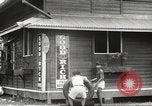
Filipino people working in different jobs, industry, and factories in the Philippines before World War 2
Activities of Filipino people in the Philippines before World War II. A horse-drawn calesa moves through Escolta, the business district of Manila. Billboards advertise Coca-Cola in the Philippines. Activities and quiet scenes at the siesta time. Buildings along the sides of a street. Sign boards outside the buildings read: 'Good Rich' and 'Coca Cola'. A Bahay Kubo (Nipa hut) in the countryside. A horse drinks from trough. A monkey hangs on bamboo pole. A water buffalo (carabao) laze in the mud. Timber trees are felled by men for lumber. Smoke from chimneys of factories. Wooden logs are carried on railroad wagons moving on rails. People work in a sugarcane farm and harvest the sugarcane. Men with Carabaos plow in a sugarcane field. Filipino workers transport sacks of sugar into a ship. Men climb up coconut trees and pick coconuts. The coconuts are loaded into carts. A Filipino man pours out a cup filled with sap from a rubber tree. Men cut tobacco. Filipino women roll tobacco into cigars inside a cigar factory. Men harvesting and slicing abaca (also known as Manila hemp). The processing of hemp. Men shredding Manila hemp into long strands. Shredded abaca are hung outdoors to dry. A machine twines hemp. (Pre war scenes, but from a 1944 film.)
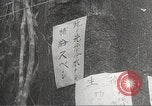
Japanese soldiers look at their mails and an airplane makes a message pick up with a skyhook in the Philippines (WW2)
The Japanese occupation of the Philippines during World War II. Mails are pasted on a tree. Japanese soldiers look at postal mail in a jungle setting. Japanese soldiers carry supplies using a long bamboo pole. Soldiers filling drums with water from a river. Hose fills the drum with water. A truck carrying water containers drives past along a way. Japanese soldiers use rolling pins and boil a pot. Water flows from hose. Japanese cooking from vats. A Japanese airplane in flight. The airplane makes a message pick up with a skyhook.
Japanese soldiers advance and give victory banzai in Corregidor Island, Philippines (WWII)
Japanese victory at the Battle of Corregidor during Japanese occupation of Philippines in World War II. Japanese troops land on Corregidor Island (also known as Fort Mills during the American Colonial Period). Japanese troops disembark from boats during their landing at the island of Corregidor. Japanese soldiers climb their way up the island. Soldiers advance on Corregidor Island. Japanese troops march past destroyed buildings. Captured American and Filipino prisoners of war are taken away. Japanese soldiers stand near gun batteries and give victory banzai. View of the Mile Long Barracks of Corregidor. The soldiers advance and walk past a destroyed building. The Japanese flag is raised. Japanese soldiers take down the United States flag in Corregidor.
The history and traditions of the U.S. Army in the United States.
An orientation film titled 'The Long Gray Line' for West Point Military Academy's plebes in the United States. The academy's history and traditions are depicted. Exterior of a chapel. Soldiers pray inside the church. They march on a street. U.S. Army Commander-in-Chief George Washington seated at his desk writing a letter. The soldiers march along a road. A statue. The soldiers stand in formation.

German technicians work on an A-4 missile at Peenemunde Rocket Center, Ostvorpommern, Germany,in World War II
Technicians working on German A-4 missile, at Peenemunde Rocket Centre in Ostvorpommern, Germany, during World War 2. Wartime art painted on the missile shows a pig with wings. Another painting shows a woman riding a rocket, labeled "V4" through a crescent moon and stars. Workers stand on long ladders reaching to the top of the missile.

U.S. Marines load a bread basket onto a destroyer in the Mariana Islands.
Activities of United States Marines during the invasion of Saipan and Tinian in the Mariana Islands during World War II. Loaves of bread in a large basket on the ground. Men lift the large basket full of bread. The basket being put onto a destroyer by a long rope. The destroyer along the side of a larger ship being refueled with oil. Men stand near oil lines on the ship.
CRITICALPAST.COM: About Us | Contact Us | FAQs - How to Order | License Agreement | My Account | My Lightboxes | Shopping Cart | Advanced Search | Featured Collections | Website Terms & Conditions | Privacy Policy ©2026 CriticalPast LLC.
License Agreement |
Terms & Conditions |
Privacy Policy
©2026 CriticalPast LLC.