


 Francais
 Deutsch
 Italiano
Refine Your Search
Long Binh Vietnam 1969 stock footage and images
- Showing 4981 to 4986 of 5703 results more
more Hide
Hide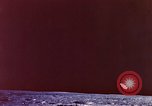
Neil Armstrong and Edwin Aldrin on lunar surface during Apollo 11 mission launched from Florida. First walk on the moon.
NASA astronauts on lunar surface during Apollo 11 mission, launched from Complex 39 at the John F. Kennedy Space Center on Merritt Island in Florida, United States. The lunar module (LM) Eagle lands on moon. Image of the lunar module (LM) Eagle on moon surface. View as Commander Neil Armstrong steps out from lunar module (LM) Eagle on the moon surface and declares "That's one small step for a man, one giant leap for mankind". Boot prints on surface of the moon after Armstrong became the first human to walk on the moon. Armstrong collects a contingency soil sample using a sample bag on a stick. He folds the bag and tucks it into a pocket. Lunar Module Pilot Edwin Eugene Aldrin (Buzz Aldrin), second man on the moon, steps out onto the moon's surface with equipment. A device is planted to collect samples from solar wind. Astronauts plant a U.S. flag on the lunar surface to honor men who lost their lives in space missions. Astronauts walk around on moon surface. Television screen shows the astronauts walking on the moon surface.
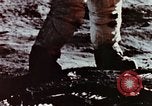
Astronauts place devices and collect samples on lunar surface during Apollo 11 mission launched from Florida
NASA astronauts on lunar surface during Apollo 11 first moon landing mission, launched from Complex 39 at the John F. Kennedy Space Center on Merritt Island in Florida, United States. Astronaut Commander Neil Armstrong and Lunar Module Pilot Edwin Aldrin, Jr (Buzz Aldrin) walk with a monitor on surface of the moon. Apollo Lunar Surface Experiments Package placed on the surface to deliver information about meteorite impacts and lunar movements. Laser ranging retro reflector placed on the surface of moon. Boot prints on the surface. The United States flag. The lunar module (LM) Eagle ascends from the surface of moon. View of the earth from lunar horizon.
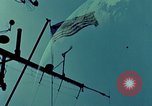
Columbia Command Module of Apollo 11 being recovered at sea and astronauts being welcomed by Richard Nixon along with others
The recovery of the Apollo 11 Columbia Command Module and astronauts welcomed after in Houston Texas. Radar equipment on USS Hornet (CVS-12). A helicopter in flight. The Columbia Command Module of Apollo 11 seen as a white light streaking through the sky as it reenters earth's atmosphere. The Columbia module seen floating in the ocean near the USS Hornet. President of the United States Richard Nixon on the USS Hornet. A helicopter recovers the astronatus from the Columbia Command module in the Pacific Ocean. A man clicks pictures. The astronauts being pulled up to the helicopter from the command module floating in the ocean. The helicopter lands on the carrier. The ramp being pushed to the helicopter. Richard Nixon waving at the astronauts. Astronauts Neil Armstrong, Buzz Aldrin, and Michael Collins disembark in special air-tight suits to applause of the crew, and then immediately enter a Mobile Quarantine Van. The crew of Apollo 11 in quarantine after returning to Earth. People welcome the astronatus in the quarantine van after it has arrived in Houston Texas. The astronauts talk over a red telephone to family and friends gathered in Houston. They wave from the quarantine van where they must remain for 3 weeks. Views of the astronauts on the moon are shown periodically. A scientist opens a collected rock and dust sample from moon using special equipment in a closed chamber. Apollo Lunar Surface Experiments Package placed on the surface. Laser ranging retro reflector placed on the surface of moon. The lunar module (LM) Eagle on moon surface.
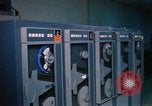
A soldier loads a tape into a RD-304 machine and works on a maintenance console in the United States.
A regional communications center in the United States. A bank of recorder/reproducer signal data machines (RD-304). A soldier loads a tape into a RD-304 machine and starts it. The soldier at a maintenance console. He pushes light flash buttons. Tape reel turning.
Experiments conducted at Oak Ridge National Laboratory, United States to dispose of waste uranium.
A documentary titled 'Project Salt Vault' depicts methods of disposing of waste uranium in the United States. View of a nuclear power plant. Cars parked in front of the plant. Electrical feeders attached to a bay. The conveyors. Uranium fuel in a nuclear reactor. An animation depicts the reprocessing of the leftover uranium fuel to separate it from radioactive waste. The uranium waste is stored in tanks. A man undertakes experiments at the U.S. Atomic Energy Commission to reduce the volume of the waste. An animation depicts heating process for reducing the waste. A sign board reads 'Project Salt Vault, Oak Ridge National Laboratory'. A salt bed is used to dispose of waste uranium. A man walks in a salt mine.
An experiment conducted at Oak Ridge National Laboratory, United States to dispose of radioactive heavy level nuclear waste.
A documentary depicts disposal of high level nuclear waste in salt mines in the United States for radioactive waste. Oak Ridge National Laboratory (ORNL). A man works on a machine and conducts a test. He operates the machine. A board reads' Project Salt Vault'. High level solidified waste. A truck carries canned fuel element for an experiment. A salt mine. A ground crew comes and collects data. Interior of the mine. A man conducts the experiment. Fuel assembly array located in different sections of the mine. An electronic heated control array. Canned fuel element for demonstration is unloaded from a special carrier. It is placed vertically over a shaft. Underground crew operates a transporter control. The can is lowered. An animation shows the can being lowered and mounted on a fuel canned transporter. A check for radiation leakage is made after the transporter doors are closed. The crew moves back to the room where the experiment is conducted. A crew man removes the radio active container from a transporter cask. The cask in lowered and a hoist cable is disconnected. The transporter carries the fuel can to the experiment room. The fuel can is kept in a hole. The crew moves and operates a remote control.
CRITICALPAST.COM: About Us | Contact Us | FAQs - How to Order | License Agreement | My Account | My Lightboxes | Shopping Cart | Advanced Search | Featured Collections | Website Terms & Conditions | Privacy Policy ©2026 CriticalPast LLC.
License Agreement |
Terms & Conditions |
Privacy Policy
©2026 CriticalPast LLC.