


 Francais
 Deutsch
 Italiano
Refine Your Search
M4-training stock footage and images
- Showing 7063 to 7068 of 8218 results more
more Hide
Hide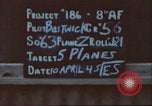
P-47 of the U.S. 8th AF, 63rd Fighter Squadron strafes German aircraft on the ground, near the end of World War II in Europe
U.S. 8th Air Force fighter aircraft operate unopposed over Germany in final days of World War 2. Gun camera footage from P-47M, of the 56th Fighter Group, 63rd Fighter Squadron, tail number 44-21112, UN-Z, "Ungly Duckling," flown by Major George E. Bostwick, of Dayton, Ohio. He strafes and destroys 5 German aircraft on the ground.
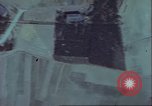
P-47, of U.S. 8th Air Force, 63rd Fighter Squadron, strafes Stendal Airfield, Germany, in final days of World War II in Europe
The Allies exercise air superiority over Germany in final days of World War 2. Gun camera footage from U.S. 8th Air Force P-47M, Number 44-21160, UN-F, "Devastatin' Deb, flown by Capt. John C Fahringer, Lima, Ohio. assigned to the 63rd Fighter Squadron of the 56th Fighter Group. He strafes German aircraft and hangars at Stendal airfield, near Berlin, Germany. Burning aircraft in front of a hangar.
P-47 of U.S. 8th Air Force, 63rd Fighter Squadron, strafing ground targets of opportunity in Germany near end of WW II
The last month of combat in World War 2, in Europe. Gun camera footage from a U.S. 8th Air Force P-47M of the 56th Fighter Group, 63rd Fighter Squadron. The aircraft strafes German targets of opportunity on the ground including German aircraft. Smoke rises from exploding building. A number of German aircraft burn. Aerial view of green fields and burning German buildings. The pilot is Captain Walter L Flagg of Conimicut, Rhode Island. His aircraft is Number: 44-21140, UN-F, named "Shoot You're Faded."
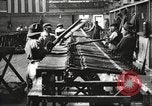
Manufacturing of U.S. Army rifles in an American war plant during World War I
Manufacturing of Army rifles in the United States during World War 1. Workers at a small arms plant in the U.S. examine wooden rifle stocks during World War 1. Men wheeling numerous dollies of rifle stocks to another part of the factory. Fully assembled rifles (appear to be either 1914 or M1917),loaded on a tray are lowered by African American workers using a manual pulley hoist to place them into a bath of hot cosmoline grease (for preservation). Then they are raised and moved to above a draining table, where they are removed and placed on a dolly. Men clean up the drippings. Next scene shows an African American worker placing the new rifles in wooden boxes for shipment. Closeup of an open wooden box of rifles ready for closing and shipping. Workers stacking 10 wooden shipping boxes of rifles in a hand dolly and moving it to shipping dock.

Workers assemble and check operation of Browning Automatic Rifles at Winchester Repeating Arms Company in World War I
Manufacture of M1918 Browning Automatic Rifles (BAR) at the Winchester Repeating Arms Company in New Haven Connecticut during World War 1. A worker assembles rifles on a bench. Another worker checks their operation by placing them into a mechanical holder and firing them. View of a black circular target showing grouping of hits during firing. View of the factory floor with movable racks containing rifles. Workers move the racks.

United States Marine Corps 1st Marine Division soldiers march on a dirt road in Talasea,New Britain during World War II.
United States Marines of 5th Regiment, 1st Marine Division, invade Talasea, New Britain, Papua New Guinea in World War 2. A Marine digs on the ground with a knife and uncovers a Japanese Model 93 ("Tape-measure") mine. He picks it up and scrapes mud from around the cover of the detonator. Marines walk on dirt road carrying equipment. Marines firing M2 60mm light mortar. Long line of heavily laden Marines slogging along jungle path.
CRITICALPAST.COM: About Us | Contact Us | FAQs - How to Order | License Agreement | My Account | My Lightboxes | Shopping Cart | Advanced Search | Featured Collections | Website Terms & Conditions | Privacy Policy ©2026 CriticalPast LLC.
License Agreement |
Terms & Conditions |
Privacy Policy
©2026 CriticalPast LLC.