


 Francais
 Deutsch
 Italiano
Refine Your Search
M4-training stock footage and images
- Showing 7243 to 7248 of 8218 results more
more Hide
Hide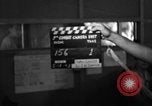
A camera repairman brings exposed films to a Drafting Chief for processing in a laboratory in Australia during World War II
The 8th Photographic Reconnaissance Squadron in Australia during World War II. Interior of a laboratory. A camera repairman brings exposed film to Drafting Chief Sergeant J. M. Brown. He turns it over to the Lab Section Chief Sergeant Robt Peterson for processing. The Drafting Chief marks the time of arrival on a lab operations chart. Two Sergeants letter negatives and plot the location of negatives on a large wall map. The wall map shows Rabaul.
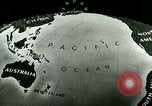
African American soldiers engaged on all fronts in World War 2
Film opens with map of the world showing the various theaters of operation in World War II. Narrator refers to Allies liberating town after town, as they advance. View of American troops being welcomed in a European town during an advance (probably Italy in 1944). Next, African American troops are seen boarding troop transport ships. A huge convoy of ships is seen from the air. Huge piles of war materiel on a dock. Ammunition being delivered by landing craft from the transport ship USS Hunter Liggett (APA-14) to American troops at a beachhead in the Pacific. An African American sailors directs the lowering of a piece of artillery from a ship into a landing craft. Construction equipment being used to clear the way for a new landing field. Docks, roads, and bridges being built as the Allies advance. American troops in the swamps of the South Pacific. American Army engineers clearing trees to build the Alaska Highway (ALCAN Highway) in 1942. Corps of Engineers building the Ledo Road (from India to China) during the war. African American soldiers building a bridge across a river in Europe. A U.S. Army truck under fire, driving along a dirt road in Europe as shells burst all around it. U.S. troops firing various kinds of field artillery and tank guns. U.S. infantryman using a flame thrower. Closeup of African American soldier using a bayonet and others firing small arms. A tank being blown up by artillery fire. A Japanese Mitsubishi A6M3 Zero aircraft maneuvers overhead in the Pacific theater. An African American soldier runs to man his Browning .50-caliber, water-cooled antiaircraft machine gun, and begins firing as the Zero fighter plane strafes his position. Closeup of Japanese pilot in his cockpit and his machine guns firing from leading edges of his plane. His rounds strike all around the U.S. gunner, who turns and follows him with more fire. His tracers show behind the plane. Closeup of the African American gunner as he continues firing. View of the Japanese airplane rolling over and diving. Next the Japanese plane, aflame, crashes on a tropical island and explodes. (Note: It is apparent that some of these combat scenes have been made up of clips from other sources, edited into this film.) (World War II; WW II; World War 2; World War Two)
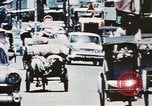
Officers at the headquarters of Far East Joint Medical Regulating office in Vietnam during the Vietnam War.
A film about aerospace medical evacuation and first aid operations for injured soldiers in Vietnam during the Vietnam War. Traffic on a street in Saigon. Headquarters of Far East Joint Medical Regulating Office. Men at the office decide upon the hospital best equipped to treat a particular patient. An officer marks on a chart. Another officer speaks over a phone. A teletype strip. Officers gather at a briefing room at Scott air base in Illinois. An officer (General Howell M. Estes, Jr.) gives a presentation about the medical rescue undertaken by air ambulance crew. Officer inquires another officer about a burn patient. Officer also briefs about the weather factors that affect medical evacuation.
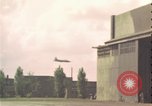
B-17 parked in front of hanger, plane prop wash blows trees and grass.
B-17 bombers in formation fly behind buildings on air field. B-17 parked in front of hanger while small track vehicle, possibly an M29 Weasel, passes by. Formation of bombers in bright sky. Strong winds blowing trees next to fields. Prop wash from B-17 plane blows trees and grass.
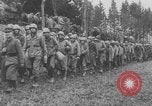
American prisoners of war captured by Germans during the Battle of the Bulge in World War II
Opening scene shows large numbers of U.S. Army soldiers taken prisoners in the final German counter offensive of World War 2, known as the Battle of the Ardennes or Battle of the Bulge. German photographer concentrates on African American soldiers in the group, with closeups of many, juxtaposing them with closeups of German soldiers. A German Panzer IV tank passes a hillside where many American prisoners are seated on the ground. A horse-drawn wagon and a Panzer III tank pass the hillside, and then the American prisoners are herded, under guard toward the road below. Scene shifts to German soldiers sharing captured American foods and cigarettes. Several German soldiers in camouflage uniforms. One carries an M34 machine gun with a circular magazine. A dozen German soldiers are seen crowded atop a tank. A tiger II tank (Panzerkampfwagen Tiger Ausf. B) drives through a village. Closeup of crewmen on a tank. One rides astride the gun barrel. Another mans a machine gun. Closeup of another machine gunner atop a tank. Several more Tiger II tanks moving through the village.
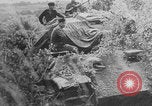
German armor, artillery, and infantry defend positions in Southern Normandy after Allied D-day invasion in World War II
As film begins, heavily camouflaged German Panther tanks (Panzerkampfwagen V Panther) are seen moving along a dirt road in Normandy during World War 2. Next, German infantry walk along a road next to forests and behind a Stug IV assault gun. A stone marker on the ground, at rear of a parked Panther tank, points to Beauquay 5 Km and Aunay 7Km. A German soldier lying prone on side of road firing an M42 machine gun. Another soldier lying prone behind him. Parked Stug IV with gun pointed to right. Some infantry gather behind artillery firing from heavily camouflaged positions. An officer with headphones communicates to gun crews. Shells bursting in the distance. A battery of rocket launchers (Nebelwerfers) begins firing. Closeup of soldier activating remote fire control box. White smoke rising in distance. Infantry moving forward toward area of white smoke. German soldiers examine a dead American soldier lying next to a knocked out Sherman tank. Closeup of large shell hole in side of the tank. German infantryman walks past a destroyed U.S. Army tank. A German soldier exploring inside the turret of a half overturned American tank. A formation of German soldiers at a field decoration ceremony. Soldiers receiving the iron cross award. They exchange hand salutes and handshakes afterwards. Next, Oberleutnant Franz Ludwig Chef 2. Batterie / Sturmgeschutz - Abteilung 1346 and Commander Stug III (Sd. Kfz. 1542/1) is seen showing approval of a soldier who mans a Stug III Ausf G, with numerous white rings painted on its gun barrel (indicating victories in combat). (Franz Ludwig is wearing the Knight's Cross of the Iron Cross, awarded on June 24, 1944 for success against British tanks in combat at the forest of Bovent east of the River Orne, Normandy.) Closeups of Franz Ludwig. View of him briefing several soldiers as they stand in front of barrel-striped StuG III. (Note: Franz Ludwig died in combat on August 14, 1944.)
CRITICALPAST.COM: About Us | Contact Us | FAQs - How to Order | License Agreement | My Account | My Lightboxes | Shopping Cart | Advanced Search | Featured Collections | Website Terms & Conditions | Privacy Policy ©2026 CriticalPast LLC.
License Agreement |
Terms & Conditions |
Privacy Policy
©2026 CriticalPast LLC.