


 Francais
 Deutsch
 Italiano
Refine Your Search
M4-training stock footage and images
- Showing 8095 to 8100 of 8248 results more
more Hide
Hide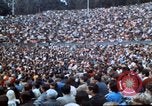
Rioting and looting in America, in response to the assassination death of Dr. Martin Luther King Jr.
A large American crowd at an outdoor stadium. Brief view of Presidential candidate Richard Nixon speaking to reporters. Narrator describes how his presidential campaign went on hold after the assassination of Dr. Martin Luther King Jr. Next scene shows rioting and looting by African American citizens in the United States in a major city (narrator references Los Angeles, Newark, Baltimore, Detroit). People stealing items from stores and smashing store windows after the death of civil rights leader Martin Luther King Jr. Image changes to a 4-way split screen, with two portions showing families watching television, one portion showing continued rioting (including Washington DC fire fighters involved in putting out an arson fire); and one portion showing interviews with notable African Americans deploring the rioting. Speakers including Roy Wilkins, Sammy Davis Jr., and James Brown.
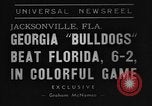
A football match between the Georgia Bulldogs and the Florida Gators which the Georgia Bulldogs win in Jacksonville, Florida.
A football match between the Georgia Bulldogs and the Florida Gators in Jacksonville, Florida. Spectators seated in a stadium watch the match. The match in progress. The Georgia Bulldogs win the match by 4 scores. Some spectators come on the ground as the match ends and the Bulldog wins.
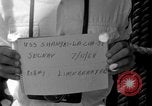
SECNAV inspects the Marine Honor Guard, receives a 19 gun salute and souvenir book aboard USS Shangri La in Mediterranean Sea.
Paul Robert Ignatius, the United States Secretary of the Navy (SECNAV) visits USS Shangri La (CV-38) in the Mediterranean Sea. View of the Marine Honor Guard standing at attention on the flight deck. Front view of Vice Admiral Edward H. Martin, COMSIXTHFLT (United States Sixth Fleet), approaching up the flight deck with a small party of officers unit. Vice Admiral Edward H. Martin, and party walk past over the flight deck. Vice Admiral Martin, Rear Admiral Lawrence Geis, Rear Admiral Isaman talk, next to the C-2A. View of one rank of the sideboys at Parade Rest on the flight deck. View of the honorable Paul Robert Ignatius, the United States Secretary of the Navy (SECNAV), walk over the flight deck alone. View of View of an unidentified Commander come down, the SECNAV Ignatius having received his Honors. The SECNAV inspects the Marine Honor Guard on the flight deck. Rear Admiral Lawrence Geis, Commander Carrier Division Four (ComCarDiv 4), and Captain Coogan, aboard USS Shangri-LA, (CVA-38). View of SECNAV standing on the flight deck, receives a 19 gun salute. SECNAV standing beside the C-2A chat with Rear Admiral Geis, and Capt. Coogan. SECNAV getting aboard the C-2A over the ramp, after having received a souvenir book from Capt. Coogan. SECNAV being assisted into a life jacket by one of the crewmen of the C-2A.
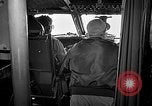
U.S. Air Force airlifts French paratroopers to Indochina.
Film opens showing entrance to cockpit of a U.S. Air Force Troop Carrier Douglas C-124 Globemaster aircraft en route from France to Indochina. A pilot is seen at the controls in the left seat, and the Aircraft Commander is observing from behind and between the pilots' seats. Close-up of number 3 and 4 engines with propellers turning as viewed from copilot's window. Two crew members are seen asleep on bunks in rear of flight deck compartment. Another is napping in a bulkhead seat. More views of engines running and propellers turning. Glimpse downward of land and clouds below. Close-up of Copilot in right seat of cockpit, wearing headset and making an announcement through his microphone. View of French paratroopers seated in cargo compartment, listening to the announcement from loudspeaker above them. Next, a French paratrooper passenger is seen opening contents of a flight lunch package. He uses the tiny can opener included in the package to open a can (with some difficulty). Paratroopers eating flight lunches.Two of the passengers playing chess on a miniature board with plug-in chessmen. Close-up of the chessboard. Co-pilot speaking on intercom again and a French paratrooper, wearing headset and microphone, speaking as well (likely translating). Glimpse of engine running on left wing. A different person (not in flight suit) at the controls in copilot's seat. The crew's Flight Engineer making throttle adjustments at his panel. View on the ground of French greeting party on the destination airfield to meet the arriving aircraft. Arriving C-124 aircraft taxiing on inboard engines only, as it proceeds along layers of pierced steel plank (Marsden matting) comprising the surface of airfield ramp. Views of French military waiting to greet arriving paratroopers. The aircrew's loadmaster lowering one of the aircraft's front loading ramps. French paratrooper passengers use it to leave the aircraft. (The other ramp is partially down and contains cartons and boxes.) Close-up of a French major in the greeting party. A woman greeting troopers, individually, as come down the ramp from the aircraft. Some French aircraft lined up on ramp, in background. (They appear to be Grumman F8F Bearcat aircraft.) Glimpse of an armed French Colonial (Tirailleurs Sénégalais) sentry standing near the aircraft. Troopers carrying cartons of rations from the aircraft and joining others preparing to board trucks for a ride to their quarters. Uniformed French soldiers in the greeting party help load heavy crate into an Army truck. Some troopers leave on trucks.
Lord Mountabatten receives welcome and being greeted by naval officers at NAS in Anacostia, Washington D.C.
Arrival of Lord Mountbatten at Naval Air Station (NAS) at Anacostia, Washington D.C. Navy band on the field prior to the arrival of the Earl. Color guard (Marine) at attention. Naval honor guard at attention. British sedan parked on the edge of field. British MP stands. Plane director motions the plane to parking area. R4Y taxis to parking area. U.S. Navy Admiral Arleigh A. Burke, Rear Admiral Baker, stand by waiting for disembarkation of Admiral of the Fleet The Earl Mountbatten of Burma, KG, The First Sea Lord and Chief of Naval Staff of Great Britain, Lord Mountbatten and party. Ramp of plane being lowered. Lord Mountbatten leaves the ramp, stops momentarily by the side boys. He is greeted by Adm. Burke. He goes through the receiving line. Admiral Burke and two British Officers stand at attention during rendering of honors. Marine honor guard in front of operations at NAS. Naval honor guards. Lord Mountbatten speaks to Admiral Burke. He gets into the sedan. Admiral Burke and Rear Admiral Baker walk. Admiral Burke gets into a sedan. Personnel on top of operations platform looking on. Four star Admiral's flag. Long line of Naval personnel holding state flags.
Views of Midway Island before, during and after the first Japanese bombing attack there in World War II
Japanese bombing attack on Midway Island in World War 2 (Battle of Midway). Opening scene shows map with Midway Island in context .of the Pacific Ocean. A Navy Consolidated PBY Catalina flying boat is seen among clouds. Closeup of the plane from another in formation with it. View of gunner with machine gun in blister of a PBY. Views from the PBY of Midway Island, from above and from low over the water. Two PT boats in the harbor. A PBY seaplane lands and is next seen being towed tail first up an incline, by sailors using lines. A U.S. Marine Corps color guard leads a contingent of Marines marching in formation along a pier, where some submarines are docked. F lock of white sea birds photographed against blue sky and Gooney birds on the white sands of the Island. Marines silhouetted in front of a beautiful sunset. The are relaxing. One plays an accordion. Sentries are alerted by some thunder from clouds in the distance. Next, B-17E bombers are seen near sandbagged positions on the airfield. Air crews gather for briefings. Camera pans over several B-17s being loaded with bombs and refueled. Glimpse of a railroad engineer who served 38 years on the Ironton railroad, standing next to a steam locomotive.( He is ostensibly related to one of the flyers.) Brief views of the flyer’s mother and sister. B-17 taxiing on number 1 and 4 engines (unusual). Several B-17Es taking off. One is Number 41-2524. Others with readable numbers are 41-2611, 41-2632, 41-2648, and 41-2437. Suddenly, several Japanese aircraft are seen in loose trail formation overhead. Marine fires machine gun from a defensive position. Black flak clouds form from exploding U.S. antiaircraft rounds. One Japanese aircraft falls burning toward the sea. Several U.S. Marine Chance-Vought SB2U Vindicator aircraft take off to engage the Japanese bombers. The U.S. aircraft maneuvering overhead. More machine gun fire from defenders on Midway. A bomb explodes close to the camera, sending debris flying. More machine gun fire, and another bomb strikes near the shoreline with a huge explosion. Explosions on other areas of Midway. A hangar burning. Another bomb strike close to the camera. Marines running past burning and destroyed aircraft, and raising the American flag, as fires burned and the bombing continued.
CRITICALPAST.COM: About Us | Contact Us | FAQs - How to Order | License Agreement | My Account | My Lightboxes | Shopping Cart | Advanced Search | Featured Collections | Website Terms & Conditions | Privacy Policy ©2026 CriticalPast LLC.
License Agreement |
Terms & Conditions |
Privacy Policy
©2026 CriticalPast LLC.