


 Francais
 Deutsch
 Italiano
Refine Your Search
M4-training stock footage and images
- Showing 1297 to 1302 of 8223 results more
more Hide
Hide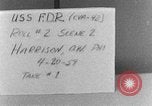
Douglas A-4 Skyhawk A4D on port catapult and USS Franklin D. Roosevelt underway in the Mediterranean Sea.
Midway-class aircraft carrier USS Franklin D. Roosevelt in the Mediterranean Sea. The bow of USS Franklin D. Roosevelt (FDR) cutting through water. View of the flight deck. U.S. Navy Douglas A-4 Skyhawk A4D on port catapult.
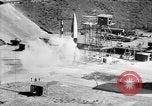
An Aggregat 4 'A-4' missile, also known as a V-2 rocket, fails to launch during a test firing in Peenemunde, Germany
Misfiring of German ballistic missile A-4 during tests in Peenemunde, Germany. Aggregat-4 missile on a launch pad. Puff of smoke rises from the tail section of the missile as it barely rises from pad. Missile falls down after losing power and a huge explosion occurs. Fire on launch pad as smoke rises. (World War II period).
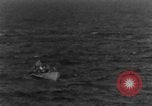
Search for survivors after collapse of U.S. Air Force Radar Station (Texas Tower No. 4,TT-4) in the Atlantic ocean, off Long Island.
Search and rescue efforts after the destruction of Texas Tower Number 4, a U.S. Air Force Air Defense Command Offshore Radar station, in 1961. It was located off Long Island (39degrees48'N 72degrees40'W) and operated by airmen of the 646th Radar Squadron. It had experienced structural difficulties including damage from Hurricane Donna, on September 12, 1960 and was being scheduled for repair or dismantling. The USNS New Bedford and the USS Wasp were in the vicinity, on January 15, 1961, when the storm caused the Tower to collapse and sink.But they were unable to save anyone. In subsequent search and rescue operations, after the storm, The USS Sunbird (ASR-15) submarine rescue ship is seen at the site, along with sailors in a motor whaleboat from the USS Blandy (DD-943). A helicopter from the USS Wasp (CV-18)flies overhead. A scuba diver surfaces near the whaleboat and is taken aboard. A motor whaleboat from the USS Sunbird maneuvers in rough water. Whaleboats seen returning sailors and divers to the Sunbird.
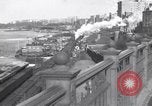
Elevated railroad trains operating in New York City
Beginning of film shows view from a high roadway of steam rising from locomotive pulling a passenger train uptown on the West side of Manhattan. Some waterfront houses and the Hudson river are seen at the left of the train tracks. Next are views from the first car of a train approaching a station on an elevated electrified train track with several lines of rail ahead. Billboards are seen atop some of the buildings near the train tracks. The camera train moves past an empty train station that displays some advertisements under its platform and more are seen atop buildings near the rail line. The camera train proceeds straight ahead past another empty station. A billboard on a building outside and below the elevated rail line reads: "Leary's Cafe." The train continues Northward on what appears to be the Harlem "L" (elevated train) with multiple tracks. A passenger train passes in the opposite direction. Moving straight ahead, the track splits, taking the train down below the original level (which continues at the upper level to the left).
Series of test in which automatic detonator 'mole' is tested for effectiveness in disabling railroad trains.
A research film in which 'mole', an automatic detonator, is tested for effectiveness in disabling railroad trains when a train suddenly enters darkness as in a tunnel. Railroad train approaching camera position near track. Point of view shot from left side of railroad locomotive train as it approaches and enters a tunnel. A train passes through tunnel. Working and components of mole explained. Components include photoelectric cell, amplifier and a detonator. Working of mole explains where to place explosive, why and how to prepare it. Charge is placed on a railroad car. This car is attached at the end of train. A train moves. Train car damaged after detonating mole. Men at railroad car examine. Charge placed by men on train. Explosion and reaction of train is tested. Damage is examined. Next test shows 'linear shaped charge' with explosive and bracket to hold it, demonstrates how to secure charge to bracket, bracket to train car and where to place components of mole. Explosion on train. Damage in detail is examined. World War 2 period.
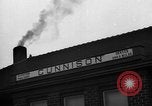
Denver and Rio Grande railroad train starts out for Black Canyon, from Gunnison, Colorado
During final year of passenger operations, a narrow gauge railroad train of the Denver and Rio Grande begins its journey through Black Canyon, at Gunnison, Colorado. Sign on top of a building reads 'Gunnison'. Smoke comes out of a chimney. Engine of the train emits smoke.Engineer oils numerous places on locomotive drive mechanisms.The train conductor,standing, in front of a Rio Grande box car, waves at a crossing guard, standing at a level crossing with a flag. His dog stands beside him. He waves his flag to stop any vehicular traffic on the road. The conductor waves at the engineer and climbs aboard a passenger car.The engineer turns in his cab and sounds the steam whistle. The fireman shovels coal into the locomotive engine firebox, from which flames emerge as door is opened. The locomotive slowly begins to move. Train is seen speeding across a railroad bridge over the Gunnison River. Two men who are fishing in the river, watch as the train crosses the bridge. View of train track, from train. This is a Rocky Mountain Railroad Club sponsored trip on the Denver & Rio Grande Railroad dated May 29, 1949 to be the last passenger train through the Black Canyon from Gunnison to Cimarron Colorado and return. The engineer seen oiling the 361's running gear and operating the consolidation is my late grandfather Mr. C L Braswell while I be leave the fireman to be Tom Doyle and the conductor Shorty Dean. My name is Richard Lehman and as a thirteen year old my mother, grandmother and I went down to the Gunnison depot to see my granddad take the last passenger train down through the Black Canyon in many years. Both my mother and grandmother can be seen in a view shot from on top of an; adjacent coal car. At the time I was unaware of what the Rocky Mountain Railroad Club was nor what the special train was for. My granddad told me to get on in the baggage car and so I was privileged to be able to take the last train through the Black Canyon before abandonment and to get acquainted with the Rocky Club
CRITICALPAST.COM: About Us | Contact Us | FAQs - How to Order | License Agreement | My Account | My Lightboxes | Shopping Cart | Advanced Search | Featured Collections | Website Terms & Conditions | Privacy Policy ©2026 CriticalPast LLC.
License Agreement |
Terms & Conditions |
Privacy Policy
©2026 CriticalPast LLC.