


 Francais
 Deutsch
 Italiano
Refine Your Search
M4-training stock footage and images
- Showing 2803 to 2808 of 8223 results more
more Hide
Hide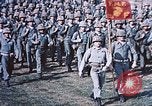
U.S. Marine Corps senior officers converse with each other; also training of U.S. Marines in the United States.
United States Marines marching in field dress and battle helmets, with shouldered arms. Marine Commandant, General David M. Shoup, sits at his desk, talking with members of his staff. Closeup of General Shoup, and then of a Marine Brigadier General sitting next to him. Closeup of a Lieutenant General sitting across from General Shoup. The three converse as General Shoup touches a world globe at his side. Scene shifts to view of the Golden Gate Bridge, and then to two women sitting on a high hill overlooking the city of San Francisco. Another view (nighttime) of the Bridge and city. Private boats in a marina. Flight of two Marine Chance Vought Crusader F8 aircraft flying in formation. Aerial view of highway "clover leaf" network on the ground, busy with vehicle traffic.
U.S. Army pre-World War II bayonet training film on the horizontal butt stroke attack sequence.
Slow motion and full speed demonstration and description of the first move in the horizontal butt stroke bayonet attack sequence. American soldiers demonstrate attack while narrator discusses their mistakes. Slow motion and full speed demonstration and description of the second and third moves in the horizontal butt stroke attack sequence. Soldier performing demonstration has a very animated and determined look on his face. Normal speed description and demonstration of non-verbal commands used by the instructor to signal soldiers to perform certain moves in the sequence while practicing. Group practicing full sequence of attacks. M1903 Springfield rifle with bayonet attached used by soldiers.
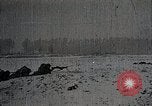
Japanese infantry and tanks train and exercise in wintertime. Japanese infantry and cavalry in fair weather training exercises.
Japanese infantry are seen in live fire exercises during the winter. They fire small arms and machine guns as they advance from point to point across snow-covered fields. Japanese soldiers firing a machine gun from a position hidden beneath frozen snow-covered foliage. Japanese soldiers climbing the roof of a building and knocking down its brick chimney to gain a protected firing position. Several views of Japanese troops firing the guns on their Type 89 Yi-Go tanks, as they advance in the snow. The tanks running through barbed wire defenses and maneuvering. Closeups of tank negotiating deep ditch and climbing hill in snow. Scene shifts away from snowy conditions to Japanese infantry and mounted cavalry exercises in fields and woods. Cavalry enter a wooded area. Infantry run across fields, and ignite smoke screen generators. Soon white smoke obscures the scene. Soldiers fire from prone positions. Cavalry executes several charges across the fields, recorded by the camera from various points of view.
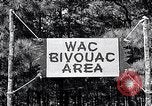
U.S. Women's Army Corps personnel training in different fields and given career advice at the training center
The role of women in the United States Army. A sign reads ' WAC Bivouac area'. Women carry heavy packs and march. During 10 minute break, they sit on ground and talk. Women's Army Corps (WAC) personnel set up tents and line up for chow, eating from mess kits. Women play softball. A woman reads letter from home. A woman drinks from a canteen. Women exercise and do calisthenics. They learn unarmed defense tactics. WAC military police march in formation. A woman being interviewed. Women in classrooms being given career guidance. A woman works on the punch card machine. A man and a woman drafting. Women work in the kitchen. Women work in laboratories. A woman on X ray machine and a solider lying on the table. Dentists check soldier. A woman being commissioned as an officer. Women disembark from a ship. WAC assigned to Japan, Paris or Germany. Views of a Shinto shrine in Japan, the Arc de Triomphe in Paris, and people in Berlin walking through Brandenburg gate British Sector and heading to other side, as German police officers watch. Woman assists male officers in a meeting, as the men view early television screen. View of Patton tank on the move.
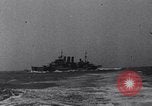
Training of British Navy personnel using a training film.
Firing of British warship's heavy guns. (Some crewmen sleep through it.) Nighttime firing of heavy guns. Captain (in movie about ship) addresses assembled crew on bow of ship about importance of watertight door discipline. (World War II period).
U.S. Army Training film about Army Air Forces regulations for pilots training in Boeing Stearman PT-17 "Kaydet" aircraft.
As film opens, a number of U.S. Army Air Forces Stearman Boeing PT-17 “Kaydet” bi-plane trainer aircraft are seen taxiing on an airfield. One takes off and another lands and taxis into position on the flight line. A student pilot leaves the operations building and fastens the leg straps of his seat pack parachute before climbing upon the wing of a PT-17, where he checks the aircraft's Form One record. Closeup of the form. He climbs into the cockpit, fastens his safety belt. Glimpse of magneto switch. Glimpse of fuel gauge. With engine running the pilot activates the flight controls to check proper action. Glimpse of tachometer showing 1550 RPM. View of airplane taxiing in "S" movement because of low visibility with engine in front. Closeup of pilot pausing before takeoff to recheck wind and runway. Views of the aircraft on takeoff, tail wheel rising, and plane becoming airborne. Animated diagram shows precautions for turning out of traffic after takeoff and for avoiding collisions using right of way rule. Glimpse of PT-17 cruising above farmland. Views of the plane flying in vicinity of clouds but carefully avoiding them. Closeup of pilot in cockpit looking all around while in flight. View of cockpit instruments, including compass, airspeed indicator, Needle and ball, and altimeter. Closeup of engine oil temperature gauge. View of the airplane flying close to another and follow rule to prevent collision. Next, the aircraft makes a shallow dive and then executes a spin. Closeup of the pilot signaling everything is OK. (World War II; WW II; World War 2; World War Two)
CRITICALPAST.COM: About Us | Contact Us | FAQs - How to Order | License Agreement | My Account | My Lightboxes | Shopping Cart | Advanced Search | Featured Collections | Website Terms & Conditions | Privacy Policy ©2026 CriticalPast LLC.
License Agreement |
Terms & Conditions |
Privacy Policy
©2026 CriticalPast LLC.