


 Francais
 Deutsch
 Italiano
Refine Your Search
M4-training stock footage and images
- Showing 2875 to 2880 of 8223 results more
more Hide
Hide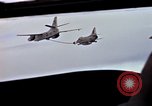
A-3B Aircraft refuels an A-4C in flight.
A-3B Aircraft refuels an A-4C in flight. A-3B tanker in flight with fuel hose extended. A-4C moves up, makes contact with fuel probe of A-3B. Another A-4C is flied in the background.
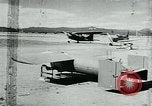
United States Air Force personnel attach the Azon Bomb with a GB-4 missile at a United States Air Force base.
A GB-4 missile and an Azon Bomb kept at a USAF base. Airmen attach the Azon Bomb to a GB-4 missile. Various components of the GB-4 missile are assembled step by step. Airmen attach radio control, tail section, radar and stabilizer, electrical unit, camera system, generator. Airmen put the warhead, fins and radar antenna to complete the assembly. (World War II period).
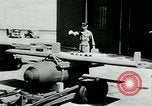
GB-4 missile launched from a United States Air Force bomber B-17 hits the target.
Two GB-4 missiles mounted on a trailer at a U.S. Air Force base in United States. Trailer tows them to a USAF B-17 Bomber, while airmen sit on the missiles. Two GB-4 missiles attached to the underside of a B-17 fuselage. The aircraft takes off. Bomber launches a missile while in the sky. GB-4 flies and leaves smoke trails. Its crash near the target.
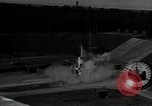
An animation shows the trajectory and distance covered by A-4 missile in Peenemunde in Germany
German A-4 missile launches from a site in Peenemunde as it emits smoke. A meter records the readings related to the launch. A map shows the point from where A-4 was launched and an animation shows the trajectory of the missile. Missile covers a distance of 190 kilometers from the launch site to the point in sea where it crashes near a search boat. Scientists work to develop A-4 missile with the help of machines.
Captain James Green being airlifted from his crash site by a Sikorsky YR-4 helicopter in Shingbwiyang, Burma during World War 2
Men carry injured U.S. Army Air Force Jungle Rescue Pilot Captain James Green from hospital tent to completed MEDEVAC landing zone in Shingbwiyang, Burma during World War II. Green had been injured in a crash of his helicopter. Dr. Underwood talks on hand radio as men sight an incoming Sikorsky YR-4 helicopter. Engineer sets off smoke flare. Helicopter lands and men hold it. Men carry Captain Green on litter to the helicopter and he shakes hands with Pilot Lieutenant Raymond Murdock. Dr. Underwood gives Green an injection in his arm. Men put Captain Green in the helicopter and it takes off. Men cheer and shake hands with Dr. Underwood. This is an early example of one of the first helicopter MEDEVAC (Medical Evacuation) flights in a combat zone. Prior to this MEDEVAC flight, this particular helicopter, a Sikorsky YR-4, had been dismantled at Wright Field in Dayton, Ohio on January 17, 1945, loaded on a C-54 transport, and flown to the North Burma theater of operations. It was reassembled and flown by Capt. Frank Peterson, USAAF, on January 26, 1945 to evacuate wounded weather observer Private Howard Ross from a 4,700 foot mountain ridge in the Naga hills of Burma.
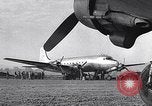
A YR-4 helicopter Pilot attends to a crashed B-25 and carries an injured in Burma during World War II.
A YR-4 helicopter being unloaded from a C-54 aircraft in Burma during World War II. Air jungle rescue unit Pilots of 10th Air Force fly YR-4 to attend to a crashed B-25. Pilot paints a big yellow cross on the plane's wing and checks instruments. The helicopter flies back to the home base. Rescue mission members briefed before leaving for Naga Hills. Helicopter YR-4 lands at a helipad and takes off with an injured soldier.
CRITICALPAST.COM: About Us | Contact Us | FAQs - How to Order | License Agreement | My Account | My Lightboxes | Shopping Cart | Advanced Search | Featured Collections | Website Terms & Conditions | Privacy Policy ©2026 CriticalPast LLC.
License Agreement |
Terms & Conditions |
Privacy Policy
©2026 CriticalPast LLC.