


 Francais
 Deutsch
 Italiano
Refine Your Search
M4-training stock footage and images
- Showing 2995 to 3000 of 8223 results more
more Hide
Hide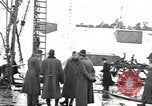
Wreckage of A-4 German missile in Peenemunde in Germany
German military officers and other officials at the launch site of A-4 missile in Peenemunde in Germany. Wreckage of A-4 missile is seen as hills in the back drop are covered with heavy snow. Missile impacts an area and explodes causing smoke.
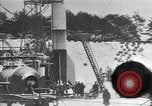
Blank time clock in frame as A-4 missile launches in Peenemunde in Germany
A -4 missile of Germany being tested in Peenemunde in north east Gernany. Officials prepare for the launch. Snow is seen on the ground. Missile emits smoke before taking off from the launch pad. The time clock cut out is missing in lower right of frame. A-4 missile moves upwards as a flare is seen towards its tail. Missile moves further upwards as a meter records data.
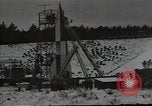
A-4 missile launch from a site in Peenemunde in Germany
Launch site of A-4 missile in Peenemunde in Germany with snow all around. A-4 missile emits smoke before taking off from the launch pad. Missile moves upwards as a flare is seen at the tail.
Test flights of German missile A-4 V2 rocket in Peenemunde. First fully successful flight on Oct. 3, 1942.
Opening slate mentions speed and pressures generated in the test launch of A4 V2 rocket. The rocket launches and appears to be successful, moving up and out of sight. However, some white smoke descends and lingers in the atmosphere afterwards. The next slate states that the causes of the malfunctions have been identified and corrected. It is followed by a slate showing date of 3 October, 1942, and another about last instructions before the 3rd launch. German rocket scientist, Konrad Dannenberg, is seen discussing matters with several German officers at the test site. (Dannenberg is in the center of the group. Second from left is possibly Wernher von Braun. Second from right is possibly General Walter Dornberger.) The next slate reads: 1558 hours (3:58 PM) followed by one reading: Fire free. A German officer is seen speaking those words into a microphone. Camera shows a technicians hand as he sets firing switches on a control panel. ;Closeup of V2 rocket engine firing up. The rocket ascends successfully and disappears from sight. (Note: The footage at the end of clip showing the successful Oct 3 flight of A-4 V2 rocket was reportedly part of a film shown to Hitler at his Wolfe's Lair in 1943.) (World War II period).

Dimensions of 4.2 inch mortar of United States
A film titled 'Army's newest mortar' Different parts and dimensions of United States 4.2 inch mortar are explained. Used for direct fire against stationary objects 4.2 inch mortar consists of a clamp, reaction chamber, fixed firing pin. Soldiers assemble the mortar. It is mounted on a tripod stand. Soldiers carry it in a machine gun cart. Trinitrotoluene (TNT) filled shells are fired from the mortar Rocket drivers are used for firing at low elevation areas whereas gravity fire is used for the areas at a higher elevation. (World War II period).
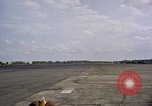
United States Marine R4D aircraft lands with supplies at Soc Trang base in Vietnam
United States Marine R4D aircraft carrying supplies lands at Soc Trang air base in Vietnam. R4D taxis to parking area as marines stand by to unload the supplies. Door of the aircraft opens.
CRITICALPAST.COM: About Us | Contact Us | FAQs - How to Order | License Agreement | My Account | My Lightboxes | Shopping Cart | Advanced Search | Featured Collections | Website Terms & Conditions | Privacy Policy ©2026 CriticalPast LLC.
License Agreement |
Terms & Conditions |
Privacy Policy
©2026 CriticalPast LLC.