


 Francais
 Deutsch
 Italiano
Refine Your Search
M4-training stock footage and images
- Showing 3949 to 3954 of 8218 results more
more Hide
Hide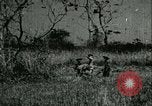
Students learn to send and receive Morse code messages from U.S. and Burmese instructors in Burma during World War II.
U.S. OSS (Office of Strategic Services) officers train Burmese recruits in Burma during World War II. Students learn to send and receive Morse code messages. American and Burmese officers train the students. The instructors and students in a field. They remove the equipment from bags and lay it out on the ground. Students set up the equipment and cables. One student uses headphones at a radio transmitter. They make adjustments to the equipment and set up the antenna. An American instructor guides and helps the students. Students operate telegraphs and write down the decoded massage. Students take turn to operate the telegraph. The instructor supervises and check the students' messages. A Burmese instructor demonstrates and helps students set up the equipment.
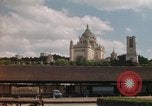
Basilica of St. Therese in Lisieux, France.
In Lisieux, the Basilica of St. Therese in Lisieux (Basilique Sainte-Thérèse). A sign reads 'Lisieux'. A couple stands at a railway station. A train pulls up at the platform. View of the Basilica of St Therese as seen from a moving train. Filmed by former war correspondents visiting France, 25 years after the Allied invasion of France during World War II.
U.S. Army Air forces pilots learn about the Republic P-47 Thunderbolt airplane
From a U.S. Army Air Force Training film, "How to Fly the P-47. Pilot Familiarization." United States pilot seated on table writes a postcard to his mother, "Mrs D.Q. Hopkins. 1024 Clay Avenue, Pelham, New York" Board in the background with 'Daily Assignment of today' written on it. Scene shifts to forward view from cockpit of a Republic P-47 aircraft flying low over the flight line at an Air Base. Momentary glimpse of the pilot and his post card in the office. Back again, to forward view from cockpit of a P-47, but this time it is on final approach to the runway. Scene shifts to ground view of a P-47 landing. It taxis to the ramp and parks. The crew chief stands on the wing as the pilot completes and signs the aircraft's Form 1 (record of any problems). Five pilots walk past the flight line. The pilot, wearing a seat pack parachute, climbs down from the cockpit. The five pilots, seen earlier, approach, and one introduces them to the P-47 pilot (Captain Hopkins). They are Lieutenants assigned to his training flight. He greets them and shakes hands with all. The group ask questions about the P-47. Then they all go to the pilots room. As Captain Hopkins takes off his flight gear he tells them the P-47 is designed to operate at high altitude. He describes the P-47, referencing a large illustration of it on the wall. (World War II; WW II; World War 2; World War Two)
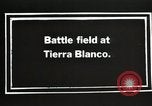
Defeated Mexican Federal soldiers and refugees after battle at Tierra Blanca, Mexico, and marching to Marfa
Man walks across the battle field at Tierra Blanca, Mexico, during the Mexican Revolution. Defeated Federal soldiers and their families near Presidio, Texas. Women and children seated on ground. Men stand with horses and mules. Many prisoners huddled under blankets. 5000 Federal prisoners and refugees march to Marfa under guard of U.S. Cavalry soldiers of the American Punitive Expedition forces. Mexican refugees seeking asylum in the U.S. board a train bound for Fort Bliss in El Paso, Texas. U.S. Cavalry soldiers standing near the railroad trains.
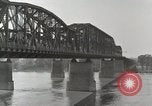
The Harahan Bridge in Memphis, Tennessee.
The Harahan Bridge in Memphis, Tennessee. Railway track over the cantilvered truss bridge with a steam locomotive pulling train cars across the bridge. Armed guards in World War I era U.S. Army uniforms guarding the bridge as train approaches. A river boat passing underneath on the Mississippi River below the bridge . Men stand next to railway track.
Industrial development in Appalachian Mountain, United States.
Depicts industry and modernization coming into rural Appalachia in the early 1900s. A steam locomotive pulling a long line of train cars moves along the mountain side, leaving a trail of smoke in the Appalachian Mountain, near Smyth County Virginia. Man, woman and children wave at the coming train. Cow grazes in field. A steam shovel excavating a site. Vehicles drive past on a dirt road newly carved into a mountain side. Two men sawing a tree with a two-person saw. The tree falls. Horse carries wooden logs from the forest area. Logs being milled into lumber pieces at a saw mill. Giant saw blade spinning and cutting the wood. Factories with smoke spewing from chimneys. Rural coal mine buildings, some up high on stilts. A man operating an electrically powered, belt-driven lathe to turn lumber into round handles for tools. A rural preacher with a bible at an outdoor site, preaching in front of a corn field. Slates indicate that he is preaching against worldly education, and in favor of biblical learning only. reaches to people. A stone on a building with the words, "Marion Junior College. 1873." The preacher waving the bible in his hand. A teenage boy seated in a rocking chair on a porch reading a book.
CRITICALPAST.COM: About Us | Contact Us | FAQs - How to Order | License Agreement | My Account | My Lightboxes | Shopping Cart | Advanced Search | Featured Collections | Website Terms & Conditions | Privacy Policy ©2026 CriticalPast LLC.
License Agreement |
Terms & Conditions |
Privacy Policy
©2026 CriticalPast LLC.