


 Francais
 Deutsch
 Italiano
Refine Your Search
M4-training stock footage and images
- Showing 4813 to 4818 of 8218 results more
more Hide
Hide
Propaganda piece shows Soviet troops, military equipment, agriculture, and industry contributing to the progress of the USSR.
United States Air Force Soviet Awareness Program shows a Soviet propaganda film with English translated voice over. Soviet troops rest after a training mission. Russian soldiers seated on and around tanks. Mountainous and wooded regions in the Soviet Union. Modern, developing, industrialized areas and cities. Women work in factories. Roads under construction. Modern farm equipment and views of farm fields in the Soviet countryside. The Soviet War Memorial or the Soviet Cenotaph in Berlin's Treptower Park. Soviet soldiers descend steps into a Soviet missile silo. Changing of personnel in a 24 hour missile silo. Soldiers at attention as a military band plays. Soviet soldiers salute. A Soviet soldier stands guard in the snow. A mission control center with men seated at some radar screens. Soviet soldiers on duty in various places. A Soviet pilot or astronaut in an aircraft or spacecraft cockpit.
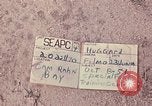
ARVN Special Forces trainees attend a class on Combat Reconnaissance Patrol at Cam Ranh Bay, Vietnam.
ARVN (Army of the Republic of Vietnam) Special Forces Training Center in Cam Ranh Bay, Vietnam. An ARVN Special Forces instructor holds a class on Combat Reconnaissance Patrol. Trainees seated on bleachers under a shed. The instructor uses a black board for the session. The instructor in a helmet stands behind a lectern and takes the class. Written matter on the black board. Trainees seated under the shed listen to the instructor. (Vietnam War period).
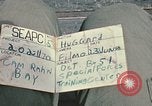
Vietnamese Special Forces trainees learn Tae Kwon Do under the supervision of Korean instructors in Vietnam.
ARVN (Army of the Republic of Vietnam) Special Forces Training Center in Cam Ranh Bay, Vietnam. A Taek Won Do classroom at the base. A sign board outside a building. A group of Vietnamese Special Forces trainees being given a lesson in the Korean martial art of Tae Kown Do by two black belt Korean instructors. The instructors direct the students. Trainees come to the front of the classroom. They take their positions and demonstrate Taek Won Do techniques and moves. The remainder of class seated on floor watches. Drawings on the wall depict Taek Won Do moves. Other trainees repeat the exercise and salute at the end of each demonstration. (Vietnam War period).
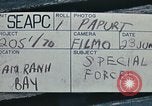
ARVN Special Forces trainees and U.S. soldiers at the 5th SFG (ABN) 1st SF compound in Cam Ranh Bay, Vietnam.
U.S. Army 5th Special Forces Group (Airborne) 1st Special Forces base in Cam Ranh Bay, Vietnam. Entrance to the US-ARVN Special Forces training compound. A sign over the entrance reads 'Home of Detachment B 51'. Soldiers walk past military trucks parked at the motor pool. A sign on the shed reads 'Motor Pool'. Two ARVN soldiers fix a tire. A sign for 'Detachment B-51, 5th SFG (ABN) 1st SF' in front of the Orderly Room. A Vietnamese girl walks past the sign. An ARVN Special Forces instructor demonstrates hand to hand combat positions and maneuvers in a field. Trainees follow instructions and practice. (Vietnam War period).
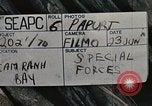
ARVN Special Forces instructors take a Combat Reconnaissance Patrol class in the woods, Vietnam.
ARVN (Army of the Republic of Vietnam) Special Forces Training Center in Cam Ranh Bay, Vietnam. An ARVN Special Forces instructor holds a class on Combat Reconnaissance Patrol. Trainees seated on bleachers under a shed. Two instructors address the trainees. Military trucks in the background. One instructor shows them a book. The instructors instruct and guide the standing trainees. An instructor uses a black board for the session. The instructor in a helmet stands behind a lectern and takes the class. Written matter on the black board. Trainees seated under the shed listen to the instructor. (Vietnam War period).
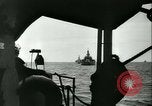
U.S. Signal Corps officers and soldiers use mine detectors, modern radars, and meteorological equipment during World War II.
The role and contribution of the U.S. Army Signal Corps in combat and war. U.S. shuttle ships loaded with signal communication supplies for U.S. and Allied troops in the European Theater make their way in the Atlantic ocean. The Squier Laboratory at Camp Alfred Vail in Fort Monmouth, New Jersey. A technician works on signal communication equipment in the laboratory. U.S. soldiers use mine detectors in the European Theater during World War II. The mine detectors detect metallic, non-metallic mines, wooden box mines, and mines in glass containers. Artillery soldiers bury large microphones into the ground in advance zones. The microphones relay back information on enemy artillery. Soldiers receive the information on radio sets. U.S. aircraft on a training flight simulating real combat situation: The aircraft lost in heavy rain and rough weather, looking for the location of Boston. The pilot switches on a modern advanced radar. The radar waves pierce thick clouds, are reflected by Earth's surface and display an image on the scope. The image shows the clear location of Boston harbor directly under the aircraft. U.S. bombers attack over the Channel coast on D-Day (6 June, 1944). U.S. soldiers employ meteorological equipment for long range weather forecast in the European Theater during World War II. Soldiers release a hydrogen balloon into the sky. Another soldier uses an apparatus to take readings of atmospheric conditions behind enemy lines. An aircraft drops an automatic weather station called SCM-18-TI by parachute into enemy territory. The timed mechanism sends out weather data in codes. The interior of the automatic weather station lying open in a field.
CRITICALPAST.COM: About Us | Contact Us | FAQs - How to Order | License Agreement | My Account | My Lightboxes | Shopping Cart | Advanced Search | Featured Collections | Website Terms & Conditions | Privacy Policy ©2026 CriticalPast LLC.
License Agreement |
Terms & Conditions |
Privacy Policy
©2026 CriticalPast LLC.