


 Francais
 Deutsch
 Italiano
Refine Your Search
M4-training stock footage and images
- Showing 4915 to 4920 of 8218 results more
more Hide
Hide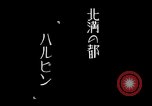
Views of street scenes and Songhua River in Harbin, Manchukuo
Flag of the Soviet-administered Chinese Eastern Railway, flying over the Harbin train station in Manckukuo. (It contains Manchukuo canton and small hammer, sickle, and star on the field.) Many cars waiting outside the station building. Overview of the city. Saint. Sofia Cathedral of Harbin seen clearly. Shoppers and pedestrians walking on crowded sidewalk under many electric power wires strung overhead. Japanese flag displayed at corner shop. Various ethnic peoples seen on sidewalks. Kitayskaya Street (China Street) lined with buildings and stores. Patrons seated on veranda of a restaurant overlooking the Songhua River. Boats on the river and bridge in far background. Closeup showing that some are houseboats in the river. Western persons in bathing attire on a sandy beach at the river. (No other ethnic groups are represented.) Sun sparkling on the water. Two Western men row a boat with a woman in the back seat. A couple of small day-sailor boats are seen under sail. View of railroad bridge over the Songhua River. A sidewheeler boat flying the Japanese Rising Sun Naval Ensign flag.
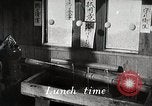
Japanese children wash hands, eat food and taught to learn physical exercise in Japan.
Japanese films show school activities to explain the school system and deficiencies are noted by narrator. The films emphasize the school's role to develop nationalism in Japan. Lunch time: Children wash their hands and come out from the building to take lunch. Children served vegetables and fish in food. Emphasis on physical culture by calisthenics and gymnastics: Children run for exercise. Children do physical exercise. Children learn the correct methods of formal exercise. Children are taught to exercise for strong and good health, which is necessary for soldier. Children do calisthenics under trained teacher. Children do gymnastic to build body and make formation. Boys doing calisthenics. (World War II period; anti-Japanese propaganda).
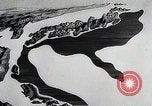
Commercial fishing industry of Japan before World War II
Animated map of fishing grounds around Japan that provide one fourth of the world's catch. Movement of the seasonal catch is tracked as it moves Northward during the year. Men and women engaged in commercial fishing, gathering in nets teeming with fish. Fishing boats plying waters of an inland sea. Fishing boats moored along the shores. Larger seagoing fishing boats leaving to operate along the coast of Honshu. Fishermen letting out nets from these boats and using cable winches to retrieve them. Views of refrigerated Japanese fishing ships that also freeze their catches, operatiing in the Siberian maritime provinces and in Alaskan and Arctic waters. Fishing boats, operating before World War 2, are seen pulling crabs aboard. View inside a floating cannery ship where salmon and crabmeat are being canned for export to places like the U.S.A. Closeup of a can displaying "ICEBOUNDBRAND" and text reading: " World Renowned Floating Cannery Pack Fresh from the Deep Sea Waters of Northern Japan. Net contents 13ounces. SELECTED CRABMEAT." Japanese wading in a river, and using trained cormorants, to catch fish. View of fisherman taking fish from his cormorant and placing them into a large jug. view of edible seaweed being harvested and laid out in the sun, in racks. Animated illustration of Japanese man and items included in his dinner of rice, soybean, fish, sea slugs, sea urchins, octopus, lily bulbs, bamboo shoots, bean curd and pickled fruits and vegetables, accompanied by a little saki (rice wine).
Various scenes showing Tokyo streets, Torii gates, festivals and a courtier looking at scroll in Japan
Map of North America and the United States, with a white outline for the United States border. Map of the Empire of Japan, including the Korean peninsula and Taiwan, and its borders in white. View of a lake with Mount Fuji. A train on top of Manseibashi bridge (1-1 Sotokanda, Chiyoda City, Tokyo 101-0021, Japan). Trams, vehicles, and bicycles in downtown Tokyo (likely Ginza or Marunouchi). A white Torii gate inside a Shinto shrine. People visit a Shinto shrine during spring. Japanese performers perform with fans on a Danjiri shrine cart during the Kishiwada Danjiri Festival in Osaka. Smokestacks in an industrial town. A wooden Torii gate. Japanese children flying a kite. A Buddhist monk blows a horn while deer graze in Nara. Spanish conquistadors and Japanese samurais ride horses. 18th century British woodcut showing metal tools and blacksmiths at work. 18th century prints showing European peasants working in a mill and horses in a grinding machine. A Japanese courtier opens and looks at a scroll with illustrations.
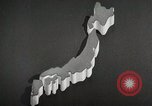
Views of China and Japan in the period leading up to the 2nd Sino-Japanese war
Film opens with outline map of Japan shown in contrast to 20 times larger China and figures representing China's 6 times greater population. Map of China is shown in pieces representing its numerous internal fiefdoms. In contrast, Japanese soldiers are shown marching in review before their singular leader, Emperor Hirohito and other national military leaders. Film shows contrasting 20th century characteristics of China and Japan. Sun Yat-sen, who figured prominently in post-Imperial China, and is considered the founding father of the Republic of China, is shown speaking to crowds. Narrator states that in 1911, this man fathered a peoples' revolution which brought to an end, China's ancient Imperial government. View of Chinese people marching and carrying flags and banners. Books are shown comparing China's Sun Yat-sen to America's George Washingon. Sun Yat-sen's political statement, shown in Chinese, contains words similar those in Abraham Lincoln's Gettysburg address. View of schools and colleges built in the new Republic of China. Chinese students shown in libraries. A couple dining in a Chinese hotel restaurant, overlooking other buildings. A tall clock tower looms at the same height outside their window. Steel being erected for a tall building. Architects at work. Scientist looking through a microscope. Technicians at work in a chemistry laboratory. Medical staff and patients in a modern hospital. Children in school under compulsory education program. Chinese people exercising their freedoms of expression and religion. The funeral of Sun Yat-sen, in 1925, attended by his successor, Chiang Kai-shek, and other Chinese leaders in military uniforms. Chinese people attending an outdoor ceremony. Examples of areas needing modernisation. Chinese workers using manually operated machinery to process fabrics. Commercial vessel plying a river using wind and sail only. Views of steam locomotives and trains being introduced to link parts of China. Trucks moving goods over roads (still unpaved). Miners working in open air mines, digging coal and iron. Molten tin being poured from a crucible. Machines performing complex tasks in a fabric mill and women tending spinning and knitting machines. School children engaged in collective outdoor games and exercise drills. Scene shifts to Japan, where Emperor Hirohito, on a white horse, leads military leaders in reviewing Japanese forces. A formation of Japanese Model 97 medium tanks passing in review, with tank commanders saluting from their turrets. Glimpse of Japanese steel mill. Headline in World-Telegram newspaper of 14 february, 1934, reads: "Tokyo House Passes Huge Arms Budget." A Los Angeles newspaper of 23 November, 1934, expands on the same story. New Orleans Times-Picayune, Sunday, 5, May, 1936, reports that Japan is strained by its huge arms costs.
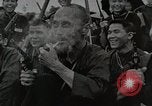
Chinese employ guerrilla warfare against Japanese occupying forces in the Second Sino-Japanese War (WW2)
Opening scene shows closeups of many smiling Chinese Guerrilla fighters during the Second Sin-Japanese War (World War II). Animated map shows Japanese occupied areas as clinging to lines of communication (roads, railroads, and waterways), Japanese troops, carrying Rising Sun flag, march into a Chinese town. A Japanese armored boat, flying the naval ensign, cruises along a narrow stretch of river, with a large Chinese fortress in the background. Its officers watch carefully through binoculars. A Japanese armored train is seen patrolling a stretch of railroad. A long line of Chinese guerrilla fighters marching along a dusty road carrying a variety of weapons. Some, both men and women, are seen. One carries a homemade flag. The camera pans across them, all carrying shouldered arms. Chinese farmers threshing grain by shoveling it into the air, as they might have done before becoming guerrilla fighters. One guerrilla carrying two grenades around his neck. Many marching with shouldered arms and conical straw hats on their backs. Views of their feet clad in sandals. More scenes of Chinese guerrilla fighters marching. Animated map shows guerrilla attacks against Japanese-held lines of communication. A Chinese guerrilla fighter running through a field, banging a tin to sound a call to arms. Others picking up weapons and responding. Next, a group of them are seen diving into a river and moving along low to the water. Others are seen running across a ridge of rock. Still others come over a hill ostensibly attacking a Japanese patrol. Two large explosions and black smoke are seen behind running guerrilla fighters. Another scene also shows Chinese guerrillas running from an explosion. Heavy smoke and Wreckage of building and equipment at a railroad site. Japanese troops struggling to transit marshes and mud, with horses pulling artillery pieces, and many men pulling a rope to retrieve a sunken field piece from a stream. One Japanese officer wipes his face with a handkerchief, as he confers with others about the situation.
CRITICALPAST.COM: About Us | Contact Us | FAQs - How to Order | License Agreement | My Account | My Lightboxes | Shopping Cart | Advanced Search | Featured Collections | Website Terms & Conditions | Privacy Policy ©2026 CriticalPast LLC.
License Agreement |
Terms & Conditions |
Privacy Policy
©2026 CriticalPast LLC.