


 Francais
 Deutsch
 Italiano
Refine Your Search
M4-training stock footage and images
- Showing 5119 to 5124 of 8218 results more
more Hide
Hide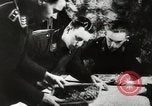
Germans prepare for a direct invasion of England, and British sailors drop naval mines in the English Channel for coastal protection.
Germany's preparations for invasion of the United Kingdom in World War 2. German soldiers study papers at a desk and prepare for direct invasion over England. The soldiers observe back lighted reconnaissance photos with a magnifying glass and observe forms of ships. A German pilot inside an aircraft in flight low near the coast of Dover, Portsmouth, and Plymouth. A German torpedo boat, or Schnellboots aka S-boot or S-boat, at sea running at high speed. German sailors and officers on the deck of a Schnellboots torpedo boat. German Army paratroopers in training for jumps. German paratroopers jump from simulated aircraft at low height, and hanging from wires, as they practice landing and rolling. German paratroopers at the open door of an aircraft and jumping in a line from the aircraft in flight. A number of parachutes in the air. A sketch shows the layers of British defensive positions from the coast inward. British flying boat over water. Gun turret of flying boat in action. Allied signal man soldier using portable signal lamp. Sailor on ship using large signal lamp. A British ship in the rough North Sea during a squall storm. British sailors in mine laying operation drop large round naval contact mines with protruding Hertz horns visible, into the sea. Booms with steel submarine nets in front of a British harbor to catch submarines and surface craft.
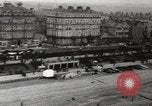
British soldiers with guns at beaches and soldiers check identity of people in England during World War II.
Aerial view of buildings and beaches on coast of England, United Kingdom, during World War 2. Narrator describes preparations by British soldiers for an invasion of England by German forces. British soldiers train for defensive operations. They run holding rifles and take up positions along the coast. Artillery gun barrel as the gun is fired. A group of soldiers run carrying guns. Two soldiers walk. A church and a field. A soldier checks the identity of a woman and a man. Another one stops a vehicle and checks the identity of a civilian driver. Soldiers board vehicles. British aircraft overhead in flight, on patrol against German attack. British troops hold guns and march. New recruits are processed: Man in civilian suit stands in queue to receive military uniform and equipment as he enters the British armed forces. A ship carrying troops from Canada departs its home port bound for the war front. Families of the troops wave from dock and wish them good bye.
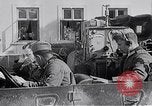
The invasion and siege of Warsaw, Poland by German forces during World War II
The German viewpoint of events during the Polish Campaign in Warsaw, Poland, during World War 2. Ostensibly to spare Warsaw from destruction, German radio operator soldiers wearing headphones, in a mobile communications center, issue an ultimatum from the German High Command, to the Commander of the city of Warsaw, demanding capitulation of defending forces within 12 hours. A German Junkers Ju-52 trimotor transport aircraft parked at a small airport. The aircraft takes off (to disperse handbills with this message.) A German Dornier DO-17 bomber takes off. Next, a German checkpoint is seen clogged with vehicles amd persons attempting to leave the city. Narrator states that only 870 members of the Diplomatic Corps and 1200 foreigners elected to leave. They are seen departing along a road set aside for that purpose by the German High Command. German officers supervise their departure. One, carrying Japanese envoys or diplomatic delegation, bears a large Japanese flag on its roof. Next, the siege of Warsaw begins, with German gunners loading and firing a 305mm siege mortar. They take refuge in a trench behind the weapon when it fires. Other German field artillery firing, including a 75mm field piece, a 15 cm sfh18 german heavy field howitzer and others not seen. German gunners using periscopic range finding equipment and looking through binoculars to direct artillery. A freight train hit by gunfire. More German 15cm sFH 18 guns firing. German troops watching the artillery barrages from a trench. Smoke rising in distance. More sfh18s firing. Smoke clouds forming above the city. Adolf Hitler observing the artillery siege through periscopic binoculars. Tops of the heads of his officer entourage (their uniform caps) as they crowd around Hitler. More smoke rising as the artillery barrages continue. Adolf Hitler holding binoculars as he stands in the company of army officers. He, and they, look up at sound of aircraft overhead. View of Ju-87 Stuka dive bombers low overhead. Aerial view of smoke on ground and formed into billowing clouds above the city. View from cockpit of observation plane, of smoke rising from Warsaw citadel.
U.S. President Wilson gets reelected as Americans prepare for war during World War I
Events during World War 1. Sketches : In November 1916 newspaper shows Wilson reelected as a president. Cartoon depict the people of America supporting the Wilson's policy of peace. Several sketches of Thomas Woodrow Wilson after winning the election. Second inaugural of President Wilson at the United States capitol in Washington D.C. The German High Command in Berlin. Posters show the hardships of German citizens due to Allied blockade. Germany announces unrestrained submarine warfare against all vessels. Posters of the Germans destroying the American ships. The New York times reports German demarche to Japan and Mexico for support to Germany. Sketch depicts Germany Secretary of foreign affairs, Arthur Zimmermann seeks these alliances. Theodore Roosevelt addresses people. Several sketches of Woodrow Wilson. On April 2nd 1917 President Woodrow Wilson obtains declaration of war against Germany, from congress. American enters the conflict. U.S. Soldiers carry weapons in the battle field. sketches of several American officials. People work in factories to produce war materiel. A person with posters promoting Liberty bonds. A blindfolded person draws numbers from a bowl for civilian conscription. Citizens entering military service. People in a railroad train and others stand outside. People holding baggage walk in a group. A doctor checks the mouth of a recruit. Army recruit getting a haircut. Soldier stands holding guns. Soldiers practice firing artillery. Soldiers march. American recruits practice on wooden guns. Several sketches of the allied armies.
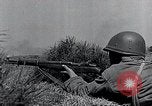
Role of American women in the military; WACS, nurses, and other military roles for women in World War 1 and World War 2
The role of women in the armed forces in the United States. A U.S. Army sniper fires a 1903 Springfield rifle on the Korean front during the Korean War. A woman in the Women's Army Corps (WAC) inspecting such a rifle in the U.S. Several Patton Tanks moving up a hilly road in Korean War. A WAC testing the turret of a Patton tank. U.S. Army women at desks as they work with Army men in an office. Picture depicts Molly Pitcher, wife of a fallen U.S. Revolutionary War artilleryman. Depiction of George Washington at desk. Depiction of Clara Barton, an American nurse with a wounded soldier. Reenactment of Clara Barton working with another women. A man holds the flag of the American red cross. Actual footage of a Wright Brothers aircraft in flight. Women in long dresses pushing an early model of car. A group of American soldiers in World War I running on a battlefield.. U.S. Army troops wearing gas masks and firing rifles from trench in World War I. American women war production workers assembling belts of machine gun bullets during World War I in a munitions factory in the United States. A nurse tending a wounded soldier. A woman nurse helping place a wounded soldiers into an ambulance in Europe, in World War I. Nurses in an operating theater in a hospital during World War I. Women march in victory parade at end of World War I. Women's suffrage demonstration by suffragists (sometimes called suffragettes) in front of the White House and then women and men entering a polling place to vote around time of of 19th amendment giving women the right to vote in 1920. Aviatrix Amelia Earhart climbing down from an airplane. Swimmer Gertrude Ederle on an award stand. U.S. Navy Vought SB2U-2 planes in flight as they drop bombs. Scene of Pearl Harbor attack by Japanese during World War 2. Army nurses look out from deck of ship in World War II. Soldiers fire artillery. View of mountains and scenes of combat on islands in the Pacific during WWII. General Mark Clark awards nurse Silver Star medal. Repatriated Army nurses, who were prisoners, are loaded onto an aircraft by means of a fork lift. In 1942, President Franklin D. Roosevelt signs legislation establishing the Women's Army Auxiliary Corps (WAAC). Secretary of State George Marshall and others witness the signing. Depiction of Godess Athena. Women volunteering for WAAC move in a line carrying bags. American women in military uniform marching. WAAC volunteers being processed. Women receive physical exams and receive inoculations. WAAC personnel being trained: working on X rays, in medical pharmacy laboratories, food service, and radio work. Women on board warships in World War 2.
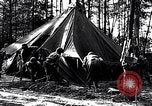
U.S. Army nurses treat injured soldiers and doctors perform surgery in Korea during the Korean War.
The role of women in the U.S. Army in Korea. Army nurses set up tent and "hit the ground" when an incoming round of artillery fire hits. Trees in the background. Army nurses treat injured soldiers in a medical railroad train. Nurses give medicine to soldiers and comfort them in a hospital. A nurse carries a tray of medicines and gives medicines to white and African American soldiers. A soldier takes medication. A team of doctors perform surgery.
CRITICALPAST.COM: About Us | Contact Us | FAQs - How to Order | License Agreement | My Account | My Lightboxes | Shopping Cart | Advanced Search | Featured Collections | Website Terms & Conditions | Privacy Policy ©2026 CriticalPast LLC.
License Agreement |
Terms & Conditions |
Privacy Policy
©2026 CriticalPast LLC.