


 Francais
 Deutsch
 Italiano
Refine Your Search
M4-training stock footage and images
- Showing 5233 to 5238 of 8218 results more
more Hide
Hide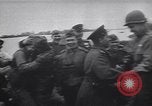
End of World War II and signing of UN charter in San Francisco, United States
United States and Soviet Union soldiers celebrate their victory as world War 2 comes to an end in Germany. "Elbe Day": Soviet and American soldiers meet at the River Elbe on 25-26 April, 1945. View of Nazi swastika being blown up at Zeppelinfeld in Nuremberg Germany in 1945. Scenes of celebration in the streets of Paris with French civilians cheering American and French soldiers and celebrating the end of World War 2. French women kiss soldiers. Crowd gathered in Times Square in New York celebrating VE-Day (Victory in Europe Day). Foreign Ministers of fifty nations arrive at San Francisco to sign the United Nations Charter. United States President Harry S. Truman addresses the delegates at the closing ceremony of the conference on June 26, 1946. Ships bring American soldiers back home, including some wounded, after World War 2. Women and families on dock at harbor wave and smile at arriving troop ship with American soldiers returning home. Also seen are soldiers of other countries including Soviet Russian soldiers returning to their families at a train station, with smiling and tearful family reunions. Cemeteries with headstones honoring soldiers who died in the war. Military hardware being scrapped to make peacetime goods. Views of explosive charges being set and military aircraft being blown up for scrap. Piles of scrapped military vehicles. A woman in a factory organizes newly manufactured clothes irons. Workers in a factory perform final assembly on newly manufactured ovens and stoves for homes.
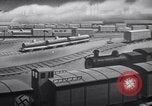
Allied bombing missions to destroy railroads and marshaling yards in occupied France and Germany during World War II
Cartoon representation of German rail yards and war factories, opens the film. Cities of : Anklam; Bremen; and Frankfurt are highlighted as critical factory and railroad junctions. Animated map shows Allied air strikes against French marshaling yards in Spring of 1944 in preparation for the invasion at Normandy. In February, 1945 Allied officers use large wall map to discuss and plan the destruction of all railroad operations in the Ruhr and surrounding areas. View of U.S. bombers in formation (with fighter cover overhead) on bombing missions in Operation Clarion, against all small and medium rail junctions in Germany. View from Allied bomber of Bombs falling and exploding at a rail junction. More aerial views of bombs exploding in numerous places during this operation. An American B-17 Flying Fortress bomber dropping bombs on a railroad marshaling yard. Aerial view of bombs exploding on targets in Essen. Views of wide destruction wrought at German railroad facilities. A US Army Air Forces P-51 fighter plane descending to strafe a target. Gun camera views of aircraft strafing lines of communication in Germany, including road and barge traffic. Closeup of runs firing from P-51 aircraft. Railroad trains being strafed and dramatic explosions at target rail sites.
United States 8th Air Force attacks rail,roadways,bridges and canals in Germany during second World War
United states 8th Air Force attacks roadways, canals, bridges in Germany during the Second World War. A bomb strikes a train causing large fire. German ME-109 explodes in mid air and another enemy aircraft spins off after one of its wings is shot at.
Japanese attack Hawaii islands in United States during World War 2, and U.S. response to attack.
A film titled 'Jap-US at war' shows Japanese diplomats leave the venue of the diplomatic talks in Washington DC in United States, soon after Japanese attack on Pearl Harbor, Hawaii islands. Secretary of State, Cordell Hull also leaves the building. President Roosevelt is seen. Japanese troops prepare for war. Japanese troops in mainland Japan board trains as crowds of Japanese citizens wave Japanese flags and cheer for their troops leaving for war. Scenes of Diamond Head in Hawaii in peaceful times are shown, including buildings, people on beaches with sunbathers and fast small boats with outriggers in the surf. City streets in Honolulu Hawaii are shown with cars and shops and view of Aloha Tower lighthouse in background. Japanese planes drop bombs over Pearl Harbor in Hawaii. United States Presidential Secretary Stephen Early tells the press of Japanese attack and the damage suffered by America. People in American cities read newspapers and scrolling lit sign (likely Times Square New York) with news about Japanese attack as the lead story. American citizens buying newspapers describing the attack at newsstands. U.S. troops march in front of War Department - Navy munitions building in Washington DC. Night time view of soldiers on guard in Washington DC. Sailors return to battle stations. U.S. Navy sailors boarding ships of U.S. Navy in the U.S. west, bound for battle. Brief scenes from American ports in Guam and Wake Island. U.S. Navy fleet ships underway in Pacific heading west toward battle with Japanese forces. Biplanes launched via catapult from U.S. Navy ships and then seen flying over Navy ships in formation as narrator encourages Americans to work together and put aside differences to win the war. Overhead view of a U.S. Navy ship passing under a bridge with deck busy with sailors and operations.
Lenin and revolutionaries during Russian Revolution in Moscow, in Soviet Union
Clip opens with scenes from 1940s before moving to historical footage from 1917. A copy of Pravda, a Bolshevik Worker's newspaper is seen. People demonstrate on the streets of Moscow against the Czar during Russian Revolution. People tearing down symbols of White Russian rule. Crowds demonstrating in streets as newspapers with news are thrown to the people in the crowds. Masses of Russian people and troops during demonstrations. Lenin arrives at a railway station. Portraits of Lenin and Stalin during Russian Revolution are seen. Views of Lenin viewing training and drills of early Soviet Russian army forces. Troops, cavalry and military band at a march past, as Lenin looks on.
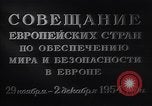
Soviet Minister Molotov welcomes a number of dignitaries in Moscow, Soviet Union
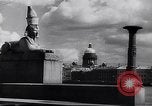
Wide views of the Kremlin in Moscow, Russia, Soviet Union. Cars and traffic on busy streets of city of Moscow. Molotov, Foreign Minister, welcomes a number of dignitaries at airport and at a railroad station in Moscow, Soviet Union, as they arrive for the "European Conference on Peace and Security in Europe" held from November 20 - December 2, 1954 (a Soviet-organized event serving as a propaganda counter to NATO and western alliances). Scenes at airport as locomotive train and railroad cars arriving at railway station and dignitaries of various soviet regions greet Molotov and other officials. Dignitaries including representatives of Estonia, Latvia and Czechoslovakia review honor guards and parades.
CRITICALPAST.COM: About Us | Contact Us | FAQs - How to Order | License Agreement | My Account | My Lightboxes | Shopping Cart | Advanced Search | Featured Collections | Website Terms & Conditions | Privacy Policy ©2026 CriticalPast LLC.
License Agreement |
Terms & Conditions |
Privacy Policy
©2026 CriticalPast LLC.