


 Francais
 Deutsch
 Italiano
Refine Your Search
M4-training stock footage and images
- Showing 5491 to 5496 of 8218 results more
more Hide
Hide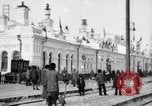
Scenes in snow covered city of Omsk, Russia, during Russian Civil War and World War I.
Scenes of Omsk, Southwest Siberia, during Russian Civil War and World War One. Russian soldiers and civilians on platform at the railway train station. Scenes of snow covered streets with many horse drawn sleds and a few automobiles. The Seraphim Alekseevskaya Chapel can be seen in the background. World War 1 military personnel and civilian pedestrians seen among the people.
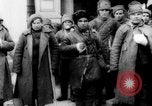
Wounded troops White Russian troops and American red Cross (A.R.C) supplies being unloaded in Russia during Russian Civil War and World War I.
Allied Expeditionary Forces in Siberia, Russia during Russian Civil War and World War I. Several dozen ambulatory wounded White Russian troops walk along a train station platform. They move out of the station. They are dressed in winter overcoats and woolen hats. Many have bandaged limbs. Some are on crutches. American Red Cross (A.R.C) supplies being unloaded. A red cross sign on the wooden boxes.
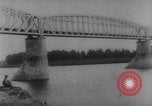
A railway bridge, damaged building and a wrecked vehicle in Russia during Russian Civil War.
Damaged buildings and installations in Siberia, Russia during Russian Civil War (and World War I). A railway train bridge. Two small boats underway at river. A damaged tower. Men stand in front of the tower. A wrecked vehicle.
OSS Morale Operations led by American in Burma for psychological warfare to demoralize the Japanese troops.
OSS (Office of Strategic Services) film on Project Gold Dust gives details of the psychological warfare techniques used by OSS Morale Operations (MO) Unit and Kachin guerrillas in Burma during World War II to demoralize Japanese troops obstructing linkage to Burma and the Ledo Road. Kachin guerrillas including North Burmese killer tribesmen prepare for an operation. They are recruited, trained and led by an American officer. MO Detachment 101 troops. Burmese load shells, guns and artillery. 1st Field team of MO OSS personnel joins Detachment 101. An aircraft lands. The guerrillas board the aircraft and are transported all over Burma. Development of MO. A message from an American officer commanding a company of Kachin comes for Major Boldt. The message is dispatched to the Major and a distribution officer delivers it to the chief. A Production and Intelligence officer works. They discuss strategy about MO material best suited to reach the Japanese. The MO intelligence officer contacts Detachment 101 research and analysis branch. They discuss the accuracy and details of the operation. They go to interrogate a Japanese 18th Division soldier held prisoner. MO and the distribution officer discuss the strategy. Radio Major Haan consults Kachin. A detailed report is prepared and given to a pilot for dispatch. The message is given to Major Boldt. The MO staff at work. A lieutenant interrogates Japanese prisoners and gains their cooperation. The MO discusses Project Gold Dust. A forged surrender order to be given to Japanese. Production of the leaflets of forged order. Press prints the leaflets in the mobile production van. The leaflets are cut, dispatched and packaged. Burmese plant the forged order in a town. A lieutenant reads a report on the spread rumor. He talks to an Anglo Burmese woman. The rumor is spread in the town. Burma Jungle 101 patrol distributes the leaflets. A carrier pigeon for Major Boldt is sent. An aircraft arrives to pick up the prisoners who have surrendered.
Psychedelic drug Lysergic acid diethylamide discovered by Dr. Albert Hofmann is used for mind control in the United states.
Documentary depicts development and administration of LSD (Lysergic acid diethylamide ) by the CIA (Central Intelligence Agency) as a tool for mind control (Project MKUltra). Scenes of swirling colors and lights meant to simulate the experience of someone being under influence of a hallucinogen. Prostitutes and late night city street scenes. A bull in a bull fighting ring that narrator says has electrodes implanted in its head to control it. A man sitting in a chair while under the influence of a drug speaks emotionally and cries. A close up of George White who worked on the CIA program. On September 21, 1977, Stansfield Turner, Director CIA, speaks about Mission Mind Control. Members are seated in a hall. News correspondent Paul Altmeyer stands in front of the Headquarters of OSS (Office of Strategic Services, and precursor to the CIA) in its original World War 2 era location in Washington DC. The first mind control work began from this Headquarters. The members who are the part of this mission are the shapers and molders of the OSS. Still photos of U.S. General, William Joseph Donovan, nicknamed 'Wild Bill', and Boston industrialist Stanley Lovell, who is the Head of OSS Research and Development efforts into mind control. Still images of OSS Captain George H. White, formerly of the Bureau of Narcotics. Correspondent shows and reads from the diary of George White and talks about his training and schooling. J. Michael Burke, President of Madison Square Garden Center is seen walking across the basketball court in the Center. He was a former colleague of Mr. White, and Burke talks about George White and his technical knowledge. Another colleague of White who is a narcotics officer talks about him. A close up of George White. A note written in White's diary. George White worked on a truth drug at St. Elizabeth's Hospital in Washington DC where experiments were conducted. View of exterior of Saint Elizabeth's psychiatric hospital in Washington DC. A 1952 CIA memo says the aim is "controlling an individual to the point where he will do our bidding against his will." Exterior views of the Sandoz Laboratory buildings in Basel, Switzerland where doctor Albert Hofmann believed that they had discovered and found a psychedelic drug and the discovery was LSD. Retired Chief Psychologist for CIA, John Gittinger, talks about the powerful drug and is being interviewed publicly. CIA's interest in LSD was intense but they were worried that the Russians would get hold of it. Commentator notes that mistaken intelligence reported that Sandoz Laboratory was going to put 100 million doses of LSD on the open market. Concerned, the United States was prepared to buy the entire supply. However, through information learned from Freedom of Information Act filings, John Marks, author of The Search for the Manchurian Candidate, tells the interviewer that this was mistaken information caused by a mixup when an American military attache confused milligrams versus kilograms, so there were in fact only 100 doses on the market. Brief footage of CIA chemist, Dr. Sydney Gottlieb.
German Chancellor Adolf Hitler attends the signing of the European Axis Pact between Germany and Italy (The Pact of Steel).
The signing of the European Axis Pact (called, by Mussolini, the Pact of Steel) in Germany on 22th May, 1939. Italian Foreign Minister, Count Galeazzo Ciano arrives in Berlin by train and is met by his German counterpart, Joachim von Ribbentrop. Ciano reviews honor guards as a band plays. Then he and von Ribbentrop drive in a car through throngs of cheering Berliners. Later, when the principals and German and Italian officials are assembled for the signing, Adolf Hitler enters the hall and walks over to greet Ciano and Goering and several German and Italian officials present. He then sits down at the table and is flanked by the two foreign ministers who sign the pact. Hitler says farewell to Ciano and leaves the hall. Von Ribbentrop publicly explains the pact.
CRITICALPAST.COM: About Us | Contact Us | FAQs - How to Order | License Agreement | My Account | My Lightboxes | Shopping Cart | Advanced Search | Featured Collections | Website Terms & Conditions | Privacy Policy ©2026 CriticalPast LLC.
License Agreement |
Terms & Conditions |
Privacy Policy
©2026 CriticalPast LLC.