


 Francais
 Deutsch
 Italiano
Refine Your Search
Mazamet France 1950 stock footage and images
- Showing 217 to 222 of 6221 results more
more Hide
Hide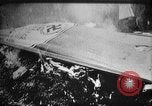
Czechoslovakia and Soviet relations after World War 2; Dubcek liberalization during Prague Spring; Soviet occupation in 1968
History of Czechoslovakia from 1919 to 1968 depicts lives of its people and various crisis. Clip shows combination of still images and moving images, with background of Czech musical soundtrack. A burning Nazi plane shot by Soviet military during World War II. Soviet Red Army marches in Prague, Poland in May 1945 to rescue from German occupation and atrocities. People destroy Nazi emblems and symbols from buildings. People assemble in large numbers on roads and cheer for the incoming Soviet troops and tanks. Civilians of Czechoslovakia during normal life after World War 2. Workers in mines, farmers in field and women work in houses. Spread of communism and communists make a star formation during a rally in Prague (sometimes called the Prague Spring). President Edvard Benes in 1948 signs pact with Soviet government. Photos of Soviet General Joseph Stalin and other Soviet leaders in his office. Various Presidents and leaders of Czechoslovakia during the 1950s. Military and civilian communist groups march on streets in 1956. Czech Skoda automobile production factory scenes in mid 1960s. Workers work in factories and shops till night hours. A Czech textile factory scene. Czech men and women in 1960s fashions enjoying mugs of beer. Several scenes with Alexander Dubček, (Alexander Dubcek), then Soviet leaders Nikita Khrushchev and Nikolai Brezhnev arrive for meeting with Dubček. Smiling Czech people walk in cities and at a cafe during liberalization measures. Soviet and Warsaw Pact tanks, armored vehicles, infantry and aircraft start their occupation ending the Prague Spring in Prague, Bratislave and other cities in August 1968. Civilians protest, demonstrate, and argue with Soviet troops and demonstrate in streets. Some approach tanks and attempt to damage the tanks. Large crowd of civilians watch the retreating Soviet forces from Czechoslovakia in 1968. Red Army met with agitation and resistance on streets by civilians. Soviet troops fire at some demonstrating civilians.
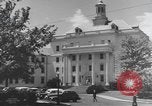
Setting up of hospitals to treat veterans suffering from neuropsychiatric disorders in the United States.
Medical facilities related to neuropsychiatric disorders being provided by the Veterans Administration in the United States. Exteriors of a V.A. hospital building. Animation shows the increase in number of neuropsychiatric patients from 1942 to 1950 and forecasts growing through the 1980s. Narrator describes high prevalence of such problems among veterans. (Also known as "shell shock" or, more recently, Post Traumatic Stress Disorder, or PTSD.) Exteriors of hospitals and training schools where neuropsychiatric specialists train. A doctor talks to a patient in a bed. Neuropsychiatric research being conducted in a laboratory. A technician works on an instrument. A neuropsychiatric specialist being trained. A technician works on an instrument. Psychiatrists discuss. They give various therapies to patients like the shock therapy, the socializing therapy in which a patient plays golf.

A hospital under the Veterans Administration that treats patients suffering from various diseases in the United States.
Medical facilities related to medicine and surgery being provided by the Veterans Administration in the United States. A graph depicts the increase in number of patients suffering from medicine and surgical diseases up to 269% from 1942 to 1950. Two war veterans at a hospital as they recover after an ailment. A surgery being performed. A pathological conference being conducted. Specialists give on the spot directions as they look after the patients. Doctors examine patients as they take X rays. A doctor looks after veterans suffering from various diseases. Patients at a hospital suffering from tuberculosis. Patients in wheel chairs. Women lying down in a garden. A doctor takes a patient's X ray. He looks at the X ray film.
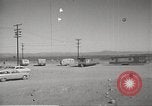
The impact on assorted vehicles due to a nuclear test during Operation Cue conducted at Yucca Flat region in Nevada.
Operation Cue conducted at Yucca Flat region in Nevada, United States. The test conducted to examine the effects of atomic explosion on buildings, houses and cars. Dummy vehicles including 1950s cars and motor homes parked at the test site. Nuclear bomb explodes at the site and vehicles are destroyed. Smoke rises from the atomic bomb explosion.
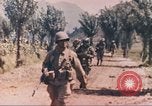
Marines of U.S. 1st Marine Division walk and fire guns in Korea.
1st Marine Division in Korea during summer and fall of 1950 during the Korean War. Marines of U.S. 1st Marine Division walk on a mud road. The marines walk past an enemy tank burning beside the road. Fire on a hill. A tank driven on the road. The marines fire machine guns during battle.
Scenes of life in post-World-War-Two Great Britain
Lifestyle of British people in early 1950s. Group of British coal miners. Several British businessmen. British residential neighborhoods post World War 2 both in cities and in outlying neighborhoods. British working men in hats and coats walking to or from work. Well-to-do neighborhood. Factory workers producing heavy equipment. British Automobile manufacturing factory with workers assembling cars. A Bentley automobile being loaded on a ship. Two U.S. Airmen sightseeing in London view traffic on streets with cars and lorries, double-decker buses, and pedestrians. View of diverse British workers, both men and women, walking on a bridge to or from work as double decker buses and other vehicles pass by on the road.
CRITICALPAST.COM: About Us | Contact Us | FAQs - How to Order | License Agreement | My Account | My Lightboxes | Shopping Cart | Advanced Search | Featured Collections | Website Terms & Conditions | Privacy Policy ©2026 CriticalPast LLC.
License Agreement |
Terms & Conditions |
Privacy Policy
©2026 CriticalPast LLC.