


 Francais
 Deutsch
 Italiano
Refine Your Search
Mazamet France 1950 stock footage and images
- Showing 235 to 240 of 6222 results more
more Hide
Hide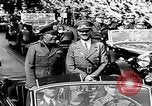
Twentieth Century scenes spanning German annexation of Austria; Italy-Ethiopia conflict; Korean War; and Vietnam War.
Adolf Hitler and Benito Mussolini standing together in an open car during a motorcade in Munich, in 1938. Civilian spectators render Nazi salutes as they pass. Next, British Prime Minister, Neville Chamberlain, arriving for the Munich treaty conference, steps from a British Airways Lockheed Model 14 passenger plane. An honor guard of helmeted and white-gloved German soldiers stands at attention during his welcome. Adolf Hitler climbs stairs of Berghof together with Chamberlain and Hitler's interpretor, Paul Otto Schmidt, on September 15, 1938 for their conference. Crowds of Germans give Nazi salute and cheer as Hitler and Mussolini appear on a balcony. Prime Minister Chamberlain back from the conference, speaks to the crowd at Heston Aerodrome on 30 September 1938, saying, among other thing, "We regard the agreement signed last night, and the Anglo-German naval agreement as symbolic of the desires of our two peoples never to go to war with one another again." Damaged buildings and ruins of city. Mussolini giving an impassioned speech. Italian cavalry carrying out a charge in Ethiopia. Italian troops employing machine guns in the Second Italo-Ethiopian War circa 1936. Italian infantry charging across sand dunes. Ethiopian Emperor Haile Selassie at the League of Nations podium. Nazi Swastika eagle statue. A formation of German troops, during the Anschluss (German annexation of Austria,in 1938). Hitler at a podium. People rendering Nazi salute in annexed city. At this point, the film transitions to 1950 as North Korean troops cross the 39th parallel and start the Korean War. A nighttime artillery barrage. North Korean troops firing a Browning M1917 machine gun and rifles. The feet of American soldiers are jumping out of foxholes as U.S.M26 Pershing tanks fire their guns from tilted positions below hills. A Pershing tank crosses a bridge back into South Korea, where a sign reads:"You are now crossing the 38th parallel, Co.B 728 MP." Scene shifts again, to President Lyndon B. Johnson delivers speech about Vietnam at a news conference on July 28, 1965, in which he states,among other things, "Three times in my lifetime...Americans have gone to far lands to fight for freedom..." as he explains U.S. involvement in Vietnam and the Vietnam War.
Ronald Reagan talks about how Radio Free Europe pierced Iron Curtain and appeals for help to keep it operating, in New York.
Public Service Announcement (PSA) for Crusade for Freedom in New York. Ronald Reagan, famous Hollywood actor, talks about how Radio Free Europe has pierced the Iron Curtain (approaching people beyond reach in Communist countries). Reagan stands beside a poster advertising the campaign. Close-up view of the "World Freedom Bell" ringing atop Berlin City Hall or Rathaus Schöneberg (John-F.-Kennedy-Platz, 10825 Berlin, Germany) in West Berlin, Germany. View of the 135,000-watt radio transmitter and radio tower. Personnel in radio studio working on transmitter and radio station in West Germany. Views of various men speaking into microphone in radio studio. Dramatized view of people handing over letters of gratitude to Radio Free Europe, "smuggled past the secret police" under hats identifying Communist informers by name. View of a letter being cut into multiple pieces for safe transport in secret. U.S. Army General Lucius Clay steps to podium during unveiling ceremony for the bell unveiling ceremony on October 24, 1950. Animated map shows Radio Free Europe transmission tower and locations of planned future transmitter towers to penetrate the Iron Curtain (during Cold War). Another map is shown with a transmitter location east of China "to establish Radio Free Asia to stop the spread of Communism in the far east." Ronald Reagan appeals for help to keep Radio Free Europe operating. He holds up a large envelope with the New York City mailing address to send contributions for the radio campaign: "General Clay, Crusade for Freedom, Empire State Building, New York City."
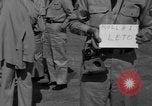
Film shot by U.S. Air Force personnel during visit to Cuban Air Force base at Campo Columbia near Havana, Cuba in January, 1953
Scenes of Cuban Air Force Base and headquarters, at Campo Columbia near Havana, Cuba, and aircraft acquired from the United States Air Force. Film opens with U.S. Air Force sergeant photographer holding a slate marked roll #1, LETO. He is dressed in starched khaki uniform. Other U.S. Airmen stand behind him. Scene shifts to a North American T-6 trainer airplane, Number 119, with skin removed from forward fuselage. A maintenance stand and tools are positioned in front of the aircraft. Hangar number 3 sits behind the T-6. The camera pans right showing two bubble-top P-47Ds parked on the ramp. The first displays number 458 (One of twenty-nine P-47s purchased from the USAF in the period, May, 1952 through June 1953). Work is being performed on the engine of the other. Camera panning right shows another T-6. Also seen is a Lockheed C-56 Lodestar (Lockheed Model 18) that was purchased in 1950 and numbered CU-EDU 2. It is parked in front of a low building with parapets and a flag flying atop it. A large multistory Headquarters building, topped with a control tower is seen in background. Closeup of another P-47 parked on edge of ramp, with its tail in the grass. Camera is moved back showing P-47s and T-6s on ramp in front of the headquarters building. Next, several U.S. Airmen are seen walking across the ramp towards the operations office on ground floor of the Headquarters building. More views of P-47s and T-6s plus a Consolidated PBY 0A-10 Catalina amphibious aircraft parked on the airfield. Several C-47 (DC-3) transport aircraft are seen at the end of the film.
Sights including Chesapeake and Ohio (C&O) Canal, Mount Vernon and Christ Church in Washington DC.
Film on Sesquicentennial of Washington DC, released in 1950. Film segments created for presentation by Treasury Department at meeting on April 25, 1929. A portrait of the first President of the United States George Washington. Animated maps of the original 13 colonies and the 10 square mile Federal District of Columbia. View of the Chesapeake and Ohio (C&O) Canal. George Washington's landmark plantation home, Mount Vernon. Christ Church in Alexandria. Old houses on a street and a hill in Georgetown. Sketch of Suter's Tavern. Animated map shows the L'Enfant development plan and the location of principal buildings. The first section of the U.S. Capitol built on Jenkins Hill. The U.S. Capitol building designed by William Thornton and Benjamin Henry Latrobe. Sketch of the White House designed by James Hoban. Sketch of Capitol Building in 1827 with dome constructed by Charles Bullfinch.
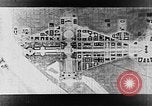
Demolition of old buildings in Federal Triangle of Washington DC and construction of new federal buildings in early 1930s
From film dealing with sesquicentennial in Washington DC, released 1950. Review of development of Washington, DC. Model of the Memorial Bridge and the Constitution Avenue in the year 1930. A model of the Jefferson Memorial. The Agriculture Building and building for the members of the House of Representatives. Elevated view of 15 blocks of old slum and run down home and office buildings in the Federal Triangle area that had been marked for destruction. Narrator characterizes them as "unsightly and useless sections of the city." Men work in demolition of slum area. They push over a building wall during clearing of the area. Crane with wrecking ball demolishes building in the Federal Triangle area. View of Department of Commerce under construction circa 1931. Construction of the Post Office Department building is seen underway in the same period.
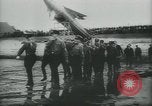
Montage of German rocketry scenes from 1930s through World War II. Nazi surrender. Atomic bomb. Japanese surrender
German rocket pioneer, Gerhard Zucker, attempting to develop postal rockets in the 1930s. Location is Wadden Sea off Cuxhaven, on April 9, 1933, where Zucker follows Nazi Sturmabteilung (also called SA or Stormtroopers) carrying the mail rocket across wet sands. The rocket is set up on a launch stand. Zucker and an assistant ignite the 8 side rockets and the mail rocket takes off. It noses up and loops over backwards, falling to the sand. German Stormtroopers lift up the damaged device. Next, is seen a later, more modern, rocket trial ending in failure. Two German engineers display a model similar to the pulse-jet-powered "buzz bomb" (V-1) employed by the Nazis in World War 2. A brief glimpse of similar American machine on sand flat, as narrator states German acknowledgement of knowledge gleaned from Dr. Robert Goddard's work. A German V-1 flying bomb (aka Doodle Bug) being launched in 1944, during World War 2. View of British houses of Parliament, London, England; an air raid shelter sign in City of Westminster. Londoners waiting out a raid in the shelter. Scenes of fire and destruction during German bombing of London, as narrator speaks about the more advanced German V-2 ballistic missiles employed later in the war. Londoners trudging through debris amongst bombed out buildings. Change of scene to U.S. infantry and armor advancing deep into Germany. Narrator refers to them overrunning rocket bases and other vital war-making facilities, near the end of the war. Glimpse of large number of German prisoners of war. Documents of military surrender being signed by Field Marshal Wilhelm Keitel, in Berlin, May 8, 1945. Closeup of Keitel. Scenes of American forces operating in Pacific theater. Aerial view of atomic bomb explosion. Japanese surrender ceremony on September 2, 1945, aboard the battleship USS Missouri. U.S. soldiers and other service personnel return home and greeting loved ones at end of war. Aerial view of Pentagon building and surrounding area in Arlington Virginia near Washington DC. U.S. troops boarding a ship in San Francisco, bound for war again, this time in Korea (1950).
CRITICALPAST.COM: About Us | Contact Us | FAQs - How to Order | License Agreement | My Account | My Lightboxes | Shopping Cart | Advanced Search | Featured Collections | Website Terms & Conditions | Privacy Policy ©2026 CriticalPast LLC.
License Agreement |
Terms & Conditions |
Privacy Policy
©2026 CriticalPast LLC.