


 Francais
 Deutsch
 Italiano

Refine Your Search
Mazamet France 1950 stock footage and images
- Showing 4669 to 4674 of 6223 results more
 Hide
Color Sound

Crashes showing pilots Lindbergh, Richard B. Byrd, Noel Davis and Stanton Wooster in the United States.
'The Epic American Trans Atlantic Flight' depicts crashes involving various pilots in the United States during early aviation history. Captain Charles A. Lindbergh. On September 21, 1926, Rena Fonck stands in front of his Sikorsky airplane, ready to try a solo flight across the Atlantic to Paris. He takes off and crashes in flames. Navy Commander Richard E. Byrd poses. On April 16, 1927, his Fokker C-2 trimotor airplane ("America"), piloted by Anthony Fokker, with Byrd, Floyd Bennett, and George O. Norville on board, flips over on takeoff at Hasborough, New Jersey. In September, 1927, Clarence Chamberlin in a Bellanca aircraft taxis and takes off. The tail and right main wheel dig into the soft field on landing and the airplane is severely damaged. The wreck of the "American Legion" Keystone Pathfinder airplane that carried Commander Noel Davis and Lieutenant Stanton Wooster to their deaths, in a crash landing, in the Back river, near Langley Field, Virginia, In Paris, on April 26, 1927, French pilot, Captain Charles Nungesser, and Francois Coli pose before taking off on their ill fated flight in a Levasseur PL8 aircraft named " White Bird." Charles Lindbergh standing next to his mother, Evangeline Land Lindbergh. The "Spirit of St. Louis" is towed out and refueled at Mineola, New York. Charles Lindbergh climbs into the plane and makes a bumpy takeoff. Bystanders watch. People gather to greet him upon arrival in Paris. Lindbergh poses with U.S. Ambassador to France Myron Herrick. Lindbergh honored by the French President Gaston Doumergue.
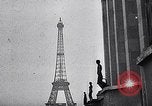
Dwight David Eisenhower travels in Europe as the Supreme Commander of the NATO forces.
A biographical documentary shows the life of Dwight Eisenhower who was the President of the United States from 1953 to 1961. Eisenhower travels in Europe as the Supreme Commander of the NATO forces. A Hotchkiss Artois makes a stop. The Eiffel Tower in Paris, France. Dwight David Eisenhower and officers salute. Others stand near him. Statues on a wall outside a building. Dwight David Eisenhower comes out of a car. A guard with sword in his hand at the entrance. Eisenhower walks inside the building with a French officer. He is greeted by an official. He is seated with another officer. People seated at a round table in a conference hall. Netherlands: A plane lands. Soldiers are gathered. They salute. Eisenhower walks with officers. The 'Schiphol' near Amsterdam. Bikes move ahead of a car. The car parked in front of the Cabinet of the Minister President at the Dutch Ministry of General Affairs. He meets other officers. A building. He gets out of the car. The flag of Norway. The Big Ben in London, England. Eisenhower arrives at the Ministry of Defense and greets the waiting public. He addresses officials. People sit and take notes. The Monument to Victor Emmanuel II in Rome, Italy. Eisenhower walks with officers and officials. Frankfurt: An aircraft is stationed. Eisenhower is greeted by an officer. Eisenhower reviews soldiers marching in Heidelberg, Germany. He salutes the soldiers.

Soldiers fire artillery and move into action in streets of city as Muslims protest in Algeria.
80 die in Algeria in Moslem protest. Views of city and closely packed houses. Vehicles on a road. Police standing in two lines beside the road. A street in the city. Soldiers fire artillery as Moslems protest against France's plan to isolate the natives if peace talks did not lead to a close association after independence. The soldiers move into action in the streets of city. Rioters carried by soldiers. Soldiers standing in a group, show Algerian flag.
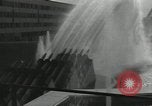
The operations of the United States Army for the defense of Europe.
United States officials in Paris, France. The Eiffel Tower in view. Officials of the United States and other European nations discuss amongst themselves and stand against aggression. United States troops advance on a battlefield for the defense of Europe. Firing and bombardment on the battlefield. Troops and a band march. People watch them.
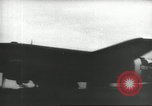
U.S. Army airborne infantry training before and after World War II
U.S. Airborne forces in World War 2. U.S. Army Air Forces C-47 aircraft, painted in invasion stripes, take off as darkness falls, on June 5, 1944 (night before D-Day) and assemble in large formation headed toward France. Airborne troops seated inside cabin of a C-47. Some smoke cigarettes. One has "Rocky" stenciled on his helmet. One smokes a cigar. An officer stands in doorway of plane and then jumps, followed by his "stick" of troopers. View from ground of parachutes filling the sky overhead. Momentary view of troopers on the ground in Normandy. German troops, taken prisoners of war, marching in a town under guard, with their hands on their heads. Scene changes to post war training of U.S. Army airborne troops. They are seen practicing how to hit the ground. They practice use of static lines in wooden mockups of aircraft; and jump from towers, and engage in actual airborne exercises, at Fort Benning, Georgia. View of war materiel being airdropped from rear of an aircraft. Special parachutes being used to drop jeeps and artillery pieces.
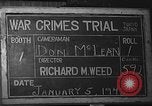
Japanese Prime Minister Tojo being tried for his World War II crimes in Tokyo, Japan.
The war crimes trial in Tokyo, Japan after World War II. Japanese Prime Minister Hideki Tojo answers the questions during the trial. U.S. Major General P.J. Mueller, Chief of Staff and party seated in the court room. Tojo being cross examined about sending of troops into French Indochina. Tojo states that the Indo China problem was discussed in a message from President Roosevelt to the Emperor. In answer as to when troops were sent there, he says around 20 September 1940 and this was done after arrangements had been made with the Vichy Government of France.
CRITICALPAST.COM: About Us | Contact Us | FAQs - How to Order | License Agreement | My Account | My Lightboxes | Shopping Cart | Advanced Search | Featured Collections | Website Terms & Conditions | Privacy Policy ©2026 CriticalPast LLC.
License Agreement |
Terms & Conditions |
Privacy Policy
©2026 CriticalPast LLC.