


 Francais
 Deutsch
 Italiano
Refine Your Search
Mekong Delta Vietnam 1968 stock footage and images
- Showing 181 to 186 of 4434 results more
more Hide
Hide
Demonstrators crowd at a park and outside Conrad Hilton hotel during Democratic National Convention in Chicago, Illinois.
Lincoln Park demonstrations during the 1968 Democratic National Convention in Chicago, Illinois. Hippies walk through park. People walk with banners. Crowd of demonstrations with signs at Conrad Hilton hotel (720 S Michigan Ave, Chicago, IL 60605, United States). Sign: 'Welcome To Chicago', Stop the War', and Resist in Prague Saigon Chicago'. Paper on road.
Senator Edward Brooke of Massachusetts talks about Richard Nixon in United States.
Richard Nixon and Spiro Agnew election campaign TV advertisement for the 1968 Presidential campaign in the United States. Senator Edward Brooke of Massachusetts talks to a man about Richard Nixon. They sit in an office. Brooke indicates that he favors Richard Nixon for the Presidential election. Edward Brooke states that Richard Nixon will restore law and order in United States coupled with justice and he will create jobs for the unemployed citizens.
Governor of California Ronald Reagan talks about Richard Nixon in United States.
During the 1968 Richard Nixon-Spiro Agnew election campaign for the Presidency in United States. Governor of California Ronald Reagan talks to an interviewer about Richard Nixon. They sit in an office. Reagan favors Richard Nixon for the Presidential election. Ronald Reagan states that people should not waste a vote by voting for a 3rd party or splinter party candidate, but that they should vote for the Republican Party candidate Richard Nixon in the U.S. Presidential elections. Reagain states that the Republican Party "is where the action is."
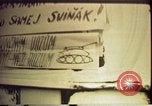
Soviet military use harsh tactics to curb civilian protesters and meet resistance while occupying Czechoslovakia
Methods used by the Soviet Army during their Warsaw Pact invasion to put down the Prague Spring in Czechoslovakia in 1968. Civilian protest cartoons, articles and signs against the Soviets. Czech civilian protesters run to escape from Soviet tanks and military in a city. Wounded demonstrators taken in ambulance. People demonstrating peacefully ran over by Soviet tanks and armored vehicles. People weep during the funeral ceremony of those killed by the Soviet Army. Soviet Army retreats from Czechoslovakia met with resistance and demonstrations by civilians.

President Johnson delivers a speech and people express grief after the assassination of Martin Luther King Jr. in the U.S.
From production "April Aftermath", showing mourning and grief throughout the United States after the assassination of Martin Luther King, Jr. on April 4, 1968. The flag of the United States is lowered at half mast. People watch on television President Johnson's speech about the assassination of Martin Luther King Jr. (leader in the American Civil Rights Movement). Families are seen at home gathered around the television to watch the speech. Views of several families of husband and wife and children gathered in their living rooms viewing television sets to watch the address. Most are white families. One family is an African American family watching television. President Lyndon B. Johnson delivers a speech. The Seal of the President of the United States on a dais. President Johnson declares April 7 as a national day of mourning for the civil rights leader. Mourning ceremonies are conducted in all churches and pilgrims of the United States. Television broadcast the faces of leaders and the news about the assassination and people expressing grief. A large crowd of civilians gather at a condolence meet. People in a line enter a building to express their grief. They come outside the building. A large crowd of civilians gather and attend the condolence ceremony. They express grief.
The letter written by the Black Activist Carmichael to Argentine Marxist revolutionary Che shown on Cuban TV in Havana, Cuba.
Trinidadian-American Black Activist Stokely Carmichael's letter shown on Cuban TV in Havana, Cuba. The letter written by Trinidadian-American Black Activist, Stokely Standiford Churchill Carmichael to Argentine Marxist revolutionary, Ernesto "Che" Guevara. The letter states that African-Americans in the U.S. admire Che, and Che is the inspiration for the Blacks inside the U.S. and to the civil rights and liberation struggle around the world. The letter is presented on Cuban TV, which was written on August 2, 1968.