


 Francais
 Deutsch
 Italiano
Refine Your Search
Melville Rhode Island 1943 stock footage and images
- Showing 67 to 72 of 6726 results more
more Hide
Hide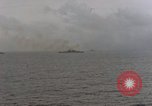
United States destroyers, heavy cruiser, and light cruiser bombard Tarawa Island in Pacific Theater
U.S. Navy World War II battleship, destroyers, heavy cruiser and light cruiser bombard the Island of Tarawa in Pacific Theater, in November 1943. Smoke rises from the beach. A 16" gun on board USS Maryland (BB-46) bombards Tarawa. Shells burst in air and island obscured by smoke. Depth charges explode in water as light cruiser continues to bombard the island. Ship at timecode 2:34 and 3:10 is a heavy cruiser of the Portland or Northhampton class, based on catapults with sea planes located at mid ship. Based on ship assignments and locations at that time, this would make it either the USS Chester (CA-27), the USS Portland (CA-33), or the USS Indianapolis (CA-35).
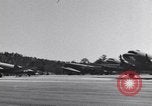
U.S. 801st Medical Air Evacuation Squadron tends wounded evacuated in C-47s from New Georgia Island, in World War II.
Sequence starts at Tontouta Air Base in New Caledonia, on the near left side of runway 2 in the area of the 13th Troop Carrier Squadron ( a.k.a. the Thirsty 13th) with their plane "Lady Eve" on the right. (The 801st Medical Air Evacuation Squadron was assigned to the 13th TCS on January 9, 1943, and remained with it until the end of the war. But they also flew on planes of the 63rd and 64th TCSs, and with the Marines.) Takeoff is on runway 11 at Tontouta Air Base. A pilot and a co-pilot at the controls in the cockpit of a C-47. A navigator at work. C-47s in flight west over New Georgia, 10 miles southeast of Munda, near Eghelo. The plane landing at Munda has no tail number and is probably a U.S. Marine Corps plane. They evacuate wounded soldiers from Munda airstrip on New Georgia Island in the Solomon Islands during World War 2. Doors of the aircraft are opened. An ambulance backs to the door of the aircraft. Litter patients are removed from the ambulance and loaded aboard the C-47.
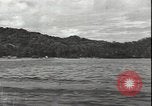
U.S. Navy PBY Catalina flying boat rescues downed U.S. Marine Corps pilot in Solomon Islands during World War II.
Rescue of Marine Corps pilot, Milton H. Vedder, who was shot down on April 25, 1943, in an aerial battle over Vangunu, New Georgia, Solomon Islands, during World War 2. View from a U.S. Navy PBY Catalina flying boat as it takes off and then flies low over islands and water. Two Marine F4U Corsairs are seen flying escort above the PBY. View from the PBY as it lands on the water and taxis past a native shack while approaching Segi Point shoreline. Crewman on PBY looks through binoculars. Native canoe approaches with Lieutenant Vedder. Native and beach observer in a boat. Man in hat is probably coast watcher Donald Kennedy. Rescued pilot Lieutenant Milton N. Vedder, in boat, smokes a cigarette. View from PBY as it takes off. Vedder and others conversing inside the PBY. Several views of the two U.S. Marine F4U Corsair fighter escort aircraft. Other F4Us are seen in distance. (Note: reportedly, the two escorting F4U Corsairs were flown, respectively, by Major Weissenberger, the Commanding Officer, and Major Leary, both from Lt. Vedder's squadron, VMF-213. )
U.S. reconstructs captured Japanese airfield at Munda Point, New Georgia Island, in World War II.
Wreckage and debris on Munda Point airfield, New Georgia Island, after its capture by U.S. forces during World War 2. Dead Japanese soldiers. Destroyed aircraft on island as result of U.S. bombing. Reconstruction workers clear and enlarge runway and operations tower as Americans improve and expand the airbase for their own operations. U.S. flag raised on pole. Seen are the first aircraft to land at Munda Point (on August 14, 1943). The first is a Royal New Zealand Air Force P-40 with letter K and white stripe on fuselage and a white tail. It is followed by a J2F Duck carrying U.S.Marine Brigadier General Francis P. Mulcahy to set up his new headquarters at Munda Point.
The Seabees construct an airstrip at Munda Point in the Solomon Islands during World War II. Daily progress seen over 5 days.
Activities of the Seabees at Munda Point in the Solomon Islands during World War 2. Views of utter destruction from the U.S bombardment of Munda. Destroyed buildings, facilities, Japanese airplanes and dead Japanese soldiers. Leafless trees and damaged wooded area. Seabees commence cleanup and construction. They cremate and bury the dead Japanese. Trucks and bulldozers move over muddy terrain to level the land to construct an airstrip. Views of the steady progress of construction over the period from August 8 to August 12, 1943. The airstrip is completed within 5 days. On the 5th day a Navy F4F aircraft lands on the coral runway. . The pilot in the cockpit smiles. The Spirit of 76 is painted on his airplane. Views of other F4Fs landing on the coral runway.
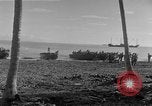
U.S. reinforcement and resupply operations on Guadalcanal, Solomon Islands, during World War II.
Reinforcements and supplies arriving on Guadalcanal during World War 2. Various views of Soldiers and supplies arriving from transport ships. These operations are occuring in 1943, after Guadalcanal has been secured and now being prepared as a base for further allied advances against Japanese-held islands on the road to Japan itself. In one scene Soldiers are seen arrivng on a Higgins Boat from the transport ship, USS George Clymer (APA-27). Most of the film shows supplies being amassed on the beachhead. Local natives are employed helping unload and store the large quantities of supplies.
CRITICALPAST.COM: About Us | Contact Us | FAQs - How to Order | License Agreement | My Account | My Lightboxes | Shopping Cart | Advanced Search | Featured Collections | Website Terms & Conditions | Privacy Policy ©2026 CriticalPast LLC.
License Agreement |
Terms & Conditions |
Privacy Policy
©2026 CriticalPast LLC.